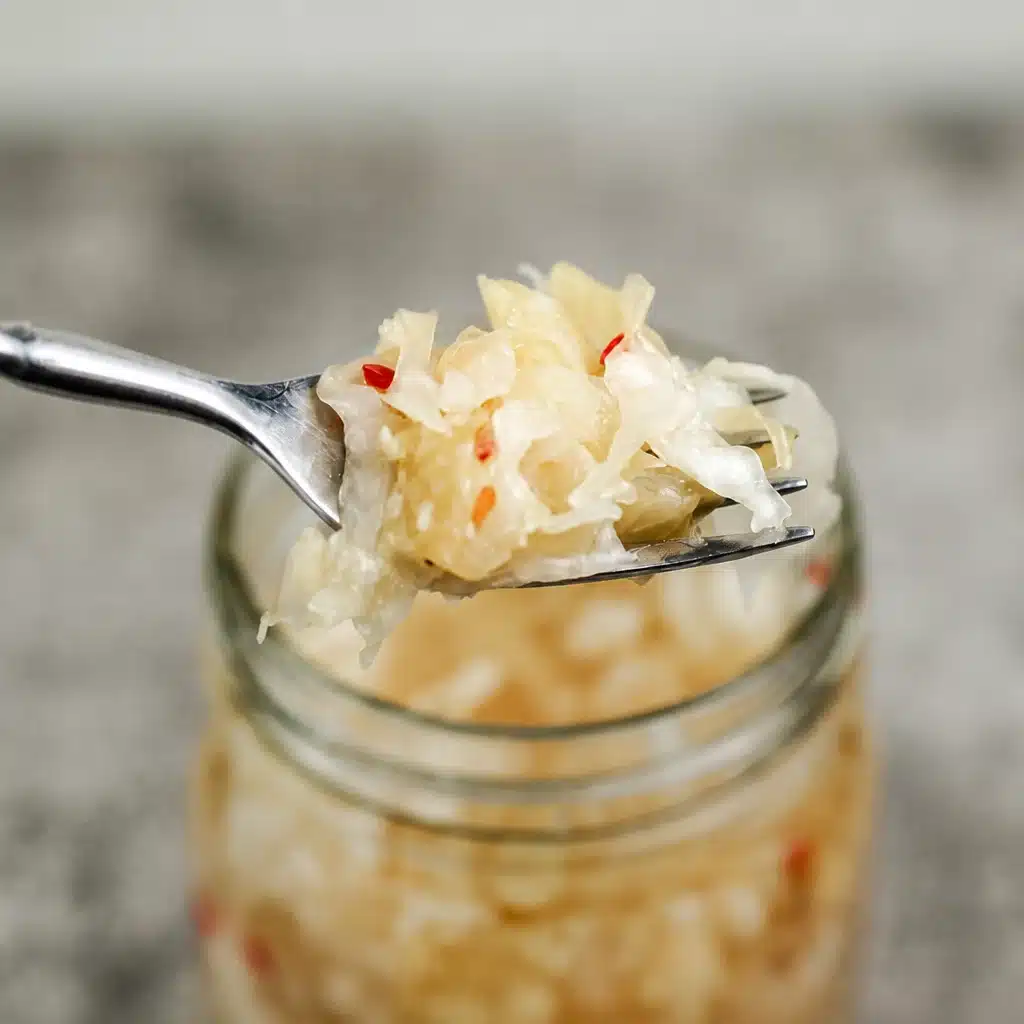
fermented cabbage recipe problems usually show up at the worst time, like when you buy a big beautiful cabbage and then realize you are kind of bored of plain salads. I have been there. I wanted something crunchy, tangy, and honestly something that makes a simple dinner feel more exciting without extra cooking. This is my go to jar method that feels almost too easy the first time you do it. It is the kind of kitchen project you can do while chatting with someone or listening to music.

Why You’ll Love This Recipe
I keep coming back to this because it is low effort but high reward. You do a little chopping, a little mixing, and then you let time do the rest. The flavor keeps getting better, and it makes everyday meals taste brighter.
Here is why I think you will actually stick with this one:
- Simple ingredients you probably already have, especially if you keep salt around.
- Crunchy texture that stays satisfying when you do the salt ratio right.
- Big flavor payoff for almost no active cooking time.
- Budget friendly since cabbage is usually cheap and lasts well.
Also, if you love cabbage in general, you might like this cozy rice situation too. I make it when I want something hearty and spicy: Cajun cabbage jambalaya.
Difference between pickled and fermented cabbage
This trips a lot of people up, so let me break it down in plain language. Pickled cabbage is usually cabbage soaked in vinegar. It tastes sharp right away because vinegar is doing the heavy lifting.
Fermented cabbage is different because you are using salt and time. The cabbage releases liquid, and that salty liquid becomes the home where good bacteria naturally grow and change the flavor. That is what gives it that deeper tang that feels alive and rounded, not just sour.
Quick comparison that I keep in my head:
Pickled: vinegar based, fast, one note tang.
Fermented: salt based, takes days, more complex flavor and aroma.
One more thing. Pickles usually go straight into the fridge. Fermenting happens at room temp first, then you chill it when it tastes right.
How To Make This Recipe
This fermented cabbage recipe is all about getting the salt right and keeping the cabbage under its own liquid. Once you do it one time, it feels super natural.
Ingredients and what you will need
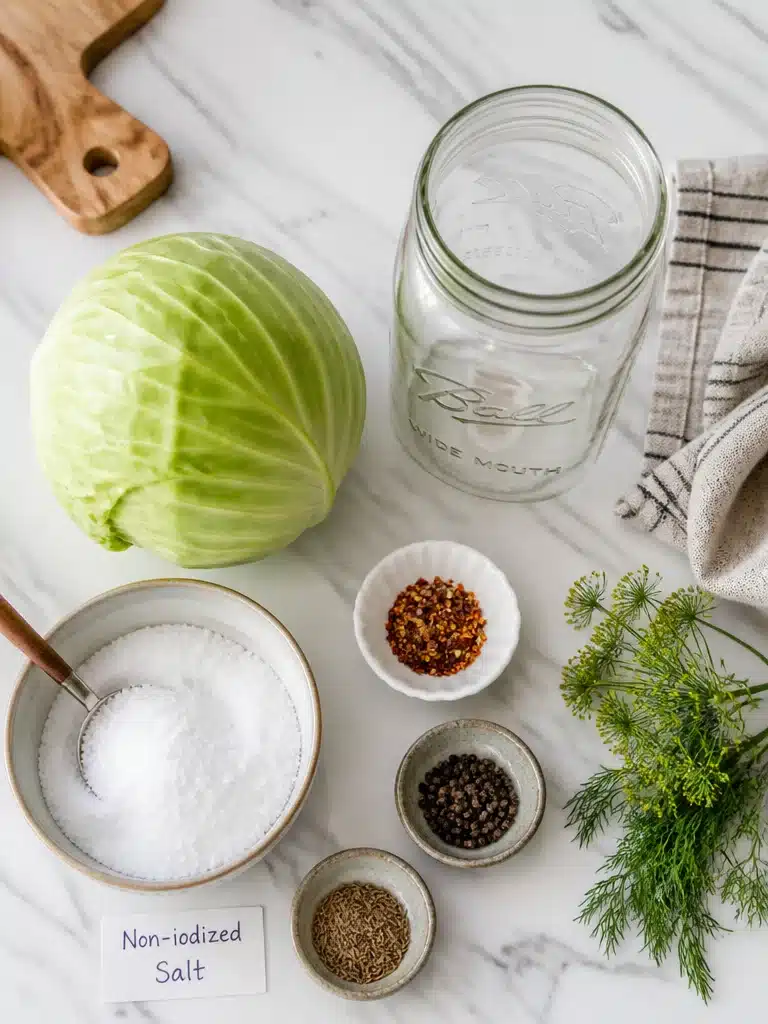
- 1 medium green cabbage, about 2 to 2.5 pounds
- Non iodized salt, 1 tablespoon per 1.75 pounds cabbage (about 2 percent by weight if you use a scale)
- Optional: 1 teaspoon caraway seeds, or a few peppercorns, or a bit of grated garlic
- 1 clean wide mouth jar (quart size is great)
- A small clean jar or fermentation weight to help hold cabbage down
- A bowl, a knife, and clean hands
Step by step directions
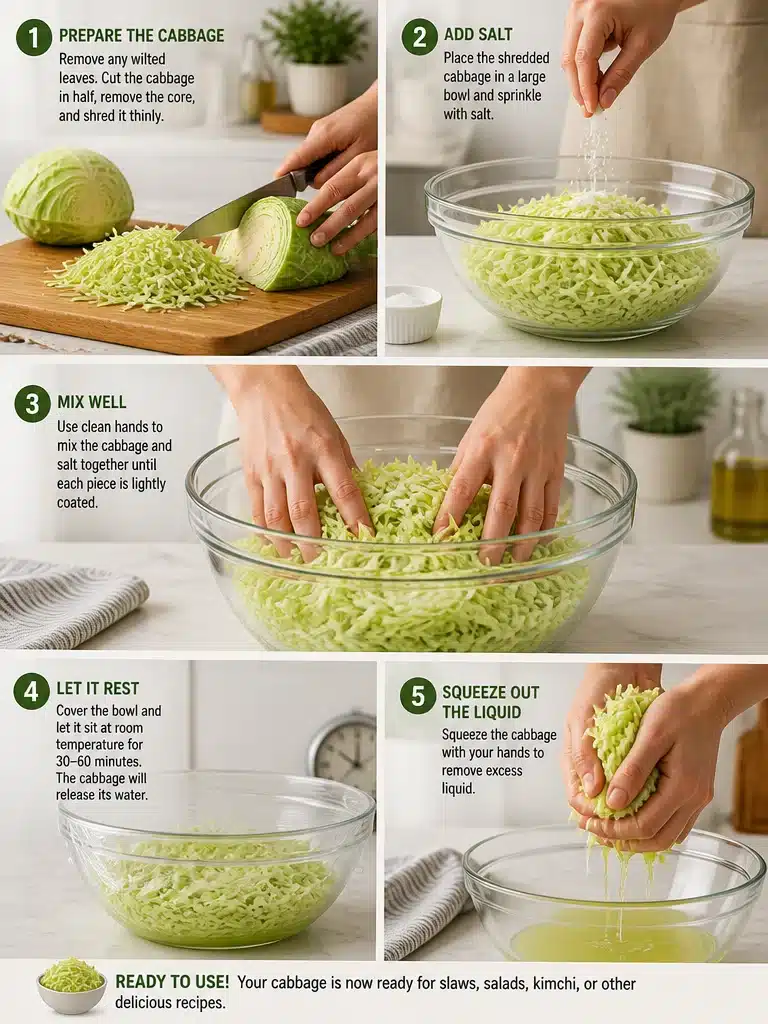
1) Prep the cabbage. Peel off any wilted outer leaves. Save one nice big leaf for later. Cut the cabbage into quarters, remove the core, then slice it thin.
2) Salt it and massage. Put the cabbage in a big bowl. Sprinkle the salt over it. Then use your hands to massage and squeeze it for about 5 to 8 minutes. At first it feels dry, then it starts turning glossy and juicy. This part is kind of oddly relaxing.
3) Pack the jar tight. Scoop the cabbage into your clean jar, a handful at a time. Press down firmly each time so the liquid rises up. You want the cabbage packed tight like it means business.
4) Keep it under the brine. Pour in any leftover liquid from the bowl. Fold that saved cabbage leaf and place it on top like a little blanket. Then add a weight. The goal is simple: cabbage stays submerged.
5) Let it ferment. Set the jar on a plate or shallow bowl in case it bubbles over. Leave it at room temperature out of direct sunlight. Start tasting around day 3. For me, day 7 to 10 is the sweet spot. When it tastes tangy and pleasant, move it to the fridge.
Little safety note from my own kitchen: It should smell pleasantly sour, like a tangy pickle vibe, not rotten. If you see fuzzy mold on top, that is a toss. If you see a thin white film, that can happen and you can usually skim it, but when in doubt, throw it out. Trust your senses.
When I am waiting on a jar to do its thing, I usually make something quick in a pan with cabbage too, like this: Chinese chicken cabbage stir fry. It scratches the cabbage itch while the jar ferments.
“I tried this method and honestly did not think it would work, but by day 6 it was perfectly tangy and still crunchy. I have been adding it to everything.”
What to use this sauerkraut in a jar for?
Once you have a jar in the fridge, you start looking for excuses to use it. This is where it gets fun. A forkful adds crunch and a bright pop that cuts through rich foods.
Here are my favorite easy uses:
On sandwiches with turkey, ham, or a veggie melt.
With eggs especially scrambled eggs or an omelet, it sounds odd until you try it.
In grain bowls
Next to sausage
In salads
If you are doing a snacky weekend at home, I like having something a little sweet after a tangy meal. These are fun for that: cheesecake recipes that will wow your taste buds. Or if you are in a wiggly dessert mood, these are cute too: gelatin recipes to brighten your day.
And random note, but if you are also someone who likes simple, minimal ingredient kitchen routines, you might be curious about this: 4 ingredient Mounjaro recipe.
Pro Tips
This fermented cabbage recipe is simple, but a few small habits make it more reliable and more delicious.
Make it consistent every time
Use the right salt. I stick with kosher salt or sea salt. Avoid iodized salt because it can mess with the process and flavor.
Keep everything clean. Clean jar, clean hands, clean tools. You do not have to sterilize like canning, just be neat and careful.
Keep it submerged. If cabbage floats above the brine for too long, you risk mold. Press it down daily if needed, especially early on.
Ferment to your taste. Warmer rooms go faster, cooler rooms go slower. Taste it. You are in charge.
Crunch tip. If you want extra crunch, ferment a bit cooler and do not overwork the cabbage when massaging. Just enough to make brine, not to turn it limp.
Common Questions
1) How long does it take to ferment?
Usually 5 to 10 days at room temperature. Start tasting around day 3 and go until it tastes right to you.
2) Do I need a special fermentation lid?
No. A regular lid works if you do not tighten it like crazy. You can also use a cloth and rubber band. Just keep it clean and let gas escape.
3) Why is my jar bubbling?
That is normal and it is a good sign. It means fermentation is active. Keep the jar on a plate in case it overflows.
4) My cabbage is not fully covered in liquid. What do I do?
First, press it down and wait a bit. It often makes more brine. If it is still dry, mix a small amount of saltwater (about 1 teaspoon salt per cup of water) and add just enough to cover.
5) How long does it last in the fridge?
In my experience, it stays good for weeks and often a couple of months, as long as it stays clean and mostly submerged. Use a clean fork each time.
A jar you will want to keep in your fridge
If you have been wanting a fermented cabbage recipe that feels doable on a busy day, this is the one I always recommend. Once you taste that crunchy tang, you will get why people keep a jar around all the time. If you want to compare methods, I found these helpful and reassuring to read: Fermented Cabbage (Sauerkraut) – Hilda’s Kitchen Blog, Easy Fermented Cabbage In A Jar – Cooking LSL, and Homemade Sauerkraut Recipe – Serious Eats. Make a jar this week, taste as you go, and do not overthink it. Your future self is going to love having that bright little bite ready in the fridge.
Print
Fermented Cabbage Recipe
- Total Time: 10 days
- Yield: 1 quart 1x
- Diet: Vegan
Description
A simple and rewarding fermented cabbage recipe that adds crunchy, tangy flavor to your meals.
Ingredients
- 1 medium green cabbage (about 2 to 2.5 pounds)
- Non-iodized salt (1 tablespoon per 1.75 pounds of cabbage)
- Optional: 1 teaspoon caraway seeds, a few peppercorns, or a bit of grated garlic
- 1 clean wide mouth jar (quart size)
- A small clean jar or fermentation weight
- A bowl, a knife, and clean hands
Instructions
- Prep the cabbage. Peel off any wilted outer leaves, save one nice big leaf for later, cut into quarters, remove the core, then slice thin.
- Salt it and massage. Put the cabbage in a big bowl, sprinkle salt over, and massage for about 5 to 8 minutes until glossy and juicy.
- Pack the jar tight. Scoop the cabbage into your clean jar, pressing down firmly to release liquid.
- Keep it under the brine. Pour in leftover liquid, fold and place the saved cabbage leaf on top, then add a weight.
- Let it ferment. Set the jar in a plate or shallow bowl, leave at room temperature out of direct sunlight, and start tasting around day 3, typically ready in 7 to 10 days.
Notes
Keep everything clean and ensure the cabbage stays submerged in the brine to avoid mold. Taste to your preference and adjust fermentation time accordingly.
- Prep Time: 15 minutes
- Cook Time: 0 minutes
- Category: Condiment
- Method: Fermentation
- Cuisine: German
Nutrition
- Serving Size: 1 tablespoon
- Calories: 20
- Sugar: 1g
- Sodium: 400mg
- Fat: 0g
- Saturated Fat: 0g
- Unsaturated Fat: 0g
- Trans Fat: 0g
- Carbohydrates: 4g
- Fiber: 2g
- Protein: 1g
- Cholesterol: 0mg

Written by Anna
Anna is the founder and recipe developer behind Chroka Recipes. She creates easy, restaurant-quality homemade recipes — from comforting dinners and decadent desserts to healthy salads and quick breakfasts. With 2,200+ published recipes, Anna helps home cooks discover their next favorite dish.