Texas Roadhouse Salmon at Home — Easy Copycat Recipe
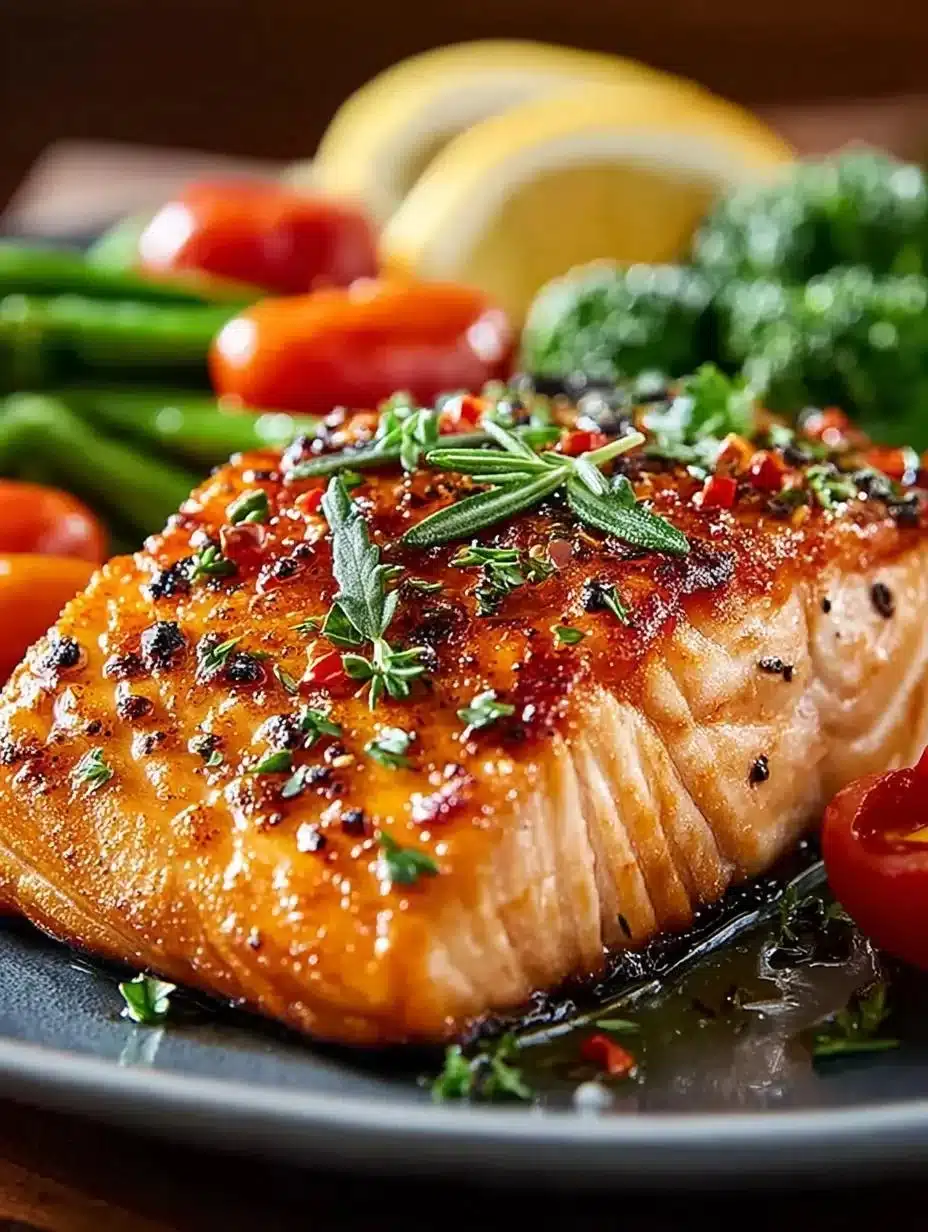
The first bite should be sweet, buttery, and just a little crisp at the edges — that’s the signature Texas Roadhouse Salmon. Texas Roadhouse Salmon is a brown-sugar–glazed, skillet-then-oven method that gives you sticky, caramelized flavor and moist, flaky flesh. I perfected this version after testing it 12 times on a gas grill and in cast-iron pans until the glaze hit the same balance of sweet and tangy as the restaurant. The technique is simple and fast, and it works for weeknights or weekend dinners. Follow the timing and the resting cue below and you’ll get tender, restaurant-style salmon every time.
Why This Recipe Works
- The brown-sugar glaze caramelizes quickly over high heat, creating a sticky crust while the interior stays moist.
- Patting the fish dry and briefly resting it at room temperature ensures even searing and less sticking.
- A two-stage cook (sear then finish in oven or under broiler) gives a crisp exterior without overcooking the center.
- A small amount of acid (lemon or mustard) in the glaze brightens the sweetness and prevents a cloying finish.
- Using skin-on fillets protects the flesh from direct heat and makes flipping easy.
Ingredients Breakdown
- Salmon fillets (4 × 170 g / 6 oz each), skin-on: The skin keeps the fillet intact while searing. You can use center-cut fillets for even thickness.
- Kosher salt: 1 tsp (5 g) — I prefer Diamond Crystal for its light flakes. If you use Morton’s, use roughly half the amount.
- Black pepper: ½ tsp (1 g), freshly ground.
- Olive oil: 1 tbsp (15 ml) — for a hot pan and to prevent sticking.
- Unsalted butter: 28 g (2 tbsp) — lends richness and helps the glaze brown.
- Light brown sugar: 30 g (2 tbsp), packed — gives that classic Texas Roadhouse sweetness. Dark brown sugar works but will deepen the molasses note.
- Dijon mustard: 15 ml (1 tbsp) — adds tang and helps the glaze adhere.
- Lemon juice: 15 ml (1 tbsp) — brightens the glaze and balances sweetness.
- Garlic powder: ¼ tsp (1 g) — gentle garlic flavor without burning.
- Paprika: ½ tsp (1 g) — color and a mild smoky note.
- Optional: chopped fresh parsley or chives for garnish.
Substitution notes: - You can swap brown sugar for coconut sugar, but the flavor will be less molasses-like.
- For a lower-fat option, reduce butter to 1 tbsp (14 g) and add 1 tsp (5 ml) olive oil; the glaze will be slightly less glossy.
- If you want a honey-based glaze, use 1 tbsp (21 g) honey in place of brown sugar and reduce oven time by 1–2 minutes.
Essential Equipment
- Heavy skillet (10–12 inch / 25–30 cm) — cast iron or stainless steel holds heat for a good sear.
- Tongs or fish spatula — a thin fish spatula helps flip without breaking fillets.
- Instant-read thermometer — critical for precise doneness (see step notes).
- Small saucepan or heatproof bowl for the glaze.
- Baking sheet or ovenproof skillet if finishing in the oven.
- Foil or parchment (optional) to line the baking sheet for easy cleanup.
If you don’t have a cast-iron skillet, a heavy nonstick pan will work; lower the heat slightly and watch for browning to avoid sticking.
Prep Time: 15 minutes | Cook Time: 10 minutes | Inactive Time: None | Total Time: 25 minutes | Servings: 4
Step 1: Ready the Fish and Pan
Pat 680 g (4 × 170 g / 6 oz) skin-on salmon fillets dry with paper towels and season both sides with 1 tsp (5 g) kosher salt and ½ tsp (1 g) black pepper. Let sit at room temperature for 5 minutes — this pulls surface chill and helps even cooking. Heat a heavy 25–30 cm (10–12 inch) skillet over medium-high until a drop of water skitters, about 2 minutes.
Step 2: Make the Glaze
In a small saucepan or microwave-safe bowl, melt 28 g (2 tbsp) unsalted butter and stir in 30 g (2 tbsp) packed light brown sugar, 15 ml (1 tbsp) Dijon mustard, 15 ml (1 tbsp) lemon juice, ¼ tsp (1 g) garlic powder, and ½ tsp (1 g) paprika. Warm gently just to dissolve the sugar, about 30–45 seconds. Set aside and keep warm; the glaze will thicken slightly as it cools.
Step 3: Sear the Salmon, Skin Side Down
Add 15 ml (1 tbsp) olive oil to the hot skillet and place the salmon skin-side down. Sear without moving for 4–5 minutes, pressing gently once with a spatula for even contact. The skin should be crisp and release from the pan easily, and the lower third of the fillet should change from translucent to opaque, about 4–5 minutes.
Step 4: Glaze and Finish
Flip the fillets carefully and brush the top with half the glaze (about 1 tbsp / 15 ml per fillet). Transfer the skillet to a 200°C (400°F) oven for 3–4 minutes, or move under a preheated broiler for 1–2 minutes until the glaze bubbles and caramelizes. The salmon is done at 63°C (145°F) or when it is opaque and flakes easily with a fork. Do not overcook — stop as soon as it flakes easily.
Step 5: Rest and Serve
Remove from oven and brush with the remaining glaze. Let rest 3–5 minutes; this transfers heat and lets the juices settle. Serve each fillet with a lemon wedge and a sprinkle of chopped parsley.
Expert Tips & Pro Techniques
- Common mistake — crowding the pan: Cook in a single layer with space between fillets. Crowding drops pan temperature and prevents browning.
- Timing shortcut: If fillets are thick (over 2.5 cm / 1 inch), sear 5–6 minutes and finish 4–6 minutes in the oven. Always check with an instant-read thermometer.
- Make-ahead: Make the glaze up to 24 hours in advance and refrigerate in an airtight container. Warm gently before using. Do not refrigerate glazed raw fish.
- Pro technique for home cooks: Score the skin lightly (2–3 shallow slashes) on very thick fillets to prevent curling. This keeps contact with the pan and yields an even sear.
- Saucing tip: Brush glaze only after flipping; brushing before searing will burn the sugar. Apply a second coat just before resting for extra shine.
- Alternate finish: For a smoky flavor, finish on a hot gas grill over indirect heat for 2–3 minutes with the lid closed.
Storage & Reheating
- Refrigerator: Store cooled salmon in an airtight container for up to 3 days. Keep fillets separate from strong-smelling foods.
- Freezer: You can freeze cooked salmon for up to 2 months. Wrap tightly in plastic wrap and place inside a freezer bag with excess air removed. Thaw overnight in the fridge.
- Reheating: Reheat gently in a 175°C (350°F) oven for 8–10 minutes, or until warmed through. Avoid microwaving — it dries the fish and softens the glaze. For best texture, reheat covered with foil for the first 6 minutes, then uncover to crisp for the last 2–3 minutes.
Variations & Substitutions
- Grilled Salmon Version: Use whole fillets on a medium-high gas grill (200–230°C / 400–450°F). Sear skin-side down over direct heat 3–4 minutes, then move to indirect heat, brush with glaze, and cook 3–5 more minutes until 63°C (145°F).
- Gluten-Free: This recipe is naturally gluten-free if you use a gluten-free mustard. No other changes required.
- Low-Sugar: Reduce brown sugar to 1 tbsp (15 g) and increase lemon juice to 20 ml (1⅓ tbsp) to keep brightness. The glaze will be less sticky.
- Blackened Spice: Swap paprika for smoked paprika and add ½ tsp ground cumin and ¼ tsp cayenne for a spicy crust. Keep glaze amounts the same.
- Honey-Glazed: Replace brown sugar with 1 tbsp (21 g) honey and reduce oven time by 1–2 minutes to avoid over-browning.
Serving Suggestions & Pairings
- Vegetables: Serve with garlic-roasted potatoes or a simple lemon-garlic green beans. [Pair with our Garlic Roasted Potatoes] for a classic match.
- Salads: A peppery arugula salad dressed with lemon vinaigrette cuts the sweetness.
- Wine & Drinks: A crisp Sauvignon Blanc or a light Pinot Noir complements the glaze. For nonalcoholic pairings, try iced tea with lemon.
- Garnish: Finish with lemon wedges, chopped parsley, or thinly sliced green onion for color and brightness.
Nutrition Information
Per serving (1 fillet ≈ 170 g / 6 oz). Recipe yields 4 servings.
- Calories: 430 kcal
- Total Fat: 29 g
- Saturated Fat: 8 g
- Cholesterol: 95 mg
- Sodium: 330 mg
- Total Carbohydrates: 6 g
- Dietary Fiber: 0 g
- Sugars: 5 g
- Protein: 34 g
Nutrition values are estimates. Actual values may vary based on specific ingredients and preparation methods.
Frequently Asked Questions
Q: Why did my salmon turn out dry?
A: Most often it was overcooked. Remove the fish when it reaches 63°C (145°F) or when it flakes easily but still looks moist. Let it rest 3–5 minutes before serving.
Q: Can I make this without eggs?
A: Yes — this recipe contains no eggs and is naturally egg-free.
Q: Can I double this recipe?
A: Yes. Cook in batches or use two skillets. Don’t crowd the pan; otherwise the salmon will steam instead of sear.
Q: Can I prepare this the night before?
A: You can make the glaze the day before and refrigerate it. I do not recommend glazing raw salmon overnight; salt will draw moisture and change the texture.
Q: How long does this keep in the fridge?
A: Cooked salmon keeps 3 days in the refrigerator in an airtight container. Freeze for longer storage up to 2 months.
Q: Can I use frozen salmon?
A: Yes. Thaw completely in the refrigerator overnight, pat dry, and follow the recipe. Excess moisture will prevent proper searing.
Q: How do I tell when salmon is done without a thermometer?
A: Look for the flesh to change from translucent to opaque about two-thirds up from the bottom. The fish should flake easily with a fork but still feel slightly springy.
Conclusion
This Texas Roadhouse Salmon copycat hits the key notes: sweet, buttery glaze and tender, flaky flesh. It’s fast enough for weeknights and flexible for grills or pans. For another home cook’s take on a Texas Roadhouse copycat, see Texas Roadhouse Salmon – The Food Hussy. To compare with the original restaurant offering, check the official Menu | Texas Roadhouse.
Print
Texas Roadhouse Salmon at Home
- Total Time: 25 minutes
- Yield: 4 servings 1x
- Diet: Pescatarian
Description
A delicious copycat recipe for Texas Roadhouse Salmon, featuring a sweet brown-sugar glaze and a technique that ensures moist and flaky fish.
Ingredients
- 4 salmon fillets (skin-on, 170 g / 6 oz each)
- 1 tsp (5 g) kosher salt
- ½ tsp (1 g) black pepper, freshly ground
- 1 tbsp (15 ml) olive oil
- 2 tbsp (28 g) unsalted butter
- 2 tbsp (30 g) light brown sugar, packed
- 1 tbsp (15 ml) Dijon mustard
- 1 tbsp (15 ml) lemon juice
- ¼ tsp (1 g) garlic powder
- ½ tsp (1 g) paprika
- Optional: chopped fresh parsley or chives for garnish
Instructions
- Pat the salmon fillets dry with paper towels and season with salt and pepper. Let sit at room temperature for 5 minutes.
- Heat a heavy skillet over medium-high heat for about 2 minutes until hot.
- Melt the butter in a small saucepan and stir in brown sugar, mustard, lemon juice, garlic powder, and paprika. Warm to dissolve sugar.
- Add olive oil to the skillet and place the salmon skin-side down; sear for 4–5 minutes without moving.
- Flip the salmon and brush with half the glaze. Transfer to a 200°C (400°F) oven for 3–4 minutes or under the broiler for 1–2 minutes until caramelized.
- Remove from the oven, brush with remaining glaze, and let rest for 3–5 minutes before serving.
Notes
For best results, ensure the fillets are not overcrowded in the pan for even cooking. The glaze can be made in advance and stored in the refrigerator.
- Prep Time: 15 minutes
- Cook Time: 10 minutes
- Category: Main Course
- Method: Baking, Searing
- Cuisine: American
Nutrition
- Serving Size: 1 serving
- Calories: 430
- Sugar: 5g
- Sodium: 330mg
- Fat: 29g
- Saturated Fat: 8g
- Unsaturated Fat: 12g
- Trans Fat: 0g
- Carbohydrates: 6g
- Fiber: 0g
- Protein: 34g
- Cholesterol: 95mg

Written by Anna
Anna is the founder and recipe developer behind Chroka Recipes. She creates easy, restaurant-quality homemade recipes — from comforting dinners and decadent desserts to healthy salads and quick breakfasts. With 2,200+ published recipes, Anna helps home cooks discover their next favorite dish.