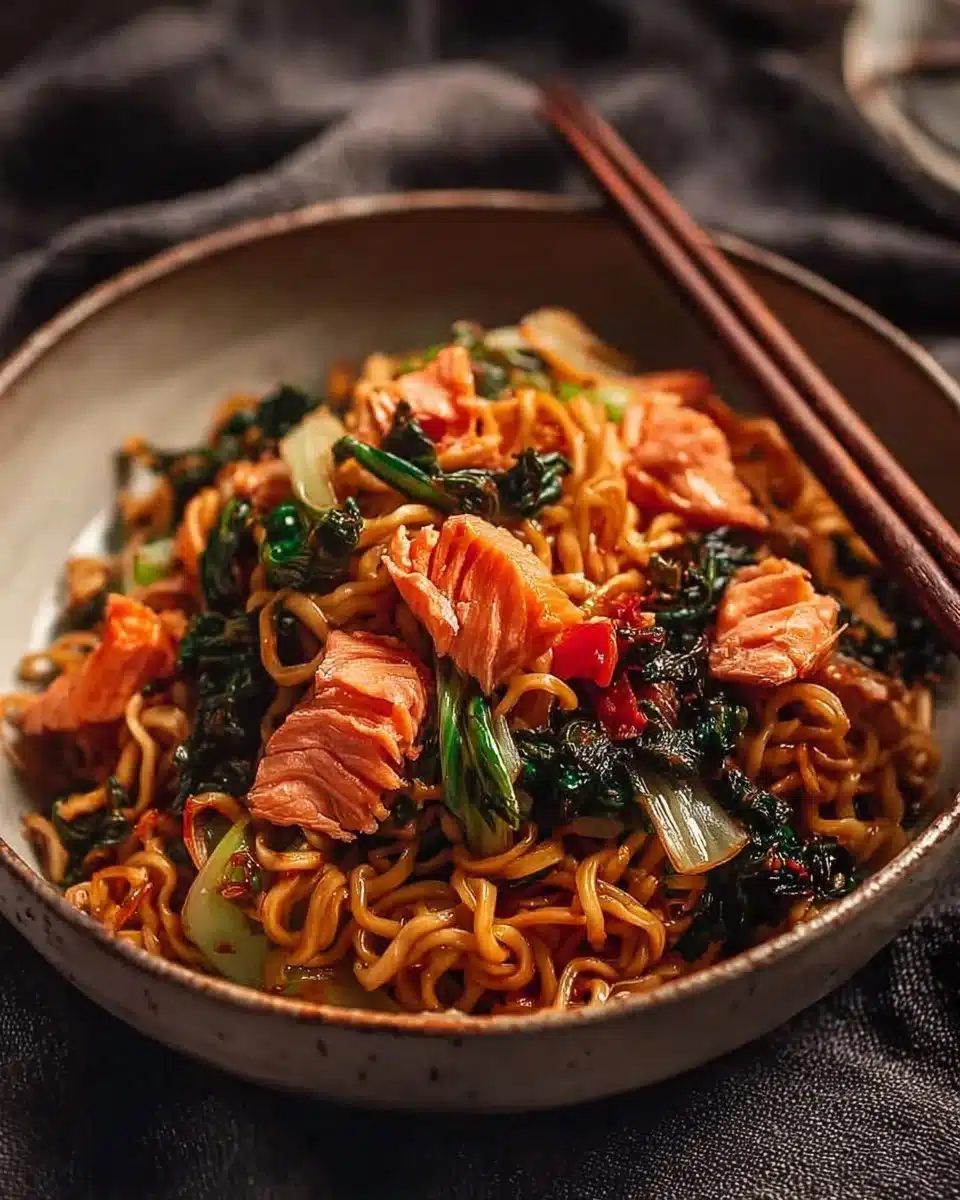
Teriyaki Salmon Noodles — Easy Weeknight Dinner
The first bite hits with sweet-salty glaze, warm oil, and tender flaked salmon sliding through slippery noodles — teriyaki salmon noodles deliver big flavor fast. This is the version I refined after testing the pan-sear and sauce timing eight times to get a glossy coating without overcooking the fish. It borrows the bright balance of Japanese teriyaki with a few home-friendly shortcuts so you can make it on a weeknight and have guests convinced you spent hours. I’ll show you when to rest the salmon, how to thicken the sauce without sugar overload, and the exact noodle timing so nothing turns gummy. Read on for clear steps, metric + imperial measures, and pro tips that save dinner.
Why This Recipe Works
- Pan-searing salmon over medium-high heat creates a crisp exterior while keeping the center moist; the high initial heat seals juices.
- A quick cornstarch slurry gives the teriyaki sauce shine and cling without making it syrupy.
- Cooking noodles just shy of done (al dente) and finishing them in the sauce lets them absorb flavor without getting gummy.
- Fresh aromatics (garlic, ginger, scallion) at the end lift the glaze and prevent the dish from tasting too sweet.
- Timing the salmon to rest 2–3 minutes after sear preserves tenderness and allows carryover cooking to finish to a safe doneness.
Ingredients Breakdown
- Salmon fillets (4 × 150–180 g / 5–6 oz each): Use skin-on for easier searing and a crispy edge; skin can be removed after cooking if you prefer. Thicker fillets (2–2.5 cm / ¾–1 inch) cook more evenly.
- Soy sauce (60 ml / ¼ cup): Provides salt and umami. If you use low-sodium soy, taste and adjust sweetener.
- Mirin (60 ml / ¼ cup) or dry sherry: Adds sweetness and acidity; if omitted, increase honey by 1 tbsp (15 ml).
- Honey or brown sugar (30–45 g / 2–3 tbsp): Balances soy; honey gives a glossy finish.
- Rice vinegar (15 ml / 1 tbsp): Brightens the sauce and cuts richness.
- Fresh ginger (15 g / 1 tbsp grated) and garlic (2 cloves, minced): Aromatics that prevent the sauce from tasting flat.
- Cornstarch (6 g / 1 tbsp) + water (15 ml / 1 tbsp): Slurry to thicken the sauce. Do not skip — without it, the sauce will remain thin and won’t cling.
- Neutral oil (15 ml / 1 tbsp) for searing: Use canola, vegetable, or light olive oil.
- Noodles (320 g / 11–12 oz dried ramen, udon, or soba): Choose texture you like; udon is thick and chewy, ramen/soba are lighter. Cook per package but undercook by 1 minute.
- Scallions (3, thinly sliced) and toasted sesame seeds (1 tbsp): Garnish for freshness and texture.
- Optional: Sesame oil (5 ml / 1 tsp) for finishing, chili flakes or togarashi for heat.
Substitutions & impact warnings:
- Tamari works for gluten-free but is saltier; reduce amount and taste.
- Coconut aminos are lower in sodium but sweeter and thinner.
- Use Diamond Crystal kosher salt if measuring by volume; if using Morton’s, halve the listed amount because it’s denser.
Essential Equipment
- Heavy skillet or nonstick frying pan (10–12 inch / 25–30 cm): A heavy pan holds heat for a good sear.
- Small saucepan or separate skillet for the sauce (optional): Makes timing easier if you prefer to cook sauce separately.
- Fine grater or microplane for ginger: Releases bright aroma without fibrous bits.
- Instant-read thermometer: Helps hit salmon doneness precisely.
- Spider or tongs for lifting noodles: Keeps them intact when moving to the pan.
If you don’t have a thermometer, check salmon by flaking the thickest part: it should be just opaque and flake easily.
Step-by-Step Instructions
Prep 10 minutes, Cook 15 minutes, Inactive time 2–3 minutes resting, Total time about 25–30 minutes. Makes 4 servings (about 1 large bowl per person).
Step 1: Mix the teriyaki sauce
In a small bowl whisk together 60 ml (¼ cup) soy sauce, 60 ml (¼ cup) mirin, 30–45 g (2–3 tbsp) honey, 15 ml (1 tbsp) rice vinegar, 15 g (1 tbsp) grated fresh ginger, and 2 minced garlic cloves. Stir in a cornstarch slurry of 6 g (1 tbsp) cornstarch + 15 ml (1 tbsp) water. Set close to the stove for quick finishing. This makes about 320 ml (1⅓ cups) sauce.
Step 2: Cook the noodles
Bring a large pot of water to a rolling boil. Add 320 g (11–12 oz) dried noodles and cook 1 minute less than package directions for al dente — about 4–6 minutes depending on noodle type. Drain and toss with 5 ml (1 tsp) neutral oil to prevent sticking. Save 60–120 ml (¼–½ cup) cooking water. Timing: 4–6 minutes.
Step 3: Sear the salmon
Pat 4 salmon fillets dry and season lightly with salt. Heat 15 ml (1 tbsp) neutral oil in a 10–12 inch (25–30 cm) skillet over medium-high heat until shimmering. Place skin-side up first for 30–45 seconds to get contact, then lower and sear skin-side down for 3–4 minutes until skin is crisp and the flesh side browns. Flip and cook 1–2 minutes more until the thickest part reads 63°C (145°F) or is just opaque and flakes easily. Do not overcook — remove at 60–62°C (140–144°F) to allow carryover to 63°C (145°F). Rest salmon 2–3 minutes. Timing: total 4–6 minutes searing plus 2–3 minutes rest.
Step 4: Finish the sauce and coat the noodles
In the same skillet, wipe excess oil, add the pre-mixed sauce and bring to a simmer over medium heat. Stir for 1–2 minutes until slightly thickened; if too thick, whisk in 30–60 ml (2–4 tbsp) reserved noodle water. Add drained noodles and toss for 1–2 minutes until glossy and coated. Sensory cue: sauce should cling and lightly coat each strand, not pool at the bottom. Timing: 2–3 minutes.
Step 5: Plate and garnish
Divide noodles among bowls, top each with a salmon fillet, spoon extra sauce over the fish, and finish with 3 sliced scallions and 1 tbsp toasted sesame seeds per bowl. Add 5 ml (1 tsp) toasted sesame oil if desired. Serve immediately while warm.
Expert Tips & Pro Techniques
- Don’t crowd the pan when searing salmon — leave space so the surface can brown. Crowding causes steaming, not searing.
- Common mistake: cooking noodles fully then reheating them in sauce. That makes them gummy. Undercook by 1 minute and finish in the sauce.
- For an extra glossy glaze, reduce the sauce by 1–2 minutes before adding the slurry; add slurry gradually and stop when the sauce coats the back of a spoon.
- Make-ahead: cook the noodles and refrigerate separately for up to 24 hours. Reheat gently in a splash of stock or reserved noodle water and toss in warmed sauce before serving.
- Professional trick adapted for home: finish the salmon with a quick blast under a broiler (1–2 minutes) to caramelize the glaze — watch closely to prevent burning.
- If your salmon is very thin, lower heat slightly and cook longer on the skin side; this protects the flesh from drying.
Storage & Reheating
- Refrigerator: Store leftover noodles and salmon separately in airtight containers. Noodles keep 3–4 days; salmon keeps 2 days.
- Freezer: Noodles freeze okay for texture if sauce-heavy; freeze in airtight containers up to 2 months. Salmon does not freeze well once glazed — it becomes dry on reheating.
- Thawing: Thaw frozen noodles overnight in the fridge.
- Reheating: Reheat noodles in a skillet over medium heat with 1–2 tbsp (15–30 ml) water or stock, tossing until warmed, about 4–6 minutes. Reheat salmon gently in a 160°C (325°F) oven for 6–8 minutes to avoid drying. Avoid microwaving for more than 30–45 seconds — it can make fish rubbery.
Variations & Substitutions
- Gluten-Free Version: Use tamari or gluten-free soy sauce and gluten-free noodles (rice or soba made from 100% buckwheat). Keep the cornstarch slurry; no other changes.
- Spicy Teriyaki Salmon Bowl: Add 5–10 g (1–2 tsp) gochujang or ½–1 tbsp (15 ml) sriracha to the sauce. Reduce honey by 1 tsp if you prefer less sweetness.
- Salmon & Vegetable Bowl: Keep sauce and salmon amounts the same; add 300–400 g (10–14 oz) quick-sautéed vegetables (snap peas, bell pepper, bok choy) and toss with the noodles at the end. Cook vegetables for 3–4 minutes until crisp-tender.
- Low-Sugar Option: Replace honey with 2–3 tbsp (30–45 ml) maple syrup and omit mirin, using 60 ml (¼ cup) water extra; reduce overall sweetness and thicken with the same slurry.
- One-Pan Dinner: Sear salmon; remove and tent. In the same pan sauté thin-sliced mushrooms and shredded carrots for 4–5 minutes, add sauce and noodles to finish. Timing increases by 2–3 minutes.
Serving Suggestions & Pairings
- Serve with quick-pickled cucumbers to cut the glaze’s sweetness.
- Pair with simple steamed bok choy or a lemony Asian slaw.
- For drink pairings, try a crisp lager or a light, unoaked white wine like Pinot Grigio.
- Garnish ideas: sliced chili, julienned nori, or a soft-poached egg for richness.
- Internal link opportunity: Pair with our [Garlic Roasted Potatoes] for a heartier meal.
Nutrition Information
Per serving (serving size: 1 bowl with 1 salmon fillet; recipe yields 4 servings) — estimates:
- Calories: 620 kcal
- Total Fat: 28 g
- Saturated Fat: 6 g
- Cholesterol: 115 mg
- Sodium: 890 mg
- Total Carbohydrates: 55 g
- Dietary Fiber: 4 g
- Sugars: 12 g
- Protein: 38 g
Nutrition values are estimates. Actual values may vary based on specific ingredients and preparation methods.
Frequently Asked Questions
Q: Why did my salmon turn out dry?
A: Most often it’s from overcooking. Pull the salmon from the pan at 60–62°C (140–144°F); carryover heat brings it to 63°C (145°F). Also avoid very high heat that chars too quickly without cooking through.
Q: Can I make this without eggs?
A: The recipe has no eggs, so it’s naturally egg-free. If you mean replacing salmon with a plant protein, use firm tofu pressed, marinated, and pan-seared for similar texture.
Q: Can I double this recipe?
A: Yes. Double ingredients and cook salmon in batches so the pan stays hot and you get proper sear. You may need a larger pot for noodles.
Q: Can I prepare this the night before?
A: You can cook the noodles and sauce ahead and refrigerate separately for up to 24 hours. Reheat gently and toss together just before serving; cook and reheat salmon only right before eating for best texture.
Q: How long does this keep in the fridge?
A: Noodles: 3–4 days refrigerated. Cooked salmon: best within 2 days. Store components separately in airtight containers.
Q: What noodles are best for texture?
A: Udon gives chewiness, ramen/soba give lightness. Whichever you choose, undercook by 1 minute and finish in the sauce.
Q: My sauce is too thin — how do I fix it?
A: Make another slurry: mix 6 g (1 tbsp) cornstarch with 15 ml (1 tbsp) cold water, whisk into simmering sauce, and cook 1 minute. Add in small increments to avoid over-thickening.
Conclusion
If you want more ideas and variations, this straightforward approach is similar to guides seen at Teriyaki Salmon Noodles – RecipeTin Eats, which offers another take on noodle type and seasoning. For a bowl-style presentation with extra toppings and assembly tips, see Teriyaki Salmon Bowl | The Cozy Apron.
Enjoy a glossy, fast weeknight dinner that feels special with only a little effort.
Print
Teriyaki Salmon Noodles
- Total Time: 30 minutes
- Yield: 4 servings 1x
- Diet: Pescatarian
Description
An easy weeknight dinner featuring tender salmon in a sweet and savory teriyaki sauce with noodles.
Ingredients
- 4 salmon fillets (150–180 g / 5–6 oz each)
- 60 ml (¼ cup) soy sauce
- 60 ml (¼ cup) mirin or dry sherry
- 30–45 g (2–3 tbsp) honey or brown sugar
- 15 ml (1 tbsp) rice vinegar
- 15 g (1 tbsp) grated fresh ginger
- 2 cloves garlic, minced
- 6 g (1 tbsp) cornstarch
- 15 ml (1 tbsp) water
- 15 ml (1 tbsp) neutral oil
- 320 g (11–12 oz) dried noodles (ramen, udon, or soba)
- 3 scallions, thinly sliced
- 1 tbsp toasted sesame seeds
- Optional: 5 ml (1 tsp) sesame oil, chili flakes, or togarashi for heat
Instructions
- Mix the teriyaki sauce by whisking together soy sauce, mirin, honey, rice vinegar, ginger, garlic, and a cornstarch slurry. Set aside.
- Cook the noodles in boiling water until al dente, drain, and toss with oil.
- Sear the salmon fillets in a hot skillet, cooking for 3–4 minutes on skin-side to crisp, and flip for an additional 1–2 minutes. Rest salmon.
- Finish the sauce in the skillet until thickened, then add the noodles and toss to coat.
- Plate the noodles in bowls, top with salmon, and garnish with scallions and sesame seeds.
Notes
For a spicier kick, add chili flakes or sriracha to the sauce. Ensure to undercook the noodles slightly before combining them with the sauce.
- Prep Time: 10 minutes
- Cook Time: 15 minutes
- Category: Main Course
- Method: Searing
- Cuisine: Asian
Nutrition
- Serving Size: 1 bowl
- Calories: 620
- Sugar: 12g
- Sodium: 890mg
- Fat: 28g
- Saturated Fat: 6g
- Unsaturated Fat: 20g
- Trans Fat: 0g
- Carbohydrates: 55g
- Fiber: 4g
- Protein: 38g
- Cholesterol: 115mg