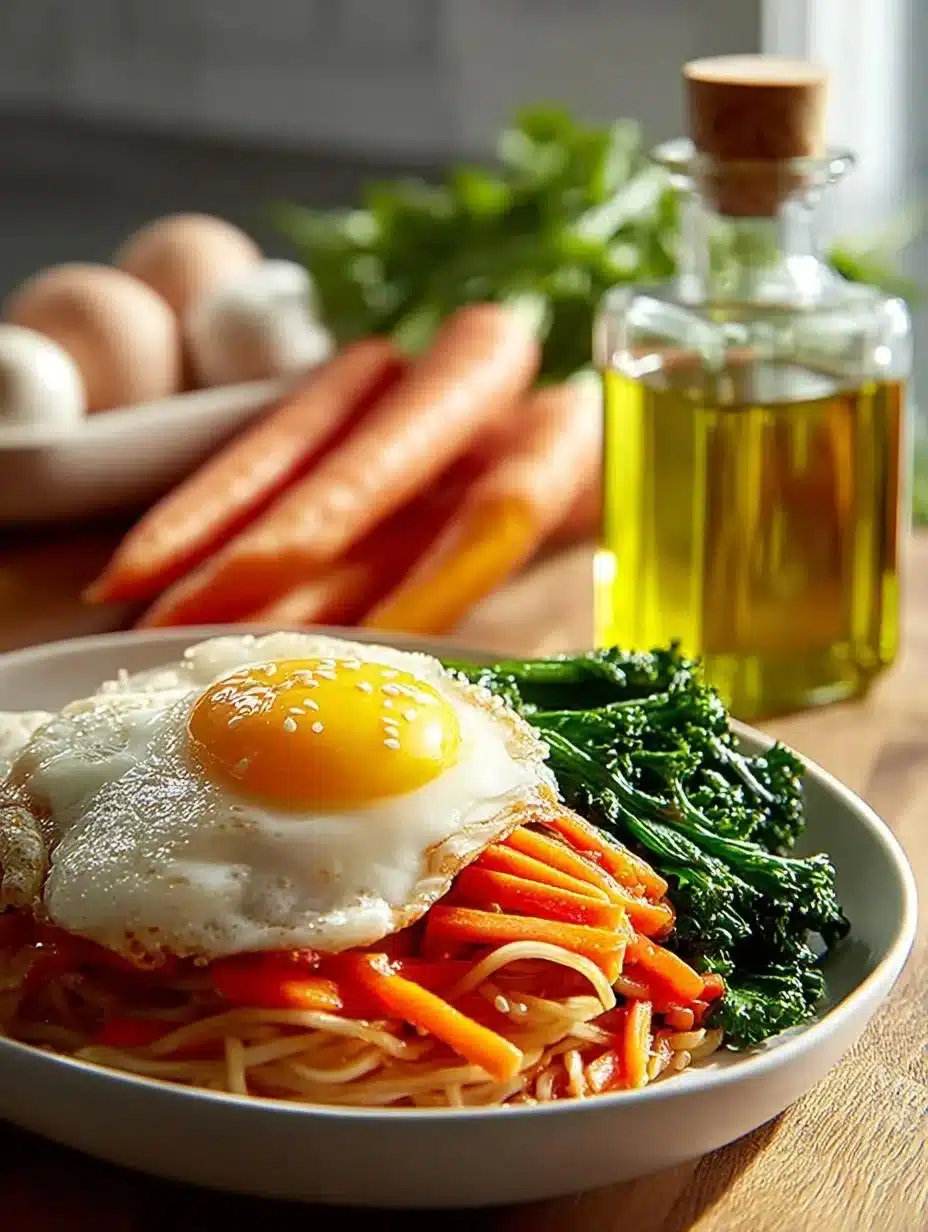
Korean Fried Noodles — Crispy Stir-Fry for Weeknights
Deeply savory, slightly sweet, and irresistibly crisp, Korean fried noodles sizzle with caramelized vegetables and a glossy soy glaze. Korean fried noodles are a fast weeknight answer when you want big flavors with little fuss. After testing this version eight times with fresh and dried noodles, I landed on a technique that gives crunch at the edges and tender noodles inside. I developed the sauce in a busy restaurant kitchen and scaled it down for home cooks. Read on for precise timings, metric and imperial measurements, and pro tips to avoid soggy noodles. Let’s get cooking.
Why This Recipe Works
- High heat sears edges, creating crisp texture while the center stays tender.
- Blanching the noodles then stir-frying removes excess starch and prevents clumping.
- A small amount of sugar balances soy and adds a glossy finish to the sauce.
- Toasting vegetables at the start builds caramelized flavor that lingers in each bite.
- Finishing with a splash of toasted sesame oil adds aroma and depth.
Ingredients Breakdown
- Noodles: 200 g (7 oz) dried wheat egg noodles or fresh chow mein noodles — they give chew and crisp when pan-fried. If using glass noodles (sweet potato starch), see variations.
- Oil: 60 ml (4 tbsp) neutral oil, divided — use canola or grapeseed for high-heat frying.
- Protein: 300 g (10.5 oz) thinly sliced beef (ribeye or flank), chicken, or tofu — slices cook quickly and carry sauce.
- Vegetables: 1 medium onion, 1 carrot, 1 bell pepper, 150 g (5 oz) napa cabbage or bok choy — they add sweetness and texture.
- Aromatics: 3 garlic cloves (minced), 30 g (2 tbsp) green onions (sliced).
- Sauce: 45 ml (3 tbsp) low-sodium soy sauce, 15 ml (1 tbsp) mirin or dry sherry, 15 g (1 tbsp) brown sugar, 15 ml (1 tbsp) rice vinegar, 10 ml (2 tsp) gochujang or 1 tsp chili paste (optional for heat).
- Seasoning: 2 g (½ tsp) Diamond Crystal kosher salt or ¼ tsp Morton’s (if using Morton’s, halve quantities).
- Garnish: 10 g (1 tbsp) toasted sesame seeds and 10 ml (2 tsp) toasted sesame oil.
Substitutions with warnings:
- Swap gluten-free noodles: Use glass or rice noodles, but frying times and texture will change.
- Tofu instead of meat: Press extra-firm tofu and pan-fry until golden; it soaks sauce differently.
- Mirin substitute: Use a mix of 1 tbsp dry sherry + ½ tsp sugar; flavor will be slightly less sweet.
Essential Equipment
- Large wok or heavy-bottomed skillet (12-inch / 30 cm) — wide surface lets liquid evaporate and noodles crisp.
- Large pot for blanching — enough water so noodles move freely.
- Spider or slotted spoon — for lifting noodles from water.
- Chef’s knife and cutting board.
- Tongs or chopsticks — for tossing noodles in the pan.
- Mixing bowl for sauce.
If you lack a wok, use the largest skillet you own. A cast-iron skillet is an excellent substitute.
Step-by-Step Instructions
Makes 4 servings. Prep 20 minutes, Cook 15 minutes, Total 35 minutes, Inactive time none.
Step 1: Prepare the Ingredients
Cut 1 medium onion into thin wedges, slice 1 carrot into matchsticks, core and slice 1 bell pepper, and chop 150 g (5 oz) napa cabbage or bok choy into 2–3 cm pieces. Slice 300 g (10.5 oz) beef thinly across the grain, or press and cube firm tofu. Mince 3 garlic cloves and slice 30 g (2 tbsp) green onions. This prep keeps the cook step fast.
Step 2: Make the Sauce
Whisk together 45 ml (3 tbsp) low-sodium soy sauce, 15 ml (1 tbsp) mirin, 15 g (1 tbsp) brown sugar, 15 ml (1 tbsp) rice vinegar, and 10 ml (2 tsp) gochujang if using. Taste for balance: it should be savory with a hint of sweetness. Set aside in a small bowl. Having the sauce ready prevents overcooking.
Step 3: Blanch the Noodles
Bring a large pot of water to a rolling boil and add 200 g (7 oz) dried wheat egg noodles. Cook 1–2 minutes less than package directions for al dente, about 3–4 minutes for many dried egg noodles. Drain and rinse under cold water to stop cooking. Toss with 10 ml (2 tsp) neutral oil to prevent sticking. Do not overcook — soft noodles won’t crisp.
Step 4: Sear the Protein
Heat 30 ml (2 tbsp) oil in the wok over high heat until it just smokes. Add the beef in a single layer and sear 60–90 seconds per side until browned but not fully cooked through. Remove and rest. For tofu, fry until deeply golden, 3–4 minutes per side. High heat locks in flavor.
Step 5: Caramelize the Vegetables
Add remaining 30 ml (2 tbsp) oil to the hot wok. Add onions and carrots and stir-fry 2–3 minutes until edges brown. Add bell pepper and cabbage and cook 1–2 more minutes until vegetables are tender-crisp. Add garlic and cook 20–30 seconds until fragrant. Stirring constantly avoids burning.
Step 6: Fry the Noodles
Push vegetables to the side. Add blanched noodles and spread them across the pan. Let sit undisturbed 1–2 minutes to form a crisp bottom, then toss and repeat once more for additional crisp patches, about 4–5 minutes total. Use tongs to flip portions and create charred edges. This step creates texture contrast.
Step 7: Combine and Finish
Return seared protein to the wok. Pour the sauce evenly and toss for 60–90 seconds until sauce coats everything and thickens slightly. Finish with 10 ml (2 tsp) toasted sesame oil and 10 g (1 tbsp) toasted sesame seeds. Taste and adjust salt if needed. Serve immediately.
Expert Tips & Pro Techniques
- Common mistake: overcrowding the pan lowers temperature and steams the noodles. Cook in batches if needed.
- Blanching timing: undercook noodles by 1–2 minutes so they firm up during frying.
- For extra crispiness: after blanching, spread noodles on a tray and chill uncovered for 10 minutes to dry surface moisture.
- Make-ahead: Prepare the sauce and slice vegetables up to 24 hours ahead. Store separately in airtight containers.
- Professional technique for home cooks: use a two-zone heat method — sear protein on high, then push to a cooler side to finish while vegetables cook. This keeps the wok hot enough to crisp noodles.
- Control sodium: use low-sodium soy sauce and adjust at the end; flavors concentrate while frying.
Storage & Reheating
- Refrigerator: Cool to room temperature and store in an airtight container for up to 3 days. Reheat within 72 hours.
- Freezer: Not recommended. Fried noodles lose crispness and become mushy after freezing and thawing.
- Reheating: Reheat in a hot skillet with 1 tsp oil over medium-high heat for 3–5 minutes, stirring to refresh crisp edges. Avoid microwaving — it makes the noodles soggy.
Variations & Substitutions
- Vegetarian: Replace meat with 350 g (12 oz) firm tofu, pressed and pan-fried. Sauce and times stay the same.
- Glass Noodle (Japchae-style): Use 200 g (7 oz) sweet potato glass noodles. Soak or boil per package, then stir-fry with the same sauce but reduce crisping time; glass noodles won’t get crispy.
- Spicy version: Add 10–15 ml (2–3 tsp) gochujang to the sauce and a pinch of chili flakes. Keep all other amounts unchanged.
- Low-sodium: Use low-sodium soy and omit added salt; add a squeeze of lime at the end to brighten.
- Seafood: Swap protein for 300 g (10.5 oz) shrimp, cooking 2 minutes per side until opaque.
Serving Suggestions & Pairings
- Garnish with extra sliced green onions and toasted sesame seeds for texture.
- Pair with a crisp cucumber salad or quick kimchi for acid and crunch.
- Serve alongside steamed rice and a light soup for a fuller meal.
- Pair with a cold lager or a jasmine tea to cut through the richness. Try pairing with our Garlic Roasted Potatoes for a heartier spread.
Nutrition Information
Serving size: about 1 plate (serves 4). Nutrition estimates per serving:
- Calories: 520 kcal
- Total Fat: 22 g
- Saturated Fat: 5 g
- Cholesterol: 60 mg (if using beef)
- Sodium: 820 mg
- Total Carbohydrates: 58 g
- Dietary Fiber: 4 g
- Sugars: 10 g
- Protein: 22 g
Nutrition values are estimates. Actual values may vary based on specific ingredients and preparation methods.
Frequently Asked Questions
Q: Why did my noodles turn out soggy instead of crispy?
A: Most often you blanched them too long or you overcrowded the pan. Undercook noodles slightly and fry in a very hot, wide pan in batches.
Q: Can I make this without eggs or egg noodles?
A: Yes. Use rice or glass noodles. Note: they absorb sauce differently and will not crisp the same way.
Q: Can I double this recipe for a crowd?
A: You can, but cook in batches. Doubling in one pan cools the surface and causes steaming rather than frying.
Q: Can I prepare this the night before?
A: You can slice vegetables and mix the sauce up to 24 hours ahead. Blanched noodles should be cooked and stored separately to avoid sticking.
Q: How long does this keep in the fridge?
A: Store in an airtight container for up to 3 days. Reheat in a hot skillet for best texture.
Q: Is there a gluten-free option?
A: Use gluten-free tamari and rice or glass noodles. Texture and crisping change, so adjust expectations.
Q: What protein works best for quick cooking?
A: Thinly sliced beef or pork cooks fastest. Shrimp also cooks quickly. For tofu, press well and fry until golden.
Conclusion
For a classic noodle stir-fry with crisp edges and glossy sauce, this Korean fried noodles method balances speed and texture. If you want to explore the glass-noodle cousin of this dish, try an Authentic Japchae Recipe: Korean Glass Noodle Stir Fry for a softer, glossy noodle experience. For another trusted take on japchae and tips on handling glass noodles, see Japchae – Korean noodles – RecipeTin Eats.
Print
Korean Fried Noodles
- Total Time: 35 minutes
- Yield: 4 servings 1x
- Diet: Non-Vegetarian
Description
Crispy stir-fried noodles with caramelized vegetables and a glossy soy glaze, perfect for quick weeknight dinners.
Ingredients
- 200 g (7 oz) dried wheat egg noodles or fresh chow mein noodles
- 60 ml (4 tbsp) neutral oil, divided
- 300 g (10.5 oz) thinly sliced beef, chicken, or tofu
- 1 medium onion, cut into thin wedges
- 1 carrot, sliced into matchsticks
- 1 bell pepper, cored and sliced
- 150 g (5 oz) napa cabbage or bok choy, chopped
- 3 garlic cloves, minced
- 30 g (2 tbsp) green onions, sliced
- 45 ml (3 tbsp) low-sodium soy sauce
- 15 ml (1 tbsp) mirin or dry sherry
- 15 g (1 tbsp) brown sugar
- 15 ml (1 tbsp) rice vinegar
- 10 ml (2 tsp) gochujang or 1 tsp chili paste (optional)
- 2 g (½ tsp) Diamond Crystal kosher salt
- 10 g (1 tbsp) toasted sesame seeds
- 10 ml (2 tsp) toasted sesame oil
Instructions
- Prepare the ingredients by cutting onion, carrot, bell pepper, and chopping napa cabbage. Slice beef or press tofu.
- Make the sauce by whisking together soy sauce, mirin, brown sugar, rice vinegar, and gochujang.
- Blanch the noodles in boiling water for 3–4 minutes, then rinse and toss with oil.
- Sear the protein in high heat oil for 60–90 seconds until browned, then set aside.
- Caramelize the vegetables in the hot wok for 2–3 minutes, then add garlic.
- Fry the noodles by adding them to the wok and letting them sit undisturbed to crisp, tossing occasionally.
- Combine the protein and sauce with the noodles, tossing for 60–90 seconds until coated.
Notes
For extra crispiness, chill blanched noodles uncovered for 10 minutes before frying. Cook in batches if necessary to avoid overcrowding.
- Prep Time: 20 minutes
- Cook Time: 15 minutes
- Category: Main Course
- Method: Stir-Frying
- Cuisine: Korean
Nutrition
- Serving Size: 1 serving
- Calories: 520
- Sugar: 10g
- Sodium: 820mg
- Fat: 22g
- Saturated Fat: 5g
- Unsaturated Fat: 15g
- Trans Fat: 0g
- Carbohydrates: 58g
- Fiber: 4g
- Protein: 22g
- Cholesterol: 60mg