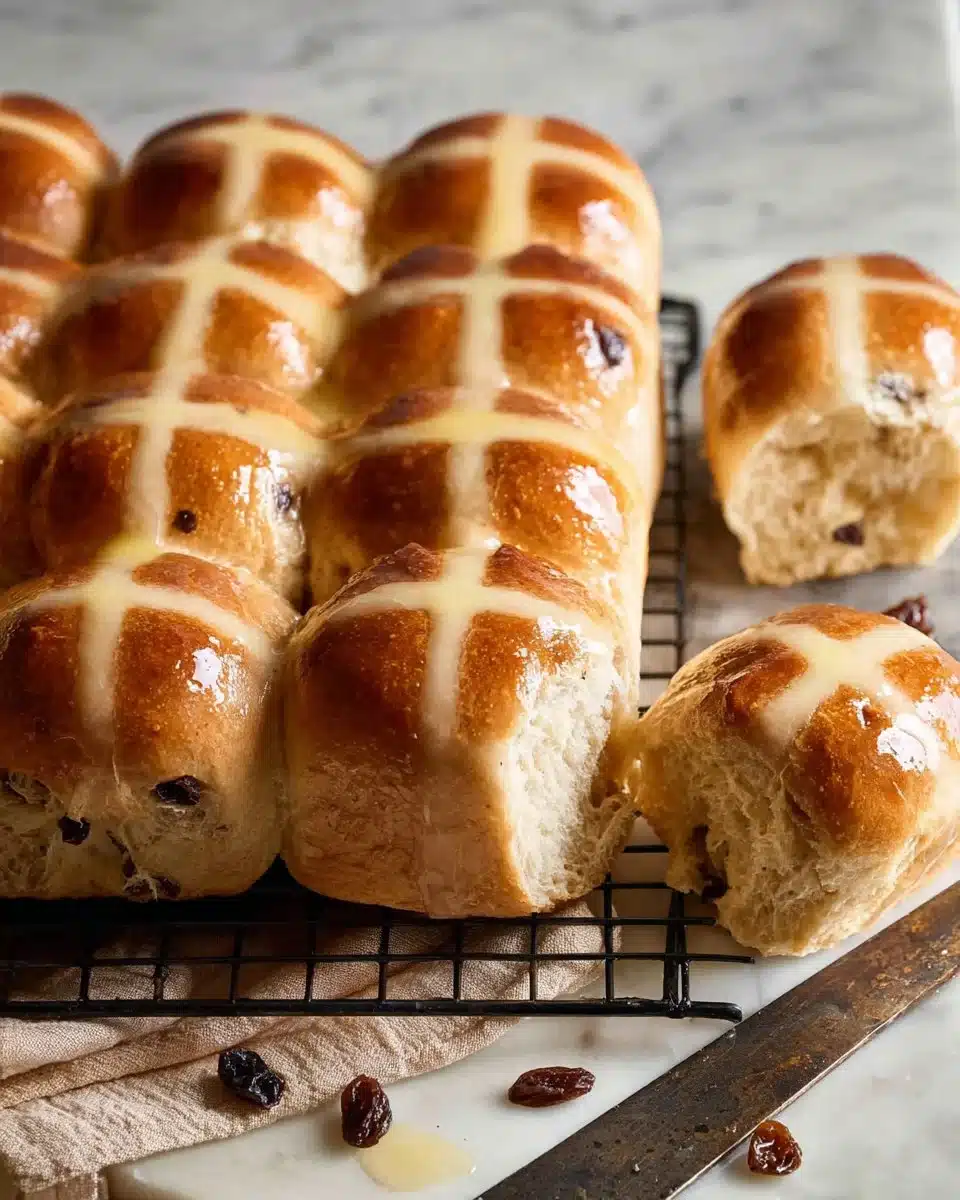
Hot Cross Buns Recipe — Soft Spiced Easter Buns
Warm, fragrant buns spiced with cinnamon and studded with currants fill the kitchen with a holiday scent. Hot cross buns are lightly sweet, tender, and flecked with orange zest for brightness. After testing this recipe eight times with different flours and rises, I settled on a method that balances chew, crumb, and spice. I refined the dough while working in a small bakery, where timing and texture mattered every morning. This version uses a short, controlled fermentation and a soft cross paste so you get classic flavor and a neat finish. Read on for the full recipe, precise timings, and pro tips to get bakery-style buns at home.
Why This Recipe Works
- A short first rise at a moderate temperature builds strength without overproofing, so buns hold shape while staying soft.
- Bread flour (or high-protein all-purpose) gives chew and structure, while milk and butter tenderize the crumb.
- Orange zest and mixed spice lift the currants and keep the flavor bright and balanced.
- The flour-and-water cross paste bakes to a neat, raised line that won’t sink into a soft top.
- A thin apricot jam glaze adds shine and a touch of fruit sweetness without making the crust sticky.
Ingredients Breakdown
- 500 g (4 cups) bread flour or strong all-purpose flour — Provides structure and chew. Substituting all-purpose is fine; buns will be slightly less chewy.
- 50 g (1/4 cup) caster (superfine) sugar — Sweetens evenly. Using granulated sugar works; if using coarse sugar, dissolve it in warm milk.
- 7 g (2 1/4 tsp) instant yeast — Fast, reliable rise. If using active dry yeast, proof it in the warm milk first (see steps).
- 10 g (2 tsp) fine sea salt — Balances sweetness. Do not skip; it controls yeast activity and flavor.
- 2 tsp ground cinnamon + 1/2 tsp ground mixed spice + 1/4 tsp grated nutmeg — Spicing gives the characteristic warmth. Adjust but keep balance.
- 150 g (1 cup) currants or raisins — Tradition calls for currants; use raisins or sultanas if preferred. If using dried cherries, reduce sugar slightly.
- 250 ml (1 cup) whole milk, warmed to 38–43°C (100–110°F) — Adds tenderness and a richer crumb. For dairy-free, swap with unsweetened almond milk; results are slightly less rich.
- 50 g (3 tbsp + 1 tsp) unsalted butter, melted and cooled — Folds into the dough to soften the crumb. Using salted butter requires reducing added salt.
- 1 large egg (50 g), room temperature — Enriches the dough and helps browning.
- Zest of 1 orange — Brightens the dough. Lemon works too, but orange is classic.
- For the crosses: 75 g (1/2 cup) plain/all-purpose flour + 60 ml (1/4 cup) water — Mix to a thick paste. Do not make it too runny or the cross will spread.
- For the glaze: 50 g (1/4 cup) apricot jam + 1 tbsp water, warmed and strained — Brushed on hot buns for shine.
Substitution notes:
- You can replace currants with 150 g (1 cup) chopped mixed dried fruit; expect a moister crumb.
- Use Diamond Crystal kosher salt if you prefer; if using Morton, keep the 10 g amount as written — this recipe was tested to that scale.
Essential Equipment
- Stand mixer with dough hook or a sturdy bowl for hand kneading.
- Kitchen scale — Weighing flour gives consistent results.
- 20–23 cm (8–9 inch) square baking tray or a large shallow roasting pan — Allows even spacing for 12 buns.
- Bench scraper or sharp knife for dividing dough.
- Thermometer for milk and oven (helpful for consistency).
- Pastry brush for glaze.
- If you lack a mixer: knead by hand for 10–12 minutes using the slap-and-fold or push-fold method.
Step-by-Step Instructions
Prep Time: 30 minutes — Cook Time: 18–20 minutes — Inactive Time: 1 hour 30 minutes (rising) — Total Time: 1 hour 58 minutes — Servings: 12 buns (1 bun each)
Step 1: Warm the milk and bloom the yeast
Warm 250 ml (1 cup) whole milk to 38–43°C (100–110°F). Add 7 g (2 1/4 tsp) instant yeast and 1 tsp of the sugar if using active dry yeast; let sit 5–10 minutes until foamy. With instant yeast, mix directly into the dry ingredients. This step takes 5–10 minutes.
Step 2: Combine dry ingredients
Whisk 500 g (4 cups) bread flour, 50 g (1/4 cup) caster sugar, 10 g (2 tsp) salt, 2 tsp ground cinnamon, 1/2 tsp mixed spice, and 1/4 tsp nutmeg in a large bowl. Stir in 150 g (1 cup) currants so they coat with flour and won’t sink. This takes about 2 minutes.
Step 3: Mix the dough
In a mixer bowl, beat the flour mixture with the warmed milk, 50 g (3 tbsp + 1 tsp) melted butter, 1 large egg (50 g), and orange zest until a shaggy dough forms. Knead on medium for 5–7 minutes until smooth and slightly tacky. By hand, knead 8–10 minutes. Do not add extra flour unless the dough is sticky and unmanageable. Kneading takes 5–10 minutes.
Step 4: First rise
Place the dough in a lightly oiled bowl, cover, and let rise in a warm spot until doubled, about 60–75 minutes at 24°C (75°F). A gently pressed finger should leave a slight indent. This inactive time is about 1 hour 15 minutes.
Step 5: Shape the buns
Turn out the dough onto a lightly floured surface. Divide into 12 equal pieces, about 70–75 g (2.5 oz) each. Shape each piece into a tight ball by stretching the surface and pinching the seam. Place in the prepared 20–23 cm (8–9 inch) baking tray, spaced evenly. This step takes 10–12 minutes.
Step 6: Second rise
Cover loosely and let the buns rise until puffy and almost doubled, about 30–40 minutes. They should hold an imprint when gently touched but still spring back slightly. This second rise is 30–40 minutes.
Step 7: Pipe the crosses
Mix 75 g (1/2 cup) plain flour with 60 ml (1/4 cup) water to a thick pipeable paste. Transfer to a piping bag or zip-top bag with the corner snipped. Pipe a cross on each bun. Aim for even pressure so lines are consistent. This takes 5–8 minutes.
Step 8: Bake
Preheat oven to 190°C (375°F). Bake the buns for 18–20 minutes until golden brown and the internal temperature reaches 88–93°C (190–200°F). Rotate once halfway if your oven has hot spots. Baking takes 18–20 minutes.
Step 9: Glaze and cool
Warm 50 g (1/4 cup) apricot jam with 1 tbsp water and strain. Brush the hot buns right away for shine. Cool on a rack for at least 15 minutes before serving. Glazing and cooling take 10–15 minutes.
Expert Tips & Pro Techniques
- Use a scale. Weighing flour prevents dry, dense buns from over-measuring.
- Common mistake: overproofing the first rise. If the dough doubles too fast, punch it down and refrigerate for 30 minutes before shaping.
- For a softer crumb, replace 50 g (1/3 cup) flour with 50 g (1/3 cup) cake flour. Expect slightly less chew.
- Make-ahead: After shaping, freeze the tray (unbaked) for up to 1 month. Thaw in the fridge overnight, then allow the second rise room temperature for 45–60 minutes before piping crosses and baking.
- Professional technique for home: For a glossy, deeper-colored crust, brush the buns with a lightly beaten egg yolk mixed with 1 tsp water before piping crosses. Do not overbrush — the cross paste needs to adhere.
- Mistake avoidance: When piping crosses, keep the paste slightly thick. Too runny and the cross will spread; too stiff and it will crack while baking.
- Extra flavor: Toast the currants briefly in a dry pan for 1–2 minutes to awaken oils, then cool before adding.
Storage & Reheating
- Refrigerator: Store cooled buns in an airtight container or resealable bag for up to 3 days. Bring to room temperature or reheat before serving.
- Freezer: Buns freeze well. Wrap cooled buns individually in plastic wrap and place in a freezer bag for up to 3 months. To thaw, transfer to the fridge overnight or leave at room temperature for 2–3 hours.
- Reheating: Reheat in a 175°C (350°F) oven for 8–10 minutes from room temperature. For frozen buns, bake from frozen at 175°C (350°F) for 12–15 minutes. Avoid microwaving — it makes the crumb gummy.
Variations & Substitutions
- Gluten-Free Version: Replace 500 g flour with a 1:1 gluten-free flour blend (500 g), add 1/2 tsp xanthan gum if not included. Dough will be stickier; chill for 15 minutes before shaping. Increase baking time by 4–6 minutes.
- Less Sweet / Brunch Version: Reduce sugar to 35 g (2 1/2 tbsp). Keep everything else the same; buns will be subtly sweet and pair well with savory toppings.
- Citrus & Cherry: Replace currants with 150 g (1 cup) chopped dried cherries and add zest of 1 lemon. No other change necessary.
- Vegan Adaptation: Use plant milk (unsweetened soy or oat) and 60 g (1/4 cup) neutral oil instead of butter. Replace the egg with a flax egg (1 tbsp ground flax + 3 tbsp water, rested 10 minutes). Texture is slightly denser; bake 2–3 minutes longer.
Serving Suggestions & Pairings
- Serve warm split and buttered with a pot of strong tea or coffee.
- For a festive brunch, pair with scrambled eggs and smoked salmon for contrast.
- Garnish with a thin orange zest twist or a dusting of fine sugar.
- Pair with [our cinnamon-spiced hot chocolate recipe] for a seasonal treat.
Nutrition Information
Per serving (1 bun). Servings: 12.
- Serving size: 1 bun
- Calories: 220 kcal
- Total Fat: 6 g
- Saturated Fat: 3 g
- Cholesterol: 35 mg
- Sodium: 220 mg
- Total Carbohydrates: 35 g
- Dietary Fiber: 1.5 g
- Sugars: 12 g
- Protein: 5 g
Nutrition values are estimates. Actual values may vary based on specific ingredients and preparation methods.
Frequently Asked Questions
Q: Why did my hot cross buns turn out dry?
A: Dry buns usually mean too much flour or overbaking. Use a scale for flour and bake until golden, not deeply browned. Check at 18 minutes and remove when the internal temperature hits about 88–93°C (190–200°F).
Q: Can I make these without eggs?
A: Yes. Replace the egg with a flax egg (1 tbsp ground flax + 3 tbsp water, rested 10 minutes) or 60 g (1/4 cup) applesauce. Texture will be slightly denser and browning reduced.
Q: Can I double this recipe?
A: Yes. Double all ingredients and mix in a larger bowl or two batches. Allow a slightly longer first rise (10–15 minutes) because a larger mass holds coldness. Work in two trays for even baking.
Q: Can I prepare these the night before?
A: Yes. After shaping, cover the tray tightly and refrigerate overnight. In the morning, allow the buns to come to room temperature and finish the second rise (30–60 minutes). Pipe crosses and bake.
Q: How long do hot cross buns keep in the fridge?
A: Stored in an airtight container, they keep 2–3 days in the fridge. For longer storage, freeze for up to 3 months.
Q: Why did my cross paste sink or smear?
A: The paste was likely too runny or the buns were underproofed. Make the paste thick enough to hold its shape. Ensure the second rise is complete and the surface is not overly sticky before piping.
Q: Can I replace currants with chocolate chips?
A: Yes. Swap 150 g (1 cup) currants for 150 g (1 cup) chocolate chips. Reduce the sugar by 10–15 g if you prefer less sweetness. Baking time remains the same.
Conclusion
If you want to compare techniques or try other tested recipes, see this clear, step-by-step version at Hot Cross Buns Recipe – RecipeTin Eats. For a traditional walkthrough with historical notes, read the detailed guide at How to Make Traditional Hot Cross Buns – Culinary Ginger.
Enjoy warm buns with butter or jam. Share extras — they taste best fresh.
Print
Hot Cross Buns
- Total Time: 118 minutes
- Yield: 12 buns 1x
- Diet: Vegetarian
Description
Warm, fragrant buns spiced with cinnamon and studded with currants, perfect for Easter celebrations.
Ingredients
- 500 g (4 cups) bread flour or strong all-purpose flour
- 50 g (1/4 cup) caster sugar
- 7 g (2 1/4 tsp) instant yeast
- 10 g (2 tsp) fine sea salt
- 2 tsp ground cinnamon
- 1/2 tsp ground mixed spice
- 1/4 tsp grated nutmeg
- 150 g (1 cup) currants or raisins
- 250 ml (1 cup) whole milk, warmed
- 50 g (3 tbsp + 1 tsp) unsalted butter, melted and cooled
- 1 large egg
- Zest of 1 orange
- 75 g (1/2 cup) plain flour for crosses
- 60 ml (1/4 cup) water for crosses
- 50 g (1/4 cup) apricot jam for glaze
- 1 tbsp water for glaze
Instructions
- Warm the milk and bloom the yeast by adding it to 38–43°C (100–110°F) milk. Let sit until foamy.
- Combine dry ingredients including flour, sugar, salt, spices, and currants.
- Mix the dough in a mixer bowl with the dry ingredients until shaggy.
- Place the dough in a lightly oiled bowl, cover, and let rise until doubled for about 60–75 minutes.
- Turn out the dough onto a floured surface and divide into 12 pieces, shaping into tight balls.
- Cover the shaped buns and let rise until puffy, about 30–40 minutes.
- Mix flour and water to create a cross paste and pipe onto buns.
- Preheat the oven to 190°C (375°F) and bake for 18–20 minutes until golden.
- Brush the buns with apricot jam for shine and cool on a rack before serving.
Notes
Use a kitchen scale for the best results in measuring flour.
- Prep Time: 30 minutes
- Cook Time: 20 minutes
- Category: Baked Goods
- Method: Baking
- Cuisine: British
Nutrition
- Serving Size: 1 bun
- Calories: 220
- Sugar: 12g
- Sodium: 220mg
- Fat: 6g
- Saturated Fat: 3g
- Unsaturated Fat: 2g
- Trans Fat: 0g
- Carbohydrates: 35g
- Fiber: 1.5g
- Protein: 5g
- Cholesterol: 35mg