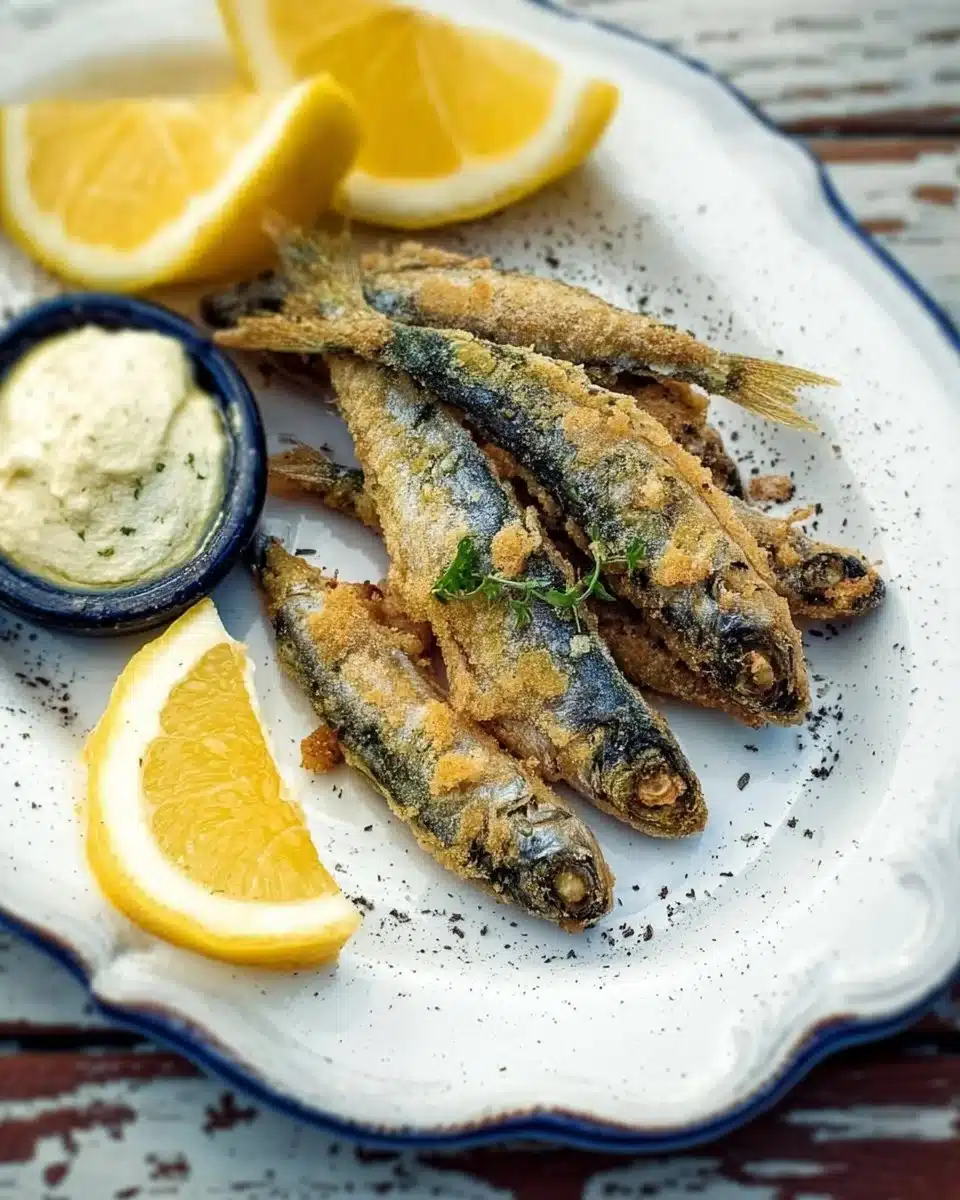
Crispy Spanish Fried Sardines — Quick 20‑Minute Recipe
The first bite should crack with a thin, golden crust and release the bright, ocean flavor of sardines. Spanish-style fried sardines are all about contrast: crunchy rebozado (a light batter) and tender, oily fish. Spanish coastal cooks have been frying small whole sardines for generations because the method is fast, cheap, and deeply satisfying. After testing this version eight times with different flours and oil temperatures, I settled on a simple semolina-flour batter for the best crunch without weighing the fish down. This is the recipe I perfected while cooking tapas service in a Barcelona-style kitchen; it’s easy enough for weeknights and showy enough for guests. Read on for the exact technique, timing, and pro tips to get reliably crisp, flavorful sardines every time.
Why This Recipe Works
- The thin semolina-and-flour rebozado creates a sturdy, crackly crust that resists oil absorption.
- Salted and briefly dried sardines crisp faster and stay juicy because surface moisture evaporates quickly.
- Frying at 180°C (350°F) cooks the fish through before the coating overbrowns.
- A short rest after salting lets the flesh tighten slightly, improving texture and handling.
- Bright acid (lemon) added after frying cuts the oiliness and lifts flavors.
Ingredients Breakdown
- Fresh small sardines, whole (about 400 g / 14 oz total). Choose firm fish with bright eyes and silver skin. Gutting and leaving heads on is traditional; see variations if you prefer fillets.
- Dry coating: 100 g (3/4 cup + 2 tbsp) semolina flour and 50 g (1/3 cup) all-purpose flour. Semolina gives grit and crispness; all-purpose lightens the crust. Do not swap all semolina unless you want a very coarse bite.
- Salt: 1½ tsp Diamond Crystal kosher salt (if using Morton’s, use 1 tsp). Salt draws moisture and seasons the fish.
- Black pepper: 1/4 tsp freshly ground.
- Lemon: 1 medium lemon, cut into wedges for finishing. Acidity brightens the oily fish.
- Extra-virgin olive oil or a neutral oil for serving drizzle (optional). Use olive oil for flavor, neutral oil if you want maximum crispness during frying.
- Frying oil: 1 L (4 cups) sunflower, canola, or peanut oil. These have high smoke points. Olive oil alone can burn in deep-frying.
- Optional: 1 garlic clove, thinly sliced, and 1 small handful of chopped parsley for garnish.
Substitutions with impact warnings:
- Gluten-free: Use 150 g (1 cup + 2 tbsp) rice flour + 25 g (2 tbsp) cornstarch; crust will be lighter but less crunchy.
- No semolina: All-purpose flour works but yields a softer crust.
- Frozen sardines: Thaw fully, pat dry, and proceed; texture is slightly softer than fresh.
Essential Equipment
- Medium heavy-bottomed saucepan or deep-fryer that holds 1 L (4 cups) oil safely.
- Candy/deep-fry thermometer clipped to the pot for accurate 180°C (350°F) readings. Critical for even cooking.
- Wire rack set over a baking sheet to drain fried sardines (not paper towels — they trap steam and soften the crust).
- Tongs or a spider/skimmer for safe fish transfer.
- Large shallow tray or rimmed baking sheet for dredging.
If you don’t have a thermometer, heat oil until a small pinch of flour sizzles and rises steadily; aim for adjustments so food cooks in 2–3 minutes.
Step-by-Step Instructions
This recipe makes 4 servings; Prep time 15 minutes; Cook time 10 minutes; Total time 25 minutes; Inactive time none.
Step 1: Clean and dry the sardines
Rinse 400 g (14 oz) whole sardines under cold water and pat each dry with paper towels. Remove scales if present and, if not already gutted, make a small incision along the belly and remove the innards; rinse again. Drying thoroughly takes 2–3 minutes and is essential to crisp crust.
Step 2: Salt and rest
Season the sardines lightly with 1½ tsp Diamond Crystal kosher salt and 1/4 tsp black pepper. Let them rest on a rack for 10 minutes to firm up and lose excess surface moisture. This short rest improves texture and helps the coating adhere.
Step 3: Mix the dry rebozado
In a wide shallow bowl, whisk 100 g (3/4 cup + 2 tbsp) semolina and 50 g (1/3 cup) all-purpose flour with a pinch more salt. Tossing fish in a dry mix is traditional and keeps the coating very light. The dry mix should be even and free of lumps.
Step 4: Heat the oil
Pour 1 L (4 cups) neutral oil into a heavy pot to a depth of about 6 cm (2½ inches) and heat to 180°C (350°F). This should take 6–8 minutes on medium-high heat. Hold the temperature steady; if it drops too much the crust will absorb oil. Use a thermometer.
Step 5: Dredge and fry in batches
Coat each sardine lightly in the semolina mixture, shaking off excess. Fry in small batches of 6–8 fish for 2–3 minutes per batch, turning once with tongs, until the crust is golden brown and the flesh is opaque, about 63°C (145°F) internal — or until the flesh flakes easily. Do not overcrowd the pot; overcrowding drops oil temperature.
Step 6: Drain and finish
Transfer fried sardines to a wire rack over a baking sheet and immediately season with a pinch of salt. Squeeze fresh lemon over the fish and scatter sliced garlic and parsley if using. Serve hot to preserve the crunch.
Expert Tips & Pro Techniques
- Test oil temperature: Fry one sardine first. If it browns too fast (less than 90 seconds) lower heat; if it stays pale after 3 minutes, raise heat.
- Common mistake: Overcoating. Do not pack on flour — shake off excess. Thick batter traps moisture and makes the crust soggy.
- Use a wire rack to rest fried sardines; paper towels will steam the crust and soften it.
- Make-ahead: Clean and salt the sardines up to 3 hours ahead, keep loosely covered in the fridge on a rack to dry. Dredge and fry just before serving.
- Professional trick for even crisper crust: Add 1 tbsp rice flour to the dry mix — it helps moisture escape and creates tiny bubbles.
- If you must use olive oil for frying, mix 50/50 with a neutral oil to reduce smoking and preserve flavor.
Storage & Reheating
- Refrigerator: Store cooled sardines in an airtight container on a wire rack for up to 2 days. Reheat only once.
- Freezer: Fried sardines are best fresh. You can freeze cooked sardines wrapped tightly for up to 1 month; texture will degrade. To freeze for longer, flash-freeze on a tray then transfer to a sealable freezer bag.
- Reheating: Reheat in a 175°C (350°F) oven for 6–8 minutes on a wire rack to re-crisp. Do not microwave — it will make the crust soggy.
Variations & Substitutions
- Sardine Fillets (no heads): Use 12–16 fillets, reduce frying time to 1½–2 minutes per side. Keep the same coating amounts.
- Gluten-Free: Replace flours with 150 g (1 cup + 2 tbsp) rice flour and add 25 g (2 tbsp) cornstarch; fry at the same temp but watch closely for faster browning.
- Spicy Version: Add 1 tsp smoked paprika and ½ tsp cayenne to the dry mix for smoky heat; the rest of the recipe stays the same.
- Mediterranean Herb: Mix 2 tbsp finely chopped oregano and parsley into the flour for an herby crust; garnish with lemon and extra herbs.
Serving Suggestions & Pairings
- Serve with lemon wedges, a simple garlic aioli, and crusty bread.
- Try alongside roasted peppers and olives for a tapas spread. [Pair with our Garlic Roasted Potatoes] for a heartier plate.
- Beverage pairings: crisp dry rosado or a light lager; both cut through the oil and refresh the palate.
- Garnish with chopped parsley, thin garlic slices, and a drizzle of good extra-virgin olive oil.
Nutrition Information
Serving size: about 100–120 g (6 sardines) — Recipe yields 4 servings.
Per serving (estimates):
- Calories: 320 kcal
- Total Fat: 20 g
- Saturated Fat: 3.5 g
- Cholesterol: 90 mg
- Sodium: 420 mg
- Total Carbohydrates: 8 g
- Dietary Fiber: 0.5 g
- Sugars: 0.5 g
- Protein: 28 g
Nutrition values are estimates. Actual values may vary based on specific ingredients and preparation methods.
Frequently Asked Questions
Q: Why did my sardines turn out soggy instead of crisp?
A: Most likely the oil was too cool or the fish had surface moisture. Dry the sardines thoroughly, salt and rest on a rack, and maintain oil at 180°C (350°F). Also avoid overcrowding the fryer.
Q: Can I make this without eggs?
A: Yes — this recipe uses a dry dredge, so no eggs are needed. If you prefer an egg wash, use 1 beaten egg mixed with 15 ml (1 tbsp) milk, but it will make the coating thicker.
Q: Can I double this recipe?
A: Yes. Fry in small batches and do not crowd the pot. You may need more oil and should maintain 180°C (350°F) between batches for consistent results.
Q: Can I prepare this the night before?
A: You can clean and salt the sardines the night before and keep them on a rack in the fridge. Dredge and fry right before serving for best crunch.
Q: How long does this keep in the fridge?
A: Store in an airtight container and consume within 2 days for best texture. Re-crisp in a 175°C (350°F) oven for 6–8 minutes before serving.
Q: Are whole sardines safe to eat? What about bones?
A: Small sardines have very soft bones that become tender when cooked. If you prefer, use fillets to avoid bones.
Q: What oil is best for frying sardines?
A: Neutral oils with high smoke points like sunflower, canola, or peanut are ideal. Olive oil adds flavor but can smoke at high temperatures; mix it 50/50 with neutral oil if you want olive flavor.
Conclusion
These fried sardines are a simple, authentic way to enjoy small fresh fish with minimal fuss. For background on classic pairings, see Rosado and Sardines – A Perfect Match. For a traditional Spanish take and historical notes on the rebozado technique, check Sardinas Rebozadas.
Print
Crispy Spanish Fried Sardines
- Total Time: 25 minutes
- Yield: 4 servings 1x
- Diet: Pescatarian
Description
Enjoy the authentic taste of Spanish-style fried sardines with a crispy semolina batter, perfect for any occasion.
Ingredients
- 400 g (14 oz) fresh small whole sardines
- 100 g (3/4 cup + 2 tbsp) semolina flour
- 50 g (1/3 cup) all-purpose flour
- 1½ tsp Diamond Crystal kosher salt
- 1/4 tsp freshly ground black pepper
- 1 medium lemon, cut into wedges
- Extra-virgin olive oil or neutral oil for serving drizzle (optional)
- 1 L (4 cups) sunflower, canola, or peanut oil for frying
- 1 garlic clove, thinly sliced (optional)
- 1 small handful of chopped parsley for garnish (optional)
Instructions
- Clean and pat dry the sardines. Remove scales and innards if necessary.
- Season with salt and pepper, then let rest on a rack for 10 minutes.
- In a bowl, whisk semolina and all-purpose flour together with a pinch of salt.
- Heat 1 L of oil in a heavy pot to 180°C (350°F).
- Dredge sardines in the flour mixture and fry in small batches for 2-3 minutes until golden brown.
- Transfer to a wire rack, season with a pinch of salt, and finish with lemon juice, garlic, and parsley if desired.
Notes
Ensure the oil is at the correct temperature for a crispy coating. Avoid overcrowding the frying pot.
- Prep Time: 15 minutes
- Cook Time: 10 minutes
- Category: Main Course
- Method: Frying
- Cuisine: Spanish
Nutrition
- Serving Size: 1 serving
- Calories: 320
- Sugar: 0.5g
- Sodium: 420mg
- Fat: 20g
- Saturated Fat: 3.5g
- Unsaturated Fat: 16.5g
- Trans Fat: 0g
- Carbohydrates: 8g
- Fiber: 0.5g
- Protein: 28g
- Cholesterol: 90mg