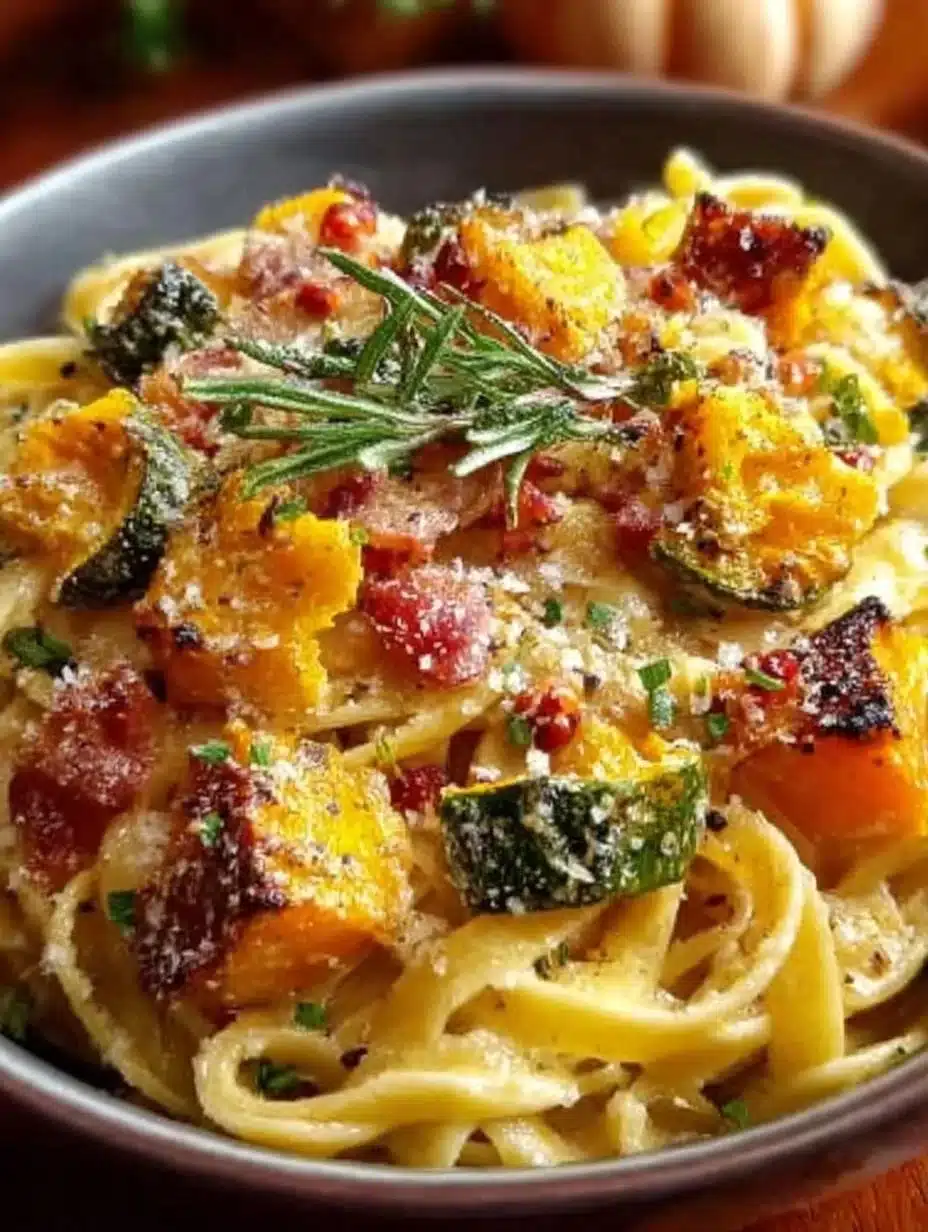
Autumn Sausage Pasta — Cozy Fall Dinner Recipe
The first bite is warm butter, caramelized squash, and a rush of herby sausage—this dish tastes like the season. Autumn Sausage Pasta balances sweet roasted squash with savory browned sausage and a silky pan sauce that clings to short pasta. I developed and tested this version eight times in a small test kitchen to nail the roast time, sausage-to-pasta ratio, and the final seasoning. The result is fast enough for weeknights yet layered and special enough for guests. Read on for step-by-step instructions, pro tips, and make-ahead ideas so your first run is your best run.
Why This Recipe Works
- Roasting squash concentrates sweetness and gives caramelized edges that contrast the salty sausage.
- Browning the sausage until bits are crisp adds Maillard flavor that flavors the whole sauce.
- Deglazing the pan with a little pasta water and cream creates a silky emulsion that coats each noodle.
- Short ridged pasta (like rigatoni or cavatappi) traps the squash and sausage in every bite.
- A touch of acid (lemon or vinegar) at the end brightens the dish and prevents it from tasting heavy.
Ingredients Breakdown
- Butternut squash (about 600 g / 1.3 lb): Roasted for sweetness and texture. Substitute kabocha or acorn for nuttier flavor; roast time may vary.
- Italian sausage (mild or spicy), casings removed — 450 g (1 lb): Provides fat and savory depth. Use pork or a mix of pork and fennel pork for classic flavor. For turkey sausage, expect a leaner finish and add 1–2 tbsp olive oil.
- Short pasta — 340 g (12 oz) rigatoni, cavatappi, or penne: Ridges hold the sauce. Do not use thin long pasta; the pieces gather the squash better.
- Yellow onion — 1 medium (about 150 g): Builds sweet aromatics. White or shallot works but adjust sweetness.
- Garlic — 3 cloves (9–12 g): Adds savory lift. Mince finely.
- Olive oil — 2 tbsp (30 ml): For roasting and sautéing; neutral oil works too.
- Heavy cream — 120 ml (1/2 cup): Creates a rich, silky sauce. For a lighter version use 240 ml (1 cup) half-and-half but reduce at the end to avoid thinning.
- Chicken or vegetable stock — 120 ml (1/2 cup): Adds depth and helps make a pan sauce.
- Parmesan cheese — 50 g (1/2 cup) grated: Adds umami and salt; reserve some for serving.
- Fresh sage or thyme — 2 tbsp chopped sage or 1 tbsp chopped thyme: Herbaceous note that pairs with squash. Sage can be crisped in browned butter for garnish.
- Lemon — 1 small, zested and juiced (optional): Brightens flavor.
- Salt and black pepper: Adjust to taste. Use Diamond Crystal kosher salt if you prefer lighter measure; if using Morton’s, halve volume.
- Red pepper flakes (optional) — pinch for heat.
Substitutions with impact warnings:
- Swap heavy cream for coconut cream for dairy-free: flavor will shift coconut-forward.
- Use sweet Italian or fennel sausage uninterrupted; swapping for chorizo will change profile dramatically (it’ll be smokier and spicier).
Essential Equipment
- 1 large rimmed baking sheet for roasting squash (not a shallow sheet pan — use edges to prevent squash sliding).
- 1 large skillet (10–12 inch / 25–30 cm) — stainless or cast iron preferred for browning sausage. Nonstick works but won’t give the same fond.
- Pot for pasta with a colander.
- Microplane for zesting lemon and grating Parmesan.
- Tongs and a wooden spoon.
- Optional: ovenproof skillet if you want to transfer from stove to oven for finishing.
If you don’t have a baking sheet with sides, roast squash on a wire rack set over a sheet to allow air circulation. If you don’t have a skillet large enough, brown sausage in batches to avoid steaming.
Step-by-Step Instructions
Time: Prep 15 minutes; Cook 30 minutes; Inactive Time None; Total 45 minutes. Serves 4.
Step 1: Roast the squash
Preheat oven to 220°C (425°F). Peel and cube 600 g (1.3 lb) butternut squash into 2–3 cm (1-inch) pieces. Toss with 1 tbsp (15 ml) olive oil, 1/2 tsp salt, and pepper. Roast on a rimmed sheet for 20–25 minutes, turning once, until edges are golden and tender. Timing cue: squash should be fork-tender and slightly caramelized, about 20–25 minutes.
Step 2: Start the pasta
Bring a large pot of salted water to a boil. Add 340 g (12 oz) short pasta and cook to 1 minute shy of package al dente (usually 9–11 minutes). Reserve 240 ml (1 cup) pasta cooking water, then drain. Timing cue: test at 8 minutes; pasta should be firm but not chalky.
Step 3: Brown the sausage
While pasta cooks, heat a 12-inch (30 cm) skillet over medium-high. Add 1 tbsp (15 ml) olive oil if using lean sausage. Crumble and brown 450 g (1 lb) sausage, cooking 6–8 minutes until bits are deeply browned and crisp in spots. Stir every 30–60 seconds. Do not overcrowd—brown in batches if needed.
Step 4: Sauté aromatics
Push sausage to the pan edge. Add 1 tbsp butter or extra olive oil, then 1 medium (150 g) diced onion. Sauté 4–5 minutes until translucent and fragrant. Add 3 minced garlic cloves and cook 30–45 seconds until aromatic but not burnt.
Step 5: Build the sauce
Pour 120 ml (1/2 cup) stock into the hot pan to deglaze, scraping up browned bits, then add 120 ml (1/2 cup) heavy cream. Stir and bring to a gentle simmer for 2–3 minutes until slightly reduced and silky. Add roasted squash and 50 g (1/2 cup) grated Parmesan. Stir gently to combine. Timing cue: simmer 2–3 minutes until sauce coats the spoon.
Step 6: Finish with pasta and seasoning
Add drained pasta to the skillet with 120–240 ml (1/2–1 cup) reserved pasta water as needed to loosen. Toss 1–2 minutes until pasta is coated and sauce clings. Add 2 tbsp chopped sage or 1 tbsp thyme, lemon zest, and 1 tbsp lemon juice if using. Taste and season with salt and pepper. Serve immediately with extra Parmesan. Sensory cue: sauce should be glossy and cling to pasta; if it’s thin, simmer 1–2 minutes to thicken.
Expert Tips & Pro Techniques
- Crisp bits matter: Brown the sausage well. The crispy browned edges add big flavor—avoid steaming by not crowding the pan.
- Save pasta water: The starchy water helps the cream and Parmesan emulsify into a silky sauce; add slowly to control consistency.
- Common mistake — watery sauce: If your sauce breaks (separates), remove from heat and whisk in 1 tbsp cold butter or 1–2 tbsp reserved pasta water to bring it back together.
- Make-ahead: Roast the squash and brown the sausage up to 48 hours ahead. Store separately in airtight containers. Reheat sausage in a skillet and add squash and sauce components to finish.
- Professional trick for home cooks: Finish the pasta in the skillet with 1–2 minutes of tossing off heat—this lets the starch and fat bind for restaurant-quality coating.
- Extra texture: Crisp a few whole sage leaves in butter for 10–20 seconds until crisp and sprinkle on top for a crunchy, aromatic garnish.
Storage & Reheating
- Refrigerator: Cool to room temperature, then store in airtight containers for up to 3 days. Keep pasta and sauce together; sauce will thicken in the fridge.
- Freezer: This dish freezes okay for up to 2 months. Freeze in portions in freezer-safe containers. Note: texture of squash softens after freezing.
- Thawing & Reheating: Thaw in refrigerator overnight. Reheat gently in a skillet over medium-low with 2–3 tbsp water or stock, stirring until warmed and saucy, 6–8 minutes. For oven reheat, cover and warm at 175°C (350°F) for 10–15 minutes. Avoid straight microwave reheating if possible; it can make the cream separate.
Variations & Substitutions
- Gluten-Free Version: Use 340 g (12 oz) gluten-free short pasta (1:1 cup weight). Add ½ tsp xanthan gum is not needed for pasta but ensure pasta is cooked to slightly firm to avoid falling apart. Cook time may vary.
- Vegetarian Version: Replace sausage with 400 g (14 oz) cremini mushrooms, sliced, and 200 g (7 oz) cooked lentils for protein. Sauté mushrooms until deeply browned (8–10 minutes) to develop savory flavor; increase Parmesan to 75 g (3/4 cup).
- Dairy-Free Version: Swap heavy cream for 240 ml (1 cup) canned coconut cream or a commercial dairy-free creamer. Use nutritional yeast (3 tbsp) for umami instead of Parmesan. Flavor will shift slightly coconut-forward.
- Spicy-Sweet Variation: Use spicy Italian sausage and add 1 tsp maple syrup with the cream for a sweet-savory contrast. Keep lemon minimal.
Serving Suggestions & Pairings
- Green side: Serve with simple arugula salad tossed with lemon, olive oil, and a sprinkle of Parmesan.
- Bread: A warm, crusty baguette or garlic bread to sop up the sauce.
- Wine pairings: Light red like Beaujolais or a medium-bodied Chardonnay.
- Garnishes: Crispy sage leaves, extra grated Parmesan, and a squeeze of lemon.
- Pair with our Garlic Roasted Potatoes for a heartier meal.
Nutrition Information
Serving size: about 1 plate (1 of 4 servings). Estimates per serving:
- Calories: 720 kcal
- Total Fat: 34 g
- Saturated Fat: 13 g
- Cholesterol: 95 mg
- Sodium: 820 mg
- Total Carbohydrates: 68 g
- Dietary Fiber: 6 g
- Sugars: 7 g
- Protein: 30 g
Nutrition values are estimates. Actual values may vary based on specific ingredients and preparation methods.
Frequently Asked Questions
Q: Why did my pasta turn out dry?
A: Dry pasta usually means too little sauce or that the pasta sat too long. Reserve pasta water and finish the pasta in the pan with the sauce for 1–2 minutes so starch and fat bind.
Q: Can I make this without eggs (or dairy)?
A: Yes. Use dairy-free cream (coconut cream or a plant-based creamer) and nutritional yeast for an umami boost. No eggs are used in this recipe.
Q: Can I double this recipe?
A: Yes, you can double it. Brown sausage in batches to avoid crowding. Use a larger pan or two pans and increase roast sheet space so squash caramelizes properly.
Q: Can I prepare this the night before?
A: Absolutely. Roast squash and brown sausage up to 48 hours ahead. Refrigerate separately and finish the sauce and pasta the next day for best texture.
Q: How long does this keep in the fridge?
A: Store in an airtight container for up to 3 days. Reheat gently in a skillet with a splash of water or stock.
Q: My sauce separated—what went wrong?
A: Separation happens if the sauce is overheated or if too much cold liquid is added at once. Remove from heat and whisk in 1 tbsp cold butter or a splash of reserved pasta water. Finish off-heat.
Q: Which squash works best?
A: Butternut gives a sweet, smooth texture. Kabocha is denser and nuttier; it works but roast time may increase by 5–10 minutes.
Conclusion
This Autumn Sausage Pasta is a reliable, cozy weeknight recipe that highlights seasonal squash and savory sausage with a creamy, well-balanced sauce. If you want a similar take with Brussels sprouts or a slightly different mix of vegetables, check out this Autumn Dinner with Sausage, Pasta, Brussels Sprouts and Butternut for inspiration. For another butternut-squash-and-sausage approach with sage, see this Butternut Squash, Sage & Sausage Pasta recipe for alternate techniques and flavor ideas.
Print
Autumn Sausage Pasta
- Total Time: 45 minutes
- Yield: 4 servings 1x
- Diet: Non-Vegetarian
Description
This cozy autumn pasta dish combines roasted butternut squash, savory sausage, and a creamy sauce for a warm, comforting dinner.
Ingredients
- 600 g (1.3 lb) butternut squash, cubed
- 450 g (1 lb) Italian sausage, casings removed
- 340 g (12 oz) short pasta (rigatoni, cavatappi, or penne)
- 1 medium yellow onion, diced
- 3 cloves garlic, minced
- 2 tbsp (30 ml) olive oil
- 120 ml (1/2 cup) heavy cream
- 120 ml (1/2 cup) chicken or vegetable stock
- 50 g (1/2 cup) grated Parmesan cheese
- 2 tbsp chopped fresh sage or 1 tbsp chopped thyme
- 1 small lemon, zested and juiced (optional)
- Salt and black pepper, to taste
- Pinch of red pepper flakes (optional)
Instructions
- Preheat oven to 220°C (425°F). Peel and cube butternut squash, toss with olive oil, salt, and pepper, and roast for 20–25 minutes.
- Bring a large pot of salted water to a boil. Add short pasta and cook until 1 minute shy of al dente, then reserve pasta water and drain.
- Heat a skillet over medium-high heat and brown sausage for 6–8 minutes until crisp.
- Add diced onion to the pan and sauté until translucent. Add minced garlic and cook until aromatic.
- P our stock into the pan, scraping up browned bits, then add heavy cream and simmer for a few minutes.
- Stir in roasted squash and Parmesan until combined, then incorporate the pasta and loosen with reserved water.
- Finish with sage or thyme, lemon zest, and juice if using, and season to taste.
Notes
For make-ahead, roast squash and brown sausage up to 48 hours ahead. Store them separately in airtight containers.
- Prep Time: 15 minutes
- Cook Time: 30 minutes
- Category: Main Course
- Method: Baking and Sautéing
- Cuisine: Italian
Nutrition
- Serving Size: 1 serving
- Calories: 720
- Sugar: 7g
- Sodium: 820mg
- Fat: 34g
- Saturated Fat: 13g
- Unsaturated Fat: 18g
- Trans Fat: 0g
- Carbohydrates: 68g
- Fiber: 6g
- Protein: 30g
- Cholesterol: 95mg