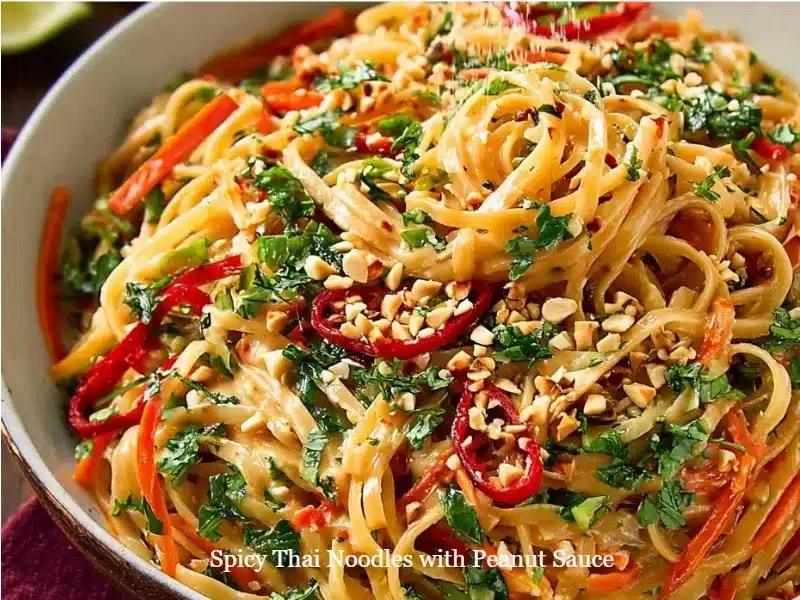
Spicy Thai Noodles with Peanut Sauce
Bright, nutty, and a little fiery, Spicy Thai Noodles with Peanut Sauce deliver a rush of texture and flavor in one pan. I developed this balance of sweet, salty, and sour after testing the sauce eight times and cooking variations in both a busy restaurant kitchen and at home. The sauce clings to the noodles, the veggies stay lively, and the heat level is easy to adjust. This is the version I return to when I want a fast, crowd-pleasing weeknight meal that still tastes thoughtful. Read on to learn why it works and how to make it reliably every time.
Why This Recipe Works
- The sauce uses both lime juice and rice vinegar for bright acidity that cuts through rich peanut butter.
- Toasted peanut butter and a touch of toasted sesame oil add depth and a slightly smoky aroma.
- Cooking the noodles just shy of done and finishing them in the sauce lets them absorb flavor without turning mushy.
- A splash of hot water (or reserved noodle water) emulsifies the sauce for a glossy, clingy finish.
- Simple mise en place and a single pan for the sauce keep the recipe fast and consistent.
Ingredients Breakdown
- Rice noodles (or thin spaghetti) 340 g (12 oz): Neutral base that soaks up sauce. If using wheat pasta, cooking times may differ slightly.
- Peanut butter 120 g (½ cup) creamy: The recipe relies on smooth peanut butter for a silky sauce. Natural peanut butter can separate; stir well before measuring.
- Soy sauce 60 ml (¼ cup): Provides umami and salt. For lower-sodium results, use a low-sodium soy sauce and taste before adding more.
- Lime juice 30 ml (2 tbsp): Fresh juice brightens the sauce. Bottled lime is weaker—avoid if possible.
- Rice vinegar 15 ml (1 tbsp): Adds a sharp, clean acidity that balances the peanut butter.
- Brown sugar or honey 25 g (2 tbsp): Rounds the acid and salt with gentle sweetness.
- Sesame oil 7 ml (½ tbsp): Small amount for aroma; too much will make the sauce taste oily.
- Chili paste or sriracha 15–30 ml (1–2 tbsp), to taste: Controls heat. Start with 1 tbsp, add more after tasting.
- Garlic 2 cloves, minced (about 8 g): Fresh garlic gives lift; avoid pre-minced garlic if possible.
- Ginger 1 tsp grated (2 g): Fresh ginger brightens the sauce.
- Vegetable oil 15 ml (1 tbsp): For frying aromatics and vegetables.
- Vegetables: red bell pepper 1 medium (120 g) thinly sliced, carrot 1 medium (70 g) julienned, green onions 3 stalks sliced: Provide crunch and color.
- Cilantro and lime wedges for garnish: Fresh finishing flavors.
- Optional: tofu 400 g (14 oz) firm, cubed and pan-fried — adds protein and makes this a complete meal.
- Salt: Use Diamond Crystal kosher salt for volume. If using Morton’s, use half the volume listed for kosher salt adjustments.
Substitutions and impact warnings:
- Peanut butter substitute: Almond or cashew butter works, but the flavor profile changes substantially.
- Gluten-free: Use tamari instead of soy sauce for a gluten-free version.
- Vegan swap: Use maple syrup instead of honey. Ensure the chili paste contains no fish sauce.
- If using natural peanut butter, the sauce may be grainier unless you warm and whisk it well.
Essential Equipment
- Large pot for boiling noodles. Use enough water so noodles can move freely.
- Large nonstick or stainless skillet (12-inch/30 cm recommended) for finishing noodles in sauce.
- Microplane or grater for ginger.
- Tongs or chopsticks for tossing noodles.
- Measuring spoons and cups, or a digital scale for accuracy.
- Fine-mesh strainer to reserve noodle cooking water.
- If you don’t have a whisk, use a fork to emulsify the sauce.
Step-by-Step Instructions
Prep Time: 15 minutes | Cook Time: 15 minutes | Inactive Time: None | Total Time: 30 minutes | Servings: 4
Step 1: Prep the ingredients
Measure and prep everything before you heat the pan. Slice the bell pepper, julienne the carrot, mince the garlic, grate the ginger, and slice the green onions. Cut tofu (if using) and pat it dry. This takes about 10–12 minutes for a practiced cook.
Step 2: Make the peanut sauce
In a medium bowl, whisk together 120 g (½ cup) creamy peanut butter, 60 ml (¼ cup) soy sauce, 30 ml (2 tbsp) lime juice, 15 ml (1 tbsp) rice vinegar, 25 g (2 tbsp) brown sugar or honey, 15–30 ml (1–2 tbsp) sriracha, 7 ml (½ tbsp) sesame oil, and 60–120 ml (¼–½ cup) warm water to thin. Whisk until smooth, about 30 seconds. Adjust water to get a pourable, glossy sauce.
Step 3: Cook the noodles
Bring a large pot of water to a boil and add 340 g (12 oz) rice noodles. Cook according to package directions until almost al dente, usually 3–5 minutes. Reserve 120 ml (½ cup) of the cooking water, then drain the noodles in a colander. Toss with a splash of oil to prevent sticking if not finishing immediately. Timing: 3–5 minutes.
Step 4: Sear the tofu (optional)
Heat 15 ml (1 tbsp) vegetable oil in a 12-inch (30 cm) skillet over medium-high heat. Add cubed tofu and sear until golden on at least two sides, about 4–6 minutes total, turning occasionally. Transfer to a plate. This step adds texture and soaks up sauce.
Step 5: Cook the aromatics and vegetables
In the same skillet, add another 15 ml (1 tbsp) oil if needed. Sauté garlic and ginger for 30–45 seconds until fragrant. Add bell pepper and carrot and cook until crisp-tender, about 3–4 minutes, stirring every 30 seconds. Add green onions in the last 30 seconds.
Step 6: Finish the noodles in the sauce
Reduce heat to medium. Add the drained noodles and prepared peanut sauce to the skillet with vegetables. Toss vigorously for 1–2 minutes, adding reserved noodle water a tablespoon at a time if needed, until sauce is glossy and clings to noodles. Taste and adjust salt, lime, or chili. Do not overcook — stop when the noodles are coated and hot.
Step 7: Combine and serve
Fold the seared tofu back in, if using, and toss for 30 seconds to warm. Plate the noodles and garnish with chopped cilantro, crushed roasted peanuts, lime wedges, and extra sliced chilies if desired. Serve immediately.
Expert Tips & Pro Techniques
- Toast your peanuts for more depth. Heat a dry pan over medium heat and toss peanuts for 2–3 minutes until fragrant.
- Common mistake: too-thick sauce that won’t coat noodles. Fix it with warm noodle cooking water, 1 tbsp at a time, until smooth and glossy.
- Make-ahead: Prepare the peanut sauce up to 3 days ahead and refrigerate in an airtight jar. Bring to room temperature and whisk with warm water before using.
- Professional trick adapted for home: Finish the noodles in a hot skillet rather than tossing cold; this helps the sauce cling and slightly caramelizes the edges.
- Protein tip: Press tofu for 15–20 minutes to remove excess water. This helps it brown better.
- Heat control: Add chili in stages. Start with 1 tbsp sriracha, then add more after tasting to avoid overshooting the heat.
Storage & Reheating
- Refrigerator: Store leftover noodles in an airtight container for up to 3 days. The sauce will thicken; add a splash of warm water or broth when reheating.
- Freezer: Not recommended. The peanut sauce and vegetables change texture when frozen and thawed.
- Reheating: Reheat gently on the stovetop in a skillet over medium-low heat with 1–2 tbsp water or broth, tossing until warmed through (about 3–5 minutes). Avoid the microwave if you want to keep vegetable texture.
Variations & Substitutions
- Vegan/High-Protein: Add pan-fried tofu (400 g / 14 oz) or tempeh; keep sauce the same. Tofu increases cook time by 4–6 minutes for searing.
- Gluten-Free: Use tamari instead of soy sauce. No other changes needed.
- Spicy-Sesame Version: Replace 1 tbsp of the warm water with 15 ml (1 tbsp) rice chili oil and increase sriracha to 2 tbsp. Keep an eye on salt.
- Light & Veggie-Forward: Use spiralized zucchini (200 g / 7 oz) for half the noodles, and reduce peanut butter to 90 g (⅓ cup). Cook zucchini briefly to retain crunch.
- Noodle swap: Use wheat spaghetti 340 g (12 oz) if rice noodles are unavailable. Cook time will be 8–10 minutes for al dente; drain and proceed as directed.
Serving Suggestions & Pairings
- Garnish with crushed roasted peanuts and fresh cilantro for crunch and brightness.
- Serve alongside a simple cucumber salad or quick pickled vegetables to add acid and contrast.
- Beverage pairings: An off-dry Riesling or iced Thai tea balances the spice.
- For a heartier meal, add pan-seared shrimp or chicken thighs.
- Internal linking opportunity: [Pair with our Garlic Roasted Potatoes] for a contrasting side.
Nutrition Information
Per serving (serving size: about 1 of 4 servings)
- Calories: 700 kcal
- Total Fat: 35 g
- Saturated Fat: 6 g
- Cholesterol: 0 mg (without added animal protein)
- Sodium: 850 mg
- Total Carbohydrates: 85 g
- Dietary Fiber: 6 g
- Sugars: 12 g
- Protein: 22 g
Nutrition values are estimates. Actual values may vary based on specific ingredients and preparation methods.
Frequently Asked Questions
Q: Why did my noodles turn out gummy?
A: You likely overcooked them in the boiling water. Cook rice noodles just until pliable, then rinse with cold water if needed and finish in the sauce. For wheat pasta, stop 1 minute before package instructions.
Q: Can I make this without peanuts or peanut butter?
A: Yes. Substitute with almond or cashew butter for a different flavor. Expect a milder, less classic Thai profile.
Q: Can I double this recipe for a party?
A: Yes. Double the ingredients and use a very large pan, or finish in two batches to ensure even coating. Sauce amounts scale linearly.
Q: Can I prepare this the night before?
A: You can make the sauce and prep the vegetables a day ahead. Cooked noodles are best finished right before serving to keep texture fresh.
Q: How long does this keep in the fridge?
A: Store in an airtight container for up to 3 days. Reheat on the stovetop with a splash of water for best texture.
Q: Is this a spicy peanut noodle recipe?
A: It can be. Start with 15 ml (1 tbsp) sriracha and increase to taste. You can also use chili paste for deeper heat.
Q: Can I use a blender to make the sauce?
A: Yes. A blender or immersion blender will make an ultra-smooth sauce, especially helpful if using natural peanut butter.
Conclusion
This Spicy Thai Noodles with Peanut Sauce recipe is fast, flexible, and built for busy weeknights. If you want another take on similar flavors, try Spicy Thai Noodles with Peanut Sauce – Cooking Classy for a variation with extra veggies. For a lighter, vegetarian-focused approach, see Spicy Peanut Butter Noodles – Eat With Clarity for more ideas.
Print
Spicy Thai Noodles with Peanut Sauce
- Total Time: 30 minutes
- Yield: 4 servings 1x
- Diet: Vegetarian
Description
Bright, nutty, and a little fiery, these Spicy Thai Noodles with Peanut Sauce are quick to prepare and bursting with flavor. Perfect for a fast, crowd-pleasing weeknight meal.
Ingredients
- 340 g (12 oz) rice noodles (or thin spaghetti)
- 120 g (½ cup) creamy peanut butter
- 60 ml (¼ cup) soy sauce
- 30 ml (2 tbsp) lime juice
- 15 ml (1 tbsp) rice vinegar
- 25 g (2 tbsp) brown sugar or honey
- 7 ml (½ tbsp) sesame oil
- 15–30 ml (1–2 tbsp) chili paste or sriracha, to taste
- 2 cloves garlic, minced
- 1 tsp ginger, grated
- 15 ml (1 tbsp) vegetable oil
- 1 medium red bell pepper, thinly sliced
- 1 medium carrot, julienned
- 3 stalks green onions, sliced
- Cilantro and lime wedges for garnish
- Optional: 400 g (14 oz) firm tofu, cubed and pan-fried
Instructions
- Prep the ingredients: Measure and prep everything before you heat the pan.
- Make the peanut sauce: In a bowl, whisk together peanut butter, soy sauce, lime juice, rice vinegar, brown sugar or honey, sriracha, sesame oil, and warm water until smooth.
- Cook the noodles: Boil water and cook rice noodles according to package directions until almost al dente. Reserve some cooking water, then drain.
- Sear the tofu (if using): Heat oil in a skillet and sear the cubed tofu until golden.
- Cook the aromatics and vegetables: In the same skillet, sauté garlic and ginger until fragrant, then add bell pepper and carrot.
- Finish the noodles in the sauce: Add drained noodles and peanut sauce to the skillet, tossing until well combined.
- Combine and serve: Serve warm, garnished with cilantro, peanuts, and lime wedges.
Notes
Make the peanut sauce up to 3 days in advance and store in the refrigerator. To save time, prepare all your vegetables beforehand.
- Prep Time: 15 minutes
- Cook Time: 15 minutes
- Category: Main Course
- Method: Stovetop
- Cuisine: Thai
Nutrition
- Serving Size: 1 serving
- Calories: 700
- Sugar: 12g
- Sodium: 850mg
- Fat: 35g
- Saturated Fat: 6g
- Unsaturated Fat: 14g
- Trans Fat: 0g
- Carbohydrates: 85g
- Fiber: 6g
- Protein: 22g
- Cholesterol: 0mg

Written by Anna
Anna is the founder and recipe developer behind Chroka Recipes. She creates easy, restaurant-quality homemade recipes — from comforting dinners and decadent desserts to healthy salads and quick breakfasts. With 2,200+ published recipes, Anna helps home cooks discover their next favorite dish.