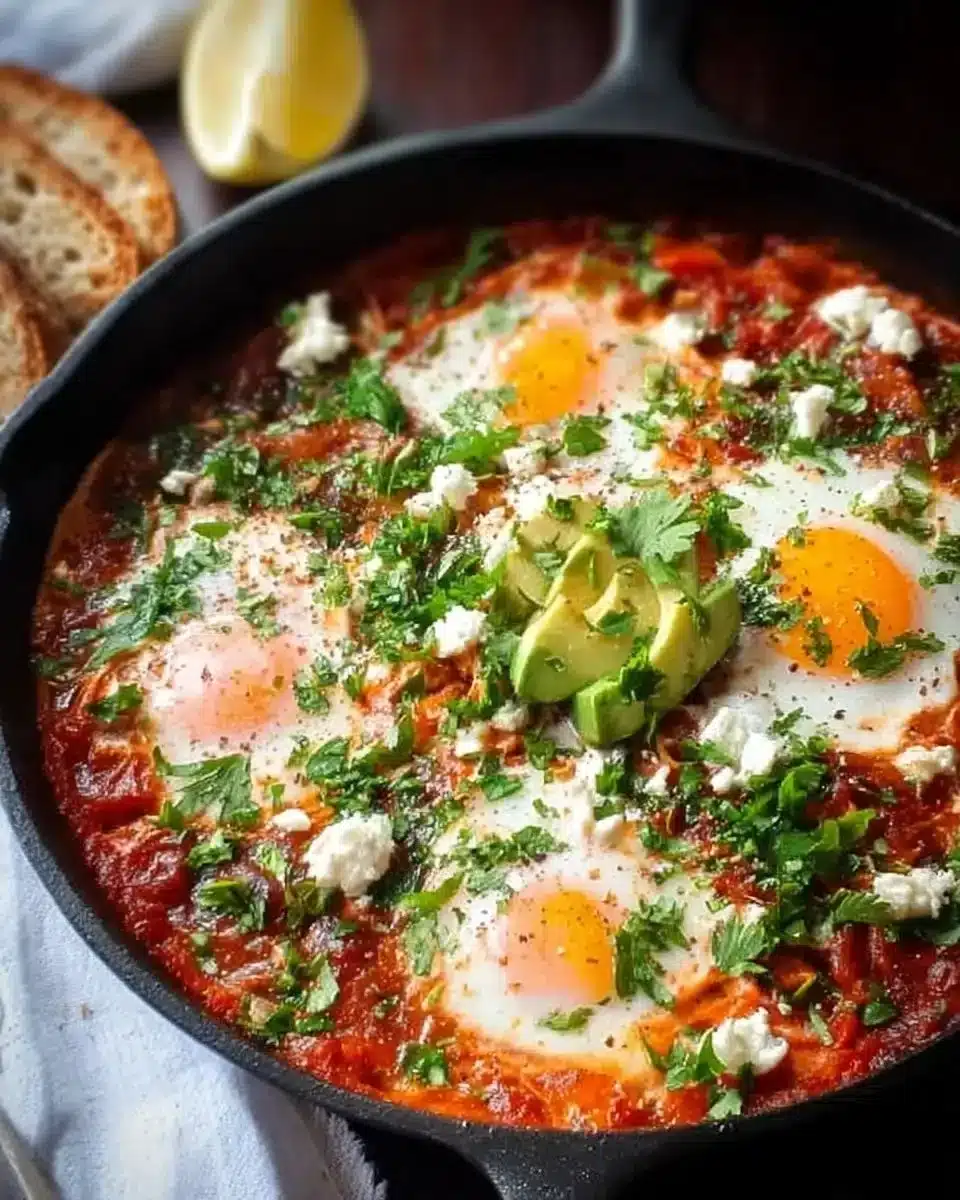
Shakshuka — Easy One-Pan Brunch in 40 Minutes
This shakshuka recipe bursts with bright tomato, warm spices, and silky eggs set right in the skillet. The first time I tested this version I made it four different ways; after testing it 8 times I settled on bold paprika, a splash of tomato paste, and a short finish under the broiler. I developed and refined it while cooking for small brunch services and at home for quick weeknight meals. The method is forgiving, fast, and perfect for cooks of any skill level. Read on for exact measurements, timing cues, and pro tips so you can make a reliable one-pan brunch every time.
Why This Recipe Works
- High-acid tomatoes plus a bit of tomato paste give a thick, balanced sauce that won’t water down the eggs.
- Browning the onion and bell pepper develops savory flavor through the Maillard reaction.
- Smoked paprika and cumin add depth without overwhelming the tomatoes.
- A short broil at the end cooks the egg whites quickly while leaving yolks soft and runny.
- Finishing with fresh herbs and a squeeze of lemon brightens the dish and balances richness.
Ingredients Breakdown
- Olive oil (30 ml / 2 tbsp): Coats the pan and helps brown aromatics. Use extra-virgin for flavor.
- Yellow onion — 1 medium (150 g): Adds sweetness. Substitute shallot if you prefer a milder onion.
- Bell pepper — 1 medium (150 g), any color: Adds texture and a little sweetness. Roasted peppers work but reduce cook time.
- Garlic — 3 cloves (9 g), minced: Adds sharpness; add later if you use garlic powder.
- Tomato paste — 2 tbsp (33 g): Concentrates tomato flavor and thickens the sauce.
- Canned crushed tomatoes — 800 g (28 oz): Forms the sauce base. Whole canned tomatoes crushed by hand produce similar results.
- Smoked paprika — 2 tsp (4 g): Adds smoke and color. For less smoke, use sweet paprika.
- Ground cumin — 1 tsp (2 g): Gives warm, earthy notes.
- Cayenne — 1/4 tsp (0.5 g), optional: Adds heat. Adjust to taste.
- Salt — 1 tsp (5 g) Diamond Crystal or 1/2 tsp (3 g) Morton kosher: Brand affects volume — if using finer table salt, use much less.
- Black pepper — 1/2 tsp (1.5 g), freshly ground.
- Eggs — 6 large (about 300 g total): Place 1–2 per person depending on appetite.
- Fresh parsley or cilantro — 15 g (a small handful), chopped: Bright herb finish.
- Lemon — 1/2, optional: A squeeze brightens the sauce.
- Feta cheese — 70 g (optional): Salty finish; crumble on top before serving.
Substitution notes:
- Vegan option: Omit eggs and stir in 400 g (1 can) of chickpeas near the end; simmer until warmed through.
- Dairy-free: Skip feta or use a dairy-free crumble. Flavor will be milder.
- If using Morton’s kosher salt, halve the quantity above.
Essential Equipment
- 10–12 inch (25–30 cm) oven-safe skillet (cast-iron preferred): Holds the sauce and eggs for finishing under the broiler.
- Wooden spoon or spatula: For stirring without scratching the skillet.
- Measuring spoons and scale: Use grams for consistency.
- Chef’s knife and cutting board: For prepping aromatics.
- Oven mitts: For moving skillet under broiler.
- Optional: Splatter screen to reduce mess.
If you don’t have an oven-safe pan, finish the eggs on the stovetop with the lid on at medium-low heat for 5–8 minutes, but watch closely.
Step-by-Step Instructions
This makes 4 servings. Prep time 15 minutes; cook time 25 minutes; inactive time none; total time 40 minutes.
Step 1: Prep the produce and spices
Trim and dice 1 medium onion (150 g) and 1 bell pepper (150 g). Mince 3 garlic cloves (9 g). Measure spices: 2 tsp (4 g) smoked paprika, 1 tsp (2 g) ground cumin, 1/4 tsp (0.5 g) cayenne, 1 tsp (5 g) kosher salt (Diamond Crystal) and 1/2 tsp (1.5 g) black pepper. This takes about 8–10 minutes.
Step 2: Sauté aromatics
Heat 30 ml (2 tbsp) olive oil in a 25–30 cm skillet over medium heat. Add the onion and bell pepper and sauté until softened and golden, about 6–8 minutes, stirring every 1 minute so they brown evenly. Add minced garlic and cook 30–45 seconds until fragrant.
Step 3: Build the tomato sauce
Stir in 33 g (2 tbsp) tomato paste and cook 1–2 minutes until it darkens slightly. Add 800 g (28 oz) crushed tomatoes, spices, and salt. Bring to a gentle simmer and cook uncovered for 8–10 minutes, stirring occasionally, until the sauce thickens and loses the raw tomato smell.
Step 4: Adjust seasoning and consistency
Taste and adjust salt or cayenne. If the sauce feels too acidic, add 5 g (1 tsp) brown sugar or a splash of olive oil. The sauce should be thick enough to hold eggs without spreading immediately, about 8–10 minutes of simmering.
Step 5: Create wells and add eggs
Using the back of a spoon, make 6 small wells in the sauce. Crack one large egg (approx. 50 g) into each well. Reduce heat to low. Cover the pan and cook for 6–8 minutes for runny yolks, checking for set whites. Do not stir — this will break the yolks.
Step 6: Finish under the broiler (optional)
For faster, even top cooking, place the skillet under a hot broiler for 2–4 minutes until the whites are set and the yolks are slightly jiggly. Broiler temperatures vary; aim for 200–260°C (400–500°F) and watch closely — 2–3 minutes is often enough. Remove with oven mitts.
Step 7: Garnish and serve
Sprinkle 15 g (a handful) chopped parsley or cilantro and crumble 70 g feta if using. Squeeze 1/2 lemon over the top for brightness. Serve immediately with crusty bread or warm pita.
Critical timing cues:
- Sauté aromatics 6–8 minutes until golden.
- Simmer sauce 8–10 minutes to thicken.
- Cook eggs 6–8 minutes for soft-set whites; broil 2–4 minutes if using broiler.
- Sensory cues: onions should be translucent and lightly caramelized; sauce should cling to a spoon.
Expert Tips & Pro Techniques
- Common mistake: Eggs overcook while waiting. Avoid this by cracking eggs directly into the sauce only when it’s at a gentle simmer and you’re ready to finish them within 10 minutes.
- Make-ahead: The tomato sauce can be made 3–4 days ahead or frozen for up to 3 months. Reheat gently, then add eggs to cook fresh.
- Pro trick for silkier sauce: After simmering, stir in 1 tbsp (15 ml) olive oil off the heat to round flavors and add gloss.
- Even egg cooking for larger groups: Use a 30 cm skillet and increase eggs, allowing 1 extra minute under broiler for each 2 additional eggs.
- Home adaptation of a restaurant technique: To deepen flavor without long braise time, brown a pinch of sugar with the tomato paste before adding tomatoes.
- Avoid watery sauce: Use crushed or whole tomatoes rather than diced, and simmer uncovered until thick enough to coat the back of a spoon.
Storage & Reheating
- Refrigerator: Store leftover shakshuka in an airtight container for up to 3 days. The eggs will firm up and the texture will change.
- Freezer: Freeze the tomato sauce (without eggs) in a freezer-safe container for up to 3 months. Thaw overnight in the fridge before reheating.
- Reheating: Reheat sauce on the stovetop over medium-low until simmering (about 5–7 minutes). If adding eggs, crack them into the warmed sauce and cover to cook for 6–8 minutes, or heat at 175°C (350°F) in an oven-safe dish for 6–10 minutes. Avoid microwaving whole shakshuka — it can make eggs rubbery.
Variations & Substitutions
- Green Shakshuka (Seasonal): Use 4 cups (about 600 g) of chopped spinach and 2 cups (300 g) of steamed chopped broccoli instead of tomatoes. Reduce garlic to 2 cloves. Cook greens until just wilted; add eggs and cover 6–8 minutes.
- Spicy Merguez Version: Brown 200 g (7 oz) sliced merguez sausage first, remove, then sauté aromatics in the rendered fat. Return sausage to sauce before cracking eggs. No other time changes.
- Vegan Chickpea Shakshuka: Omit eggs. Stir 400 g (1 can) drained chickpeas into the finished sauce and simmer 4–6 minutes. Serve with chopped parsley.
- Feta & Harissa Finish: Add 70 g (2.5 oz) crumbled feta and 1–2 tsp harissa stirred into the sauce before adding eggs for a tangy, spicy lift.
- Lower-sodium: Reduce salt to 1/2 tsp (2.5 g) and use low-sodium canned tomatoes. Taste and add salt at the end.
Serving Suggestions & Pairings
- Serve with toasted crusty bread, pita, or naan to mop up the sauce. Pair with a side salad for freshness.
- For a heartier brunch: Add roasted potatoes — pair with our Garlic Roasted Potatoes for a full plate.
- Beverages: A crisp, herbal tea or a light, fruity red wine like Beaujolais pairs well.
- Garnishes: Crumbled feta, a spoonful of labneh, or a drizzle of extra-virgin olive oil finish the dish.
Nutrition Information
Per serving (Serving size: about 1 bowl; recipe makes 4 servings)
- Calories: 310 kcal
- Total Fat: 20 g
- Saturated Fat: 5 g
- Cholesterol: 185 mg
- Sodium: 620 mg
- Total Carbohydrates: 16 g
- Dietary Fiber: 4 g
- Sugars: 9 g
- Protein: 15 g
Nutrition values are estimates. Actual values may vary based on specific ingredients and preparation methods.
Frequently Asked Questions
Q: Why did my shakshuka turn out watery?
A: If the sauce is watery, it hasn’t reduced enough. Simmer uncovered for an extra 5–10 minutes until it thickens and can hold the eggs.
Q: Can I make this without eggs?
A: Yes. For a vegan option, stir in 400 g canned chickpeas and warm through. You can also use crumbled firm tofu seasoned with turmeric.
Q: Can I double this recipe?
A: Yes. Use a larger 30 cm skillet or two pans. Cooking times for sauce stay the same; you may need an extra 1–2 minutes under the broiler for more eggs.
Q: Can I prepare this the night before?
A: You can make the sauce the night before and refrigerate. Reheat gently and add eggs when ready to serve. Avoid cooking eggs ahead — they become firm and lose texture.
Q: How long does this keep in the fridge?
A: Leftovers keep 3 days in an airtight container. Reheat the sauce on the stovetop and add fresh eggs if desired.
Q: How can I get runny yolks every time?
A: Cook on low heat and check at 6 minutes. If using the broiler, watch closely — 2–3 minutes usually sets whites and keeps yolks runny.
Q: Is shakshuka traditionally spicy?
A: Traditional versions vary. Some are mild, while others use chiles or harissa for heat. Adjust cayenne or add harissa to taste.
Conclusion
If you want another tested approach to shakshuka, I recommend reading Downshiftology’s shakshuka method for a clear pantry-friendly take. For an authentic Mediterranean perspective, see The Mediterranean Dish’s shakshuka recipe for helpful regional notes and variations.
Print
Shakshuka
- Total Time: 40 minutes
- Yield: 4 servings 1x
- Diet: Vegetarian
Description
This shakshuka recipe bursts with bright tomato, warm spices, and silky eggs set right in the skillet, perfect for brunch.
Ingredients
- 30 ml (2 tbsp) olive oil
- 1 medium yellow onion (150 g), diced
- 1 medium bell pepper (150 g), diced
- 3 cloves garlic (9 g), minced
- 33 g (2 tbsp) tomato paste
- 800 g (28 oz) canned crushed tomatoes
- 2 tsp (4 g) smoked paprika
- 1 tsp (2 g) ground cumin
- 1/4 tsp (0.5 g) cayenne (optional)
- 1 tsp (5 g) salt
- 1/2 tsp (1.5 g) black pepper
- 6 large eggs (about 300 g total)
- 15 g fresh parsley or cilantro, chopped
- 1/2 lemon (optional), for squeezing
- 70 g feta cheese (optional), crumbled
Instructions
- Prep the produce and spices by dicing onion and bell pepper, and mincing garlic.
- Heat olive oil in a skillet over medium heat. Add onion and bell pepper; sauté until golden.
- Add garlic and cook until fragrant.
- Stir in tomato paste and cook until it darkens. Add crushed tomatoes and spices, then simmer.
- Taste the sauce and adjust seasoning if needed.
- Create wells in the sauce and crack eggs into each well. Cover and cook until whites are set.
- Broil if desired for 2–4 minutes to cook the tops of the eggs.
- Sprinkle with herbs and feta, then serve immediately.
Notes
For vegan option, omit eggs and add chickpeas towards the end. Store leftovers in the fridge for 3 days.
- Prep Time: 15 minutes
- Cook Time: 25 minutes
- Category: Brunch
- Method: Baking
- Cuisine: Mediterranean
Nutrition
- Serving Size: 1 serving
- Calories: 310
- Sugar: 9g
- Sodium: 620mg
- Fat: 20g
- Saturated Fat: 5g
- Unsaturated Fat: 0g
- Trans Fat: 0g
- Carbohydrates: 16g
- Fiber: 4g
- Protein: 15g
- Cholesterol: 185mg