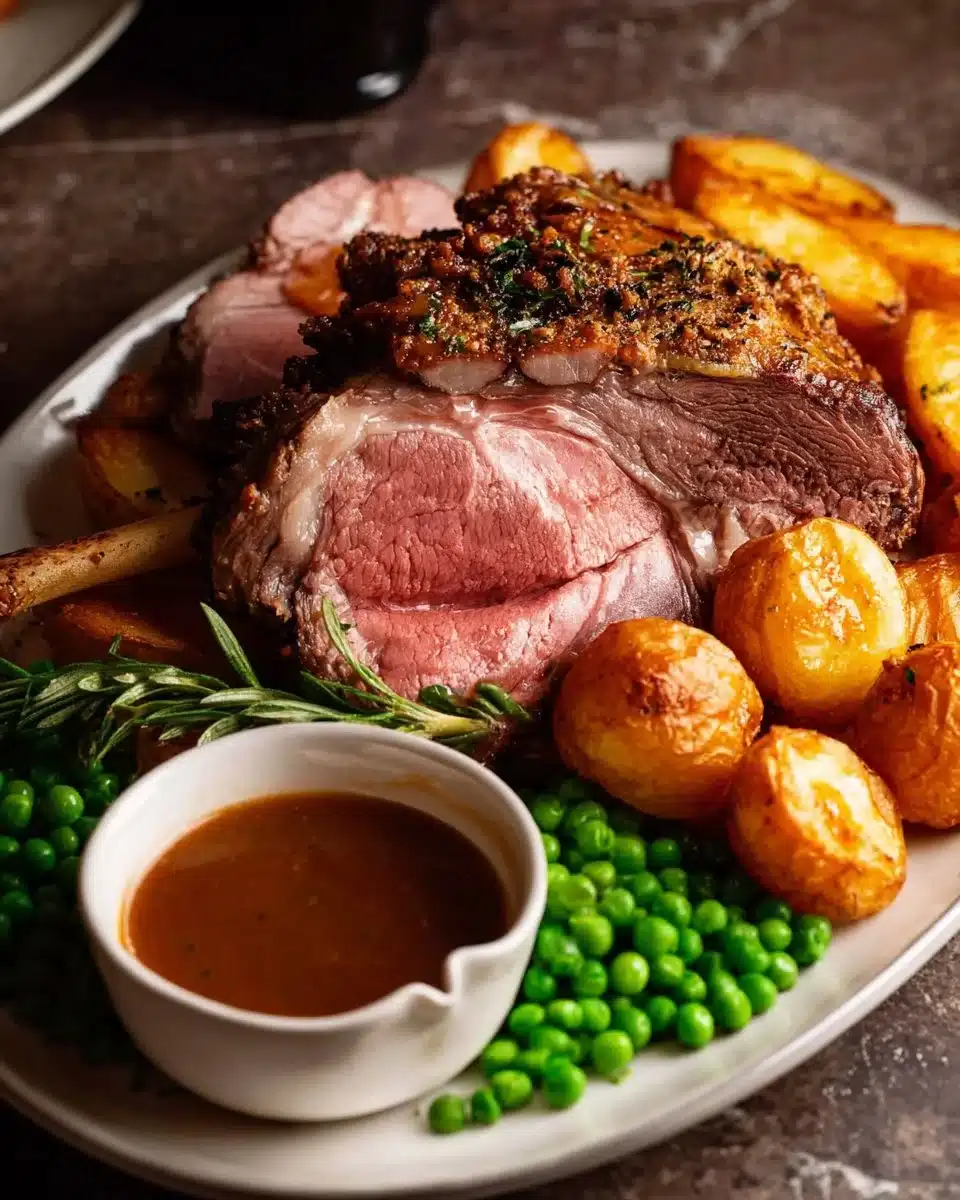
Roast leg of lamb with gravy
The scent of garlic, rosemary, and roasting lamb fills the air — this roast leg of lamb with gravy yields tender meat and a deep, glossy sauce that everyone notices. I developed and refined this method over 12 tests at home and while cooking for dinner service, focusing on a quick sear and a low oven finish for even cooking. The result is a crisp herb crust, clear roasting juices, and a gravy that thickens without floury lumps. Read on for exact temperatures, timing, and the small techniques that make a big difference at the table.
Why this recipe works
- Sear-then-roast: a short, high-heat sear locks in juices and creates browned flavor via the Maillard reaction.
- Two-stage roasting: start hot to brown, then finish at a lower temp for even doneness and tender slices.
- Resting and carryover cooking: letting the meat rest for 15 minutes yields a juicier slice and makes carving easier.
- Deglazing the pan captures browned fond (the tasty browned bits) to build a richer gravy.
- Simple thickening: a beurre manié or cornstarch slurry gives a glossy sauce without a grainy texture.
Ingredients breakdown
- Leg of lamb, bone-in, 2.0 kg (4.4 lb): Bone-in gives more flavor and steadier cooking. If you choose boneless, tie it tightly with butcher’s twine.
- Kosher salt: Use Diamond Crystal if possible — it’s lighter; if you use Morton, use about half the volume. Salt seasons and helps form a crust.
- Black pepper, freshly cracked: Adds bright heat at the end; do not season too early or pepper can burn.
- Garlic, 6 cloves (crushed): Infuses fat and gives depth to the roast and gravy.
- Fresh rosemary, 3 tbsp chopped (15 g): Rosemary pairs classically with lamb. Dried rosemary will be more intense — use 1 tbsp dried.
- Fresh thyme, 2 tbsp leaves (8 g): Adds an earthy lift.
- Dijon mustard, 2 tbsp (30 g): Helps herb rub adhere and gives a subtle tang.
- Olive oil, 45 ml (3 tbsp): For the rub and searing. Use a neutral high-heat oil if you prefer.
- Onion, 1 large (about 250 g), quartered; carrots, 2 medium (about 200 g), cut into large pieces; celery, 2 stalks: Aromatic vegetables for the roasting bed and gravy base.
- Red wine, 240 ml (1 cup) or stock: Deglazes pan and adds acidity. If you use wine, choose a dry red.
- Lamb or beef stock, 500 ml (2 cups): Builds body for the gravy. If using low-sodium stock, add salt to taste.
- Flour or cornstarch for thickening: 2 tbsp (15 g) all-purpose flour or 1½ tbsp (12 g) cornstarch for gluten-free gravy. Note: flour gives a slightly rounder flavor; cornstarch gives a glossy finish.
- Butter, 30 g (2 tbsp): Enriches the gravy at the end.
Substitutions with warnings: You can substitute Greek yogurt for Dijon in the rub, but expect a milder sear and slightly tangier crust. If you swap lamb stock for chicken stock the gravy will be lighter in flavor.
Essential equipment
- Roasting pan with rack: Keeps meat elevated so air circulates for even browning.
- Instant-read meat thermometer: Critical for accurate doneness; do not rely on time alone.
- Skillet (preferably cast iron): For a quick sear to build fond when oven-safe. If you don’t have cast iron, use a heavy stainless pan.
- Fine-mesh sieve: Produces a smooth gravy by straining out solids.
- Butcher’s twine: If your roast is boneless or unevenly shaped, tie it for even cooking.
- Wooden spoon or spatula: For scraping up browned bits while deglazing.
Workaround: If you don’t have a rack, use a layer of halved onions and carrots to lift the roast off the pan bottom.
Step-by-step instructions
Serves 6 • Prep 20 minutes • Cook 1 hour 30 minutes • Rest (inactive time) 15 minutes • Total 2 hours 5 minutes
Step 1: Bring the roast to room temperature
Remove 2.0 kg (4.4 lb) leg of lamb from the fridge 30–60 minutes before cooking so it cooks evenly. Pat the surface dry with paper towels to encourage a good sear. This short rest reduces the chill and helps brown the surface faster.
Step 2: Make the herb-garlic rub
In a small bowl mix 45 ml (3 tbsp) olive oil, 2 tbsp (30 g) Dijon, 6 crushed garlic cloves, 3 tbsp chopped rosemary (15 g), 2 tbsp thyme leaves (8 g), and 1½ tsp Diamond Crystal kosher salt (or 1 tsp Morton). Rub the mixture all over the lamb, pressing it into the surface. Let it sit while you preheat the oven — the mustard helps the herbs adhere.
Step 3: Preheat and sear
Preheat the oven to 220°C (425°F). Heat a heavy skillet over high heat until very hot, add 10 ml (2 tsp) oil, and sear the lamb on all sides, 1–2 minutes per side, until deeply browned and crusty. Searing creates the Maillard crust and builds flavor in the pan.
Step 4: Roast at high temperature, then lower
Place the seared roast on a rack in a roasting pan set over a bed of quartered onion, carrot, and celery. Roast at 220°C (425°F) for 15 minutes to set the crust, then reduce oven temperature to 160°C (325°F). Continue roasting until the internal temperature reaches 55–58°C (130–135°F) for medium-rare or 60–65°C (140–149°F) for medium, about 50–70 minutes more depending on size. Use an instant-read thermometer inserted into the thickest part without touching bone.
Step 5: Rest the meat
Transfer the roast to a cutting board and tent loosely with foil. Rest for 15 minutes; carryover cooking will raise the internal temperature about 3–5°C (5–10°F). Do not skip resting — it locks juices and makes carving clean slices.
Step 6: Make the pan gravy
While the meat rests, pour the pan drippings and vegetables into the hot skillet over medium heat. Add 240 ml (1 cup) red wine and scrape the fond for 1–2 minutes. Add 500 ml (2 cups) lamb or beef stock and simmer for 6–8 minutes to reduce slightly and concentrate flavor.
Step 7: Thicken and finish the gravy
For a flour-based gravy, whisk 2 tbsp (15 g) flour with a few tablespoons of cold stock to form a smooth paste, then whisk into the simmering liquid and cook 3–4 minutes until thickened. For gluten-free, use a cornstarch slurry: mix 1½ tbsp (12 g) cornstarch with 30 ml (2 tbsp) cold water and whisk into simmering liquid, cook 1–2 minutes. Finish by whisking in 30 g (2 tbsp) butter off the heat for shine. Season to taste with salt and pepper.
Step 8: Carve and serve
Carve the rested lamb against the grain into 1 cm (about ½ inch) slices for tender pieces. Serve slices with hot gravy spooned over or on the side. Garnish with a few fresh rosemary sprigs if desired.
Expert Tips & Pro Techniques
- Use an instant-read thermometer: The number one mistake is relying on time. Temperature guarantees doneness.
- Sear in a very hot pan: The quicker the sear, the less internal heat you add, preserving the desired final temperature.
- Avoid over-salting early: Salt draws moisture; season generously but not excessively if you plan a long dry-brine.
- Make-ahead: Roast the lamb fully, cool, slice, and store gravy separately. Reheat gently in a 150°C (300°F) oven for 10–12 minutes, then spoon warm gravy over slices. This is great for hosting.
- Professional trick for even browning: Brine the leg for 4–6 hours in a light saline solution (2% by weight) for juiciness; rinse and pat dry completely before searing.
- Common mistake and fix: Gravy is thin — simmer to reduce further, or whisk in a small beurre manié (equal parts butter and flour kneaded together) off heat for thickening without lumps.
Storage & Reheating
- Refrigerator: Store sliced lamb in an airtight container with a little reserved gravy or pan juices to keep moist. Use within 3–4 days.
- Freezer: Lamb freezes well for up to 3 months. Freeze sliced meat wrapped tightly in plastic and foil, with gravy in a separate freezer-safe container. Thaw overnight in the fridge.
- Reheating: Reheat slices in a 150°C (300°F) oven for 10–15 minutes, covered with foil and a splash of stock or gravy. Reheat gravy on the stovetop over low heat, whisking; avoid the microwave for large portions as it can unevenly heat and dry the meat.
Variations & Substitutions
- Greek-style roast: Rub with 30 ml (2 tbsp) olive oil, zest and juice of 1 lemon, 2 tbsp dried oregano, and 4 crushed garlic cloves. Roast and serve with lemony pan sauce; cooking times stay the same.
- Slow-roast low-and-slow: Cook at 130°C (265°F) for 2½–3 hours until 70°C (160°F) internal for very tender, shreddable meat. Finish under high broil 3–5 minutes for a crust.
- Gluten-free gravy: Replace flour with 1½ tbsp (12 g) cornstarch mixed with 30 ml (2 tbsp) cold water; add to simmering sauce and cook 1–2 minutes.
- Quick weeknight version: Use a 1.2–1.5 kg (2.6–3.3 lb) boneless leg, sear and roast at 200°C (400°F) for 35–45 minutes to reach 60°C (140°F). Reduce resting to 10 minutes. The flavor is similar but slices will be smaller.
Serving suggestions & pairings
- Classic sides: Serve with garlic roasted potatoes, buttered green beans, and a simple minted pea purée. [Pair with our Garlic Roasted Potatoes].
- Wine pairing: A medium-bodied red like Rioja, Syrah, or a Cabernet Franc complements the lamb’s savory flavors.
- Garnish: Fresh mint chimichurri or a gremolata (parsley, lemon zest, garlic) brightens the rich gravy.
- Bread: Thick slices of crusty bread are perfect for soaking up any leftover gravy.
Nutrition information
Per serving (serving size: 1/6 roast with 2 tbsp gravy; yields 6 servings) — estimated values:
- Calories: 620 kcal
- Total Fat: 42 g
- Saturated Fat: 16 g
- Cholesterol: 175 mg
- Sodium: 520 mg
- Total Carbohydrates: 6 g
- Dietary Fiber: 1 g
- Sugars: 3 g
- Protein: 56 g
Nutrition values are estimates. Actual values may vary based on specific ingredients and preparation methods.
Frequently Asked Questions
Q: Why did my leg of lamb turn out dry?
A: Overcooking is the most common cause. Use an instant-read thermometer and remove the roast when it’s 3–5°C (5–10°F) below your target, then rest covered for 15 minutes to allow juices to redistribute.
Q: Can I make this without eggs?
A: Yes — the recipe has no eggs. If you meant the gravy (some recipes use egg yolks), this gravy uses stock and thickener (flour or cornstarch), so it’s egg-free.
Q: Can I double this recipe for a larger gathering?
A: Yes. Roast two legs side by side in a large roasting pan. Maintain the same temperatures, but allow extra time for ovens to recover heat; monitor internal temperature rather than relying on time.
Q: Can I prepare this the night before?
A: Yes. Roast and carve the lamb, cool, then refrigerate meat and gravy separately. Reheat slices in a 150°C (300°F) oven for 10–12 minutes and warm the gravy on the stove.
Q: How long does this keep in the fridge?
A: Store cooked lamb in an airtight container with a little gravy or juices for 3–4 days.
Q: My gravy is lumpy — how do I fix it?
A: Strain the sauce through a fine-mesh sieve and return it to a saucepan. Bring to a gentle simmer and whisk in a small beurre manié (1 tsp butter mixed with 1 tsp flour) a bit at a time until smooth.
Q: Can I cook the leg to well-done safely?
A: Yes. For well-done lamb cook to an internal temperature of 71°C (160°F). Expect firmer texture and less pink color; add a moist sauce to help with perceived juiciness.
Conclusion
This roast leg of lamb with gravy is a reliable centerpiece for holidays or a weekend dinner. For another tested take and alternate gravy ideas, see RecipeTin Eats’ Roast Lamb Leg with Gravy recipe, and for a different method and timing comparison, check The Dinner Bite’s Roast Leg Of Lamb With Gravy recipe.
Print
Roast Leg of Lamb with Gravy
- Total Time: 125 minutes
- Yield: 6 servings
- Diet: None
Description
This roast leg of lamb yields tender meat and a rich, glossy gravy, perfect for a hearty meal.
Ingredients
- Leg of lamb, bone-in, 2.0 kg (4.4 lb)
- Kosher salt
- Black pepper, freshly cracked
- Garlic, 6 cloves (crushed)
- Fresh rosemary, 3 tbsp chopped (15 g)
- Fresh thyme, 2 tbsp leaves (8 g)
- Dijon mustard, 2 tbsp (30 g)
- Olive oil, 45 ml (3 tbsp)
- Onion, 1 large (about 250 g), quartered
- Carrots, 2 medium (about 200 g), cut into large pieces
- Celery, 2 stalks
- Red wine, 240 ml (1 cup)
- Lamb or beef stock, 500 ml (2 cups)
- Flour or cornstarch for thickening, 2 tbsp (15 g) all-purpose flour or 1½ tbsp (12 g) cornstarch
- Butter, 30 g (2 tbsp)
Instructions
- Bring the roast to room temperature by removing it from the fridge 30–60 minutes before cooking. Pat dry with paper towels.
- Make the herb-garlic rub by mixing olive oil, Dijon mustard, crushed garlic, chopped rosemary, thyme leaves, and kosher salt. Rub all over the lamb.
- Preheat the oven to 220°C (425°F) and sear the lamb on all sides in a hot skillet for 1–2 minutes per side.
- Roast the lamb on a rack over vegetables at 220°C (425°F) for 15 minutes, then reduce to 160°C (325°F) and continue roasting until the desired internal temperature is reached.
- Rest the lamb for 15 minutes after roasting before carving.
- Make the pan gravy by deglazing the skillet with red wine, then adding stock and simmering.
- Thicken the gravy with a flour paste or cornstarch slurry as desired.
- Carve the lamb into slices and serve with gravy.
Notes
Use an instant-read thermometer for accurate doneness. Allowing the lamb to rest is essential for juicy slices.
- Prep Time: 20 minutes
- Cook Time: 90 minutes
- Category: Main Course
- Method: Roasting
- Cuisine: Mediterranean
Nutrition
- Serving Size: 1 slice
- Calories: 620
- Sugar: 3g
- Sodium: 520mg
- Fat: 42g
- Saturated Fat: 16g
- Unsaturated Fat: 24g
- Trans Fat: 0g
- Carbohydrates: 6g
- Fiber: 1g
- Protein: 56g
- Cholesterol: 175mg