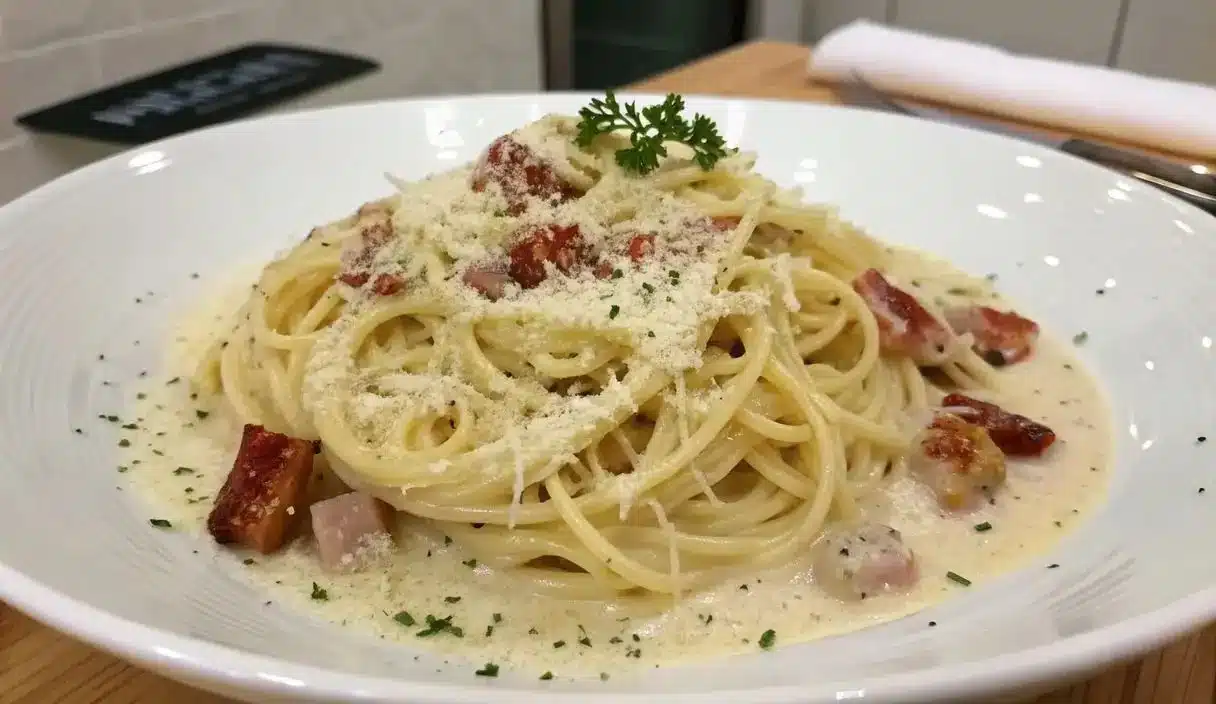
Creamy Spaghetti Carbonara — A Classic Weeknight Recipe
Silky strands of pasta glisten in an eggy, peppered sauce that clings to every forkful — this is my Creamy Spaghetti Carbonara. I learned this method while cooking in small Roman trattorie and refined it at home, testing the timing and ratios 12 times to nail a sauce that’s rich without scrambling. What makes this version noteworthy is the stove-off tempering technique that uses pasta water to create an emulsion, producing a glossy, stable sauce without cream.
You’ll get clear timing, precise weights and volumes, and fail-safe cues that keep the eggs silky. This is the recipe I taught to staff at a neighborhood trattoria; it works reliably for a busy dinner or a relaxed dinner party. Read on for breakdowns, exact steps, pro tips, and make-ahead options so you can serve perfect carbonara every time.
Why This Recipe Works
- Precise egg-to-cheese ratio creates a stable, silky emulsion rather than a curdled scramble.
- Hot starchy pasta water gently cooks the eggs off the heat, which thickens the sauce without turning it granular.
- Using guanciale (cured pork jowl) gives a porky, fatty backbone that crisps up and renders cleanly; pancetta or bacon change the flavor and texture.
- Freshly cracked black pepper and Pecorino Romano add sharpness and astringency that balance the egg richness.
- Quick timing and immediate tossing prevent the sauce from separating and ensure even coating.
Ingredients Breakdown
- Spaghetti (400 g / 14 oz): The long strands hold onto the egg-cheese emulsion well. Use good-quality durum wheat pasta for bite.
- Guanciale (150 g / 5 oz): Traditional and preferred for its porky fat and crisp texture. If unavailable, use pancetta (flavor slightly milder) or smoked bacon (adds smokiness). Note: swapping to bacon will change the authentic flavor.
- Eggs (3 large whole eggs + 1 large yolk): Whole eggs add silk; the extra yolk increases creaminess without adding liquid. Use large eggs at room temperature.
- Pecorino Romano (100 g / 1 cup grated): Provides sharp, salty tang. You can blend 75 g Pecorino + 25 g Parmigiano-Reggiano for a less assertive salt profile.
- Freshly cracked black pepper (to taste, about 1–1½ tsp): Coarse grinding gives flavor pockets and a signature black-speck look.
- Kosher salt for pasta water: Use Diamond Crystal kosher salt — if using Morton’s, use about half the amount because it’s denser.
- Extra-virgin olive oil (optional, 1 tsp / 5 ml): To prevent guanciale from sticking in low-fat pans; not required if you have a heavy skillet.
Substitution impact warnings:
- Using cream: makes the sauce richer but masks Pecorino’s sharpness and is not traditional.
- Using only yolks: results in a thicker, custardy sauce but increases fat and cost.
Essential Equipment
- Large pot (4–5 liters / 4–5 quarts) for boiling pasta. Use plenty of water so pasta cooks evenly.
- Large, heavy skillet (10–12 inch / 25–30 cm) for rendering guanciale — a stainless or cast-iron pan works best for even browning.
- Large heatproof bowl (mixing bowl) or the empty pasta pot for tossing sauce off heat.
- Tongs for transferring pasta and tossing.
- Box grater for fresh cheese.
- Small ladle or measuring cup for reserving pasta water.
- Instant-read thermometer (optional) to confirm doneness when reheating leftovers.
- If you don’t have guanciale: use diced pancetta and a nonstick skillet to reduce sticking.
Step-by-Step Instructions
Makes 4 servings. Prep time 10 minutes, cook time 15 minutes, inactive time None, total time 25 minutes.
Step 1: Prep the sauce mix
In a large bowl, whisk 3 large eggs + 1 large yolk with 100 g (1 cup) finely grated Pecorino Romano and 1 tsp freshly cracked black pepper until smooth. This is your sauce base; hold it at room temperature. Mix for 30–45 seconds until well combined.
Step 2: Bring the pasta water to a boil
Fill a 4–5 L (4–5 qt) pot with water and bring to a rolling boil; add 15 g (1 tbsp) Diamond Crystal kosher salt or 8 g (1½ tsp) Morton’s. Boil the spaghetti 400 g (14 oz) until al dente, typically 9–10 minutes; check package for exact time.
Step 3: Render the guanciale
While water heats, cut 150 g (5 oz) guanciale into 8–10 mm (¼–⅜ in) pieces. In a cold 25–30 cm (10–12 in) skillet, cook over medium heat for 6–8 minutes, stirring often, until the fat renders and the pieces are crisp at the edges. Remove from heat and leave the fat in the pan.
Step 4: Reserve pasta water and drain
Before draining, ladle off and reserve 240–360 ml (1–1½ cups) of starchy pasta water. Drain the spaghetti quickly — do not rinse — and immediately transfer to the skillet with guanciale over very low heat.
Step 5: Combine pasta and sauce off heat
With the skillet off the heat, add half the reserved pasta water (120–180 ml / ½–¾ cup) and toss the pasta for 15–30 seconds to coat. Then remove the pan from heat entirely and pour the egg-cheese mixture over the pasta. Toss vigorously for 30–60 seconds, adding more pasta water a tablespoon at a time to reach a glossy, clingy sauce. Do not add eggs to a hot pan — they will scramble.
Step 6: Finish and serve
Taste and adjust with a small pinch of salt if needed (Pecorino is salty). Plate immediately and finish with the remaining grated Pecorino and another crack of black pepper. Serve hot. Total active tossing time: about 1–2 minutes.
Expert Tips & Pro Techniques
- Use room-temperature eggs: they emulsify better and are less likely to seize when mixed with hot pasta.
- Common mistake — adding eggs to a hot pan: always remove the pan from direct heat before adding the egg-cheese mix to avoid scrambling. If tiny curds form, add more starchy water and keep tossing; the sauce can often smooth out.
- Make-ahead: cook and cool the pasta to al dente, toss with a teaspoon of olive oil, and refrigerate up to 24 hours. Reheat briefly in a skillet and finish with the egg mixture at serving time. Do not refrigerate sauce already tossed with eggs.
- Professional technique for home cooks: reserve more starchy water than you think you’ll need (at least 1 cup). The starch is your emulsion agent; adding it slowly lets you control thickness.
- Texture control: for a silkier sauce, use 1 extra yolk. For a lighter sauce, use 2 whole eggs + 1 yolk instead of 3 whole + 1 yolk.
- If you must use bacon: cook until extra-crisp to remove smokiness and drain on paper towels to reduce excess grease that could weigh down the sauce.
Storage & Reheating
Refrigerator: Store leftovers in an airtight container for up to 2 days. Because the egg-based sauce changes texture, expect some thickening; add reserved pasta water or a splash of milk when reheating to loosen.
Freezer: Not recommended. Freezing and thawing egg-based carbonara causes separation and a grainy texture.
Reheating: Gently reheat in a skillet over low heat with 2–3 tbsp (30–45 ml) reserved pasta water or milk per serving, tossing constantly until just warmed through. Alternatively, reheat in a 175°C (350°F) oven for 6–8 minutes in an oven-safe dish covered with foil; finish by tossing with a splash of pasta water. Avoid microwaving when possible — it can make the sauce curdled or rubbery.
Variations & Substitutions
- Pancetta Version: Replace guanciale with 150 g (5 oz) pancetta. Pan-fry until edges crisp, reduce additional salt by 25% because pancetta is often saltier. Flavor will be slightly less porky.
- Vegetarian Style (no pork): Replace guanciale with smoked mushrooms or 1 tbsp (15 ml) olive oil + smoked paprika for depth. Skip the crisp meat texture; include toasted pine nuts for crunch. Keep egg and cheese ratios the same.
- Carbonara without cream (traditional): This recipe is already cream-free; do not add cream. If you prefer a creamier mouthfeel, add 30–60 ml (2–4 tbsp) of heavy cream when mixing, but expect a less authentic result.
- Gluten-Free: Use 400 g (14 oz) gluten-free spaghetti (brown rice or corn blend). Cooking times vary — follow package and aim for al dente. Texture changes slightly; reserve extra pasta water to help emulsion.
- Extra-rich version: Use 3 whole eggs + 2 yolks and 125 g (1¼ cups) Pecorino for a thicker, custard-like coating. Reduce added salt accordingly.
Serving Suggestions & Pairings
- Light green salad with lemon vinaigrette to cut the richness.
- Crispy sautéed broccolini or garlicky spinach for a green contrast.
- Wines: a crisp Italian white like Verdicchio or Frascati, or a light-bodied red such as Chianti young.
- Pair with our garlic bread or [Pair with our Garlic Roasted Potatoes] for a heartier plate.
Nutrition Information
Per serving (serving size: about 1 plate; recipe makes 4 servings).
- Calories: 680 kcal
- Total Fat: 30 g
- Saturated Fat: 11 g
- Cholesterol: 255 mg
- Sodium: 980 mg
- Total Carbohydrates: 74 g
- Dietary Fiber: 3 g
- Sugars: 3 g
- Protein: 28 g
Nutrition values are estimates. Actual values may vary based on specific ingredients and preparation methods.
Frequently Asked Questions
Q: Why did my carbonara turn out dry or grainy?
A: Dryness usually means there wasn’t enough starchy pasta water to emulsify the eggs and cheese. Add a tablespoon at a time while tossing until glossy. Also avoid high residual heat when adding the egg mix.
Q: Can I make this without eggs?
A: Traditional carbonara relies on eggs for the sauce. For an egg-free version, use a small amount of cream mixed with additional Pecorino and starchy water, or use a vegan cashew-based cream, but it won’t be authentic.
Q: Can I double this recipe for a crowd?
A: Yes. Double all ingredients and cook pasta in batches if your pot or pan is too small. Tossing capacity is the limiting factor: use a very large bowl or the empty pasta pot to combine.
Q: Can I prepare this the night before?
A: You can prep components (render guanciale, grate cheese, whisk eggs) the night before. Do not mix eggs with hot pasta until serving. Cooked pasta may be refrigerated up to 24 hours and finished at service time.
Q: How long does leftovers keep in the fridge?
A: Store properly in an airtight container and use within 48 hours. The texture will change; reheat gently with added water to restore silkiness.
Q: What if I don’t have guanciale — is pancetta OK?
A: Pancetta works as the closest substitute and can be used 1:1, though expect a milder flavor. Smoked bacon will add a smoky note that changes the classic profile.
Q: Why is my sauce too salty?
A: Pecorino and cured pork add salt. Taste the rendered guanciale before adding extra salt to the pasta. Use Parmigiano-Reggiano blended with Pecorino to reduce saltiness.
Conclusion
This method gives consistent, glossy results that highlight clean, savory flavors without cream. For historical context and modern takes on Italian cuisine, see this article on Chef Davide Oldani’s approach to Italian simplicity. For local inspiration on where to taste versions of carbonara in Rome, check a curated list of the best trattorie near Piazza Venezia.
Print
Creamy Spaghetti Carbonara
- Total Time: 25 minutes
- Yield: 4 servings 1x
- Diet: None
Description
A classic weeknight recipe featuring silky strands of spaghetti coated in a rich egg and cheese sauce, enhanced by crispy guanciale.
Ingredients
- 400 g Spaghetti (14 oz)
- 150 g Guanciale (5 oz)
- 3 large Eggs + 1 large yolk
- 100 g Pecorino Romano (1 cup grated)
- Freshly cracked black pepper (to taste, about 1–1½ tsp)
- Diamond Crystal kosher salt (for pasta water)
- 1 tsp Extra-virgin olive oil (optional, 5 ml)
Instructions
- Prep the sauce mix: In a large bowl, whisk 3 large eggs + 1 large yolk with 100 g (1 cup) finely grated Pecorino Romano and 1 tsp freshly cracked black pepper until smooth.
- Bring the pasta water to a boil: Fill a large pot with water and bring to a rolling boil; add salt. Boil the spaghetti until al dente, typically 9–10 minutes.
- Render the guanciale: Cut guanciale into pieces and cook in a cold skillet over medium heat until crisp.
- Reserve pasta water and drain: Before draining, reserve some starchy pasta water, then drain the spaghetti.
- Combine pasta and sauce off heat: Add half the reserved pasta water to the skillet with guanciale and toss pasta. Remove from heat and add the egg-cheese mixture.
- Finish and serve: Taste and adjust with salt if needed, plate immediately, and finish with additional grated Pecorino and black pepper.
Notes
Use room-temperature eggs for better emulsion. Avoid adding eggs to a hot pan to prevent scrambling.
- Prep Time: 10 minutes
- Cook Time: 15 minutes
- Category: Main Course
- Method: Stovetop
- Cuisine: Italian
Nutrition
- Serving Size: 1 serving
- Calories: 680
- Sugar: 3g
- Sodium: 980mg
- Fat: 30g
- Saturated Fat: 11g
- Unsaturated Fat: 10g
- Trans Fat: 0g
- Carbohydrates: 74g
- Fiber: 3g
- Protein: 28g
- Cholesterol: 255mg