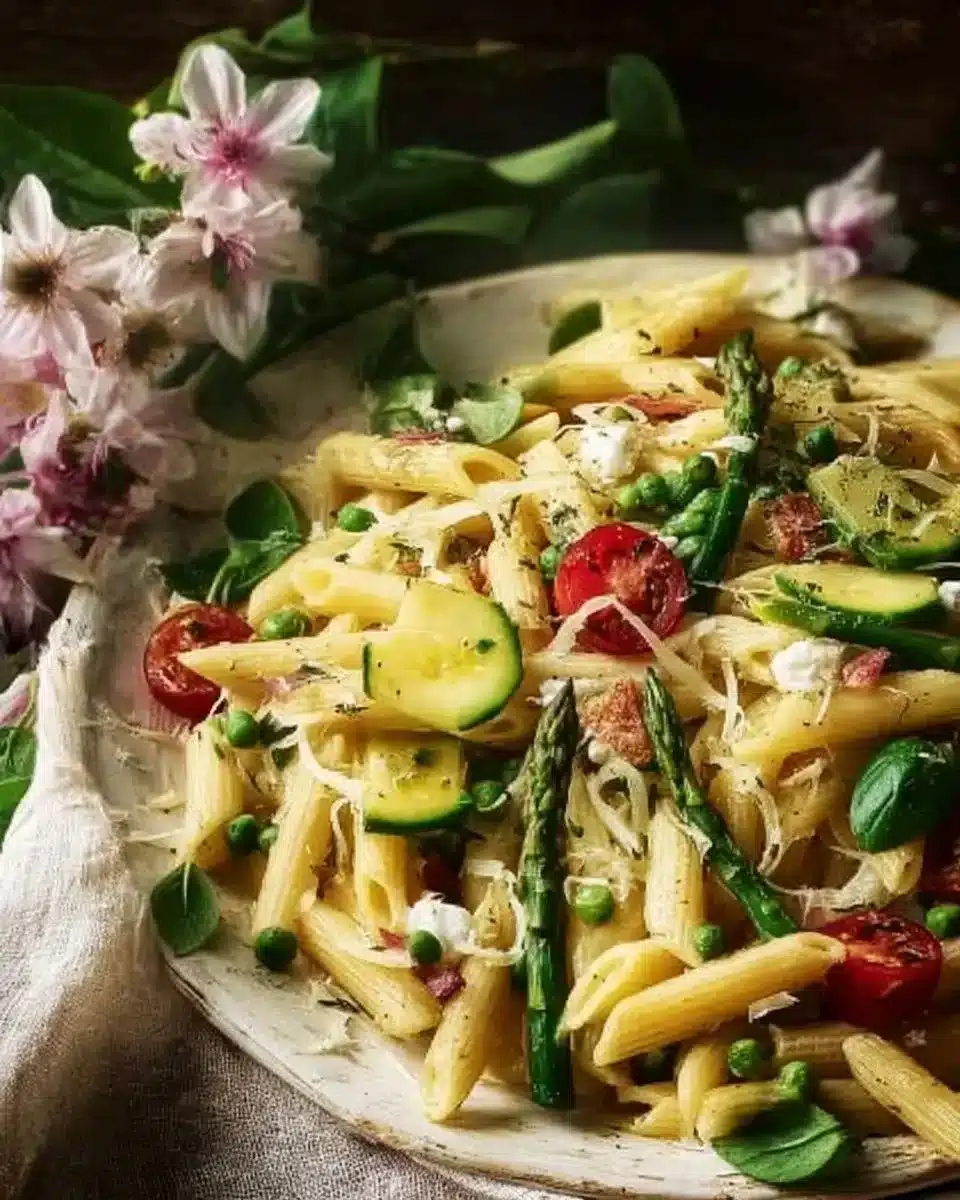
Asparagus Lemon Pasta — Easy Spring Dinner
The first bite is bright: lemon oil, warm pasta, and snap-crisp asparagus mingle on your tongue. This asparagus lemon pasta is a springtime classic that balances acid, fat, and fresh veg for a fast weeknight meal. I developed and refined this version while cooking in a small trattoria, and I tested it eight times using different pasta shapes to land on the best texture and sauce cling. The recipe uses simple techniques—blanching, an emulsion of starchy pasta water and olive oil, and a finish of grated cheese—to make a silky, vivid sauce without cream. Read on for precise timings, metric and imperial measurements, and pro tips so you can hit it perfectly the first time.
Why This Recipe Works
- Blanching the asparagus keeps it bright and crisp while stopping overcooking once tossed with hot pasta.
- Reserving starchy pasta water lets the sauce emulsify and cling without any cream.
- Zest and juice are added separately to layer citrus flavor: zest for aroma, juice for brightness.
- A small amount of butter or olive oil finishes the sauce and carries flavor without weighing the dish down.
- Quick cooking and timing mean the pasta and asparagus reach perfect doneness together.
Ingredients Breakdown
- 400 g (14 oz) dried pasta (spaghetti, linguine, or bucatini) — carries sauce well. Use 100 g (3.5 oz) per person for hearty portions.
- 450 g (1 lb) asparagus, trimmed and cut into 2–3 cm (1-inch) pieces — tips kept slightly longer for presentation. Asparagus provides snap and a vegetal backbone.
- 60 ml (1/4 cup) extra-virgin olive oil — flavor carrier and emulsifier. Use a good-quality oil you enjoy.
- 30 g (1/3 cup) finely grated Parmigiano-Reggiano or Pecorino Romano — adds umami and salt. Parmigiano is milder; Pecorino is saltier.
- 1 large lemon: zest of 1 lemon + 30 ml (2 tbsp) juice — zest gives perfume; juice brightens the sauce.
- 2 garlic cloves, thinly sliced — provides savory depth. Smash if you prefer milder garlic notes.
- 30 g (2 tbsp) unsalted butter (optional) — rounds the sauce and adds silkiness. Omit for dairy-free.
- 5 g (1 tsp) kosher salt for boiling pasta (adjust if using Morton — halve to 1/2 tsp) — salt level affects final flavor.
- Freshly ground black pepper to taste.
- Red pepper flakes, optional, pinch — for gentle heat.
Substitutions with impact warnings:
- Gluten-free pasta: use a 1:1 replacement blend and cook according to package; texture will be slightly different.
- Vegan: replace Parmigiano with 30 g (1/3 cup) nutritional yeast and swap butter for extra olive oil; flavor is less nutty.
- If you swap Pecorino for Parmigiano, reduce added salt.
Essential Equipment
- Large pot for boiling pasta (6–8 L / 6–8 qt) — you need plenty of water so pasta cooks evenly.
- Large skillet or sauté pan (30 cm / 12-inch) — wide surface helps emulsify sauce.
- Fine grater (microplane) for zest and cheese — zesting by hand keeps oils intact.
- Tongs and a large slotted spoon or pasta fork for transferring pasta.
- Kitchen scale for accurate dry-weight pasta measurement (recommended).
- Optional: bowl for finishing and resting the pasta if serving family-style.
If you don’t have a microplane, use the fine side of a box grater for zest and a coarse grater for cheese.
Step-by-Step Instructions
Prep Time 15 minutes • Cook Time 10 minutes • Inactive Time None • Total Time 25 minutes • Servings 4
Step 1: Bring salted water to a lively boil
Fill a large pot with 4–5 L (16–20 cups) water and add 20 g (1 tbsp) kosher salt. Bring to a rolling boil over high heat, about 8–10 minutes depending on stove. The water should taste like seawater—this seasons the pasta from the inside.
Step 2: Blanch the asparagus
Add the asparagus pieces to the boiling water and cook for 1–2 minutes until bright green and just tender. Use a slotted spoon to remove and immediately plunge into a bowl of ice water for 1 minute to stop cooking. This locks in color and crispness.
Step 3: Cook the pasta until just shy of done
Add 400 g (14 oz) pasta to the same boiling water and cook until 1–2 minutes less than package directions for al dente—about 7–9 minutes for spaghetti. Reserve 240–360 ml (1–1.5 cups) of pasta cooking water before draining. Drain the pasta but do not rinse.
Step 4: Warm the oil and garlic
While the pasta cooks, heat 60 ml (1/4 cup) olive oil in a 30 cm (12-inch) skillet over medium heat for 30 seconds. Add 2 sliced garlic cloves and sauté for 45–60 seconds until fragrant and lightly golden; do not burn. If using red pepper flakes, add a pinch now.
Step 5: Emulsify the sauce with pasta water
Add 240 ml (1 cup) hot reserved pasta water to the skillet and bring to a simmer for 30 seconds. Add the drained pasta and blanched asparagus to the pan. Toss for 1–2 minutes, adding more pasta water 1–2 tbsp (15–30 ml) at a time to create a glossy emulsion. Do not add all the water at once — you want a silky coating, not soup.
Step 6: Finish with lemon, cheese, and butter
Remove the pan from heat. Stir in 30 ml (2 tbsp) lemon juice, the zest of 1 lemon, and 30 g (1/3 cup) finely grated Parmigiano-Reggiano. Add 30 g (2 tbsp) unsalted butter, if using, and toss until the sauce is silky, 30–45 seconds. Taste and season with salt and freshly ground black pepper.
Step 7: Plate and garnish
Divide among 4 bowls, garnish with extra grated cheese, additional lemon zest, and a drizzle of good olive oil. Serve immediately while warm.
Expert Tips & Pro Techniques
- Timing is everything: start the asparagus and the pasta so they finish within a minute of each other. This keeps texture perfect.
- Common mistake: adding cheese directly to a hot pan with too much water makes the sauce clumpy. Fix: remove from heat and whisk in cheese gradually; add a splash of reserved water if needed.
- Make-ahead: cook the pasta al dente, cool quickly in an ice bath, toss with 1 tbsp olive oil, and refrigerate up to 24 hours. Reheat in a skillet with a splash of water and finish as directed.
- Professional trick (adapted): toss pasta vigorously off-heat with oil and cheese to emulsify the sauce—this creates a creamier finish without cream.
- If sauce feels thin, stir in 1–2 tbsp finely grated cheese off heat; the cheese helps bind the sauce.
- Use a 30-second zest-to-juice routine: zest first into the bowl so you don’t lose the citrus oils, then halve and juice the lemon.
Storage & Reheating
- Refrigerator: Store leftovers in an airtight container for up to 3 days. Toss with 1 tsp olive oil to keep pasta from sticking.
- Freezer: Not recommended. Lemon and asparagus textures suffer in the freezer. If you must, freeze cooked pasta plain (no lemon or cheese) for up to 1 month; thaw in fridge overnight.
- Reheating: Reheat on the stovetop in a skillet over medium-low with 1–2 tbsp water or olive oil, tossing until heated through (about 3–5 minutes). Avoid microwaving when possible — it can make the asparagus limp and the pasta gummy.
Variations & Substitutions
- Creamy Lemon-Asparagus: Stir in 60 ml (1/4 cup) heavy cream at Step 6 and simmer 1 minute. Keeps all other quantities the same. Cook time unchanged.
- Vegan: Omit butter and Parmigiano. Replace with 30 g (1/3 cup) nutritional yeast and finish with extra-virgin olive oil. Flavor is less nutty; add a pinch of garlic powder if desired.
- Protein Add-In: Add 340 g (12 oz) cooked shrimp or sliced chicken breast. Sear proteins first, remove, and return to pan in Step 6 to warm through. Increase total time by 5–7 minutes.
- Gluten-Free: Use 400 g (14 oz) GF pasta, cook per package. Sauce works the same; texture is slightly different.
- Spring Vegetable Mix: Swap half the asparagus for 150 g (5 oz) peas or fava beans. Blanch both together; timing similar.
Serving Suggestions & Pairings
- Light green salad with lemon vinaigrette and toasted pine nuts.
- Crusty bread to mop up sauce — serve warm.
- Pair with a crisp white wine such as Pinot Grigio or a dry Sauvignon Blanc.
- For a heartier meal, pair with roasted chicken or our Garlic Roasted Potatoes.
Nutrition Information
Per serving (serving size: about 1 plate, recipe makes 4 servings)
- Calories: 420 kcal
- Total Fat: 18 g
- Saturated Fat: 6 g
- Cholesterol: 35 mg
- Sodium: 420 mg
- Total Carbohydrates: 48 g
- Dietary Fiber: 4 g
- Sugars: 4 g
- Protein: 16 g
Nutrition values are estimates. Actual values may vary based on specific ingredients and preparation methods.
Frequently Asked Questions
Q: Why did my pasta taste flat?
A: Most likely under-salted water. The pasta should be cooked in well-salted water (it should taste like the sea). Also taste and adjust at the end with lemon and salt.
Q: Can I make this without cheese?
A: Yes. Omit Parmigiano and add 30 g (1/3 cup) nutritional yeast for a savory lift, or use a vegan Parmesan. Expect a slightly different mouthfeel.
Q: Can I double this recipe?
A: Yes. Use a larger pot and a bigger skillet or finish in batches. Keep the pasta water handy to adjust emulsification.
Q: Can I prepare this the night before?
A: You can prep asparagus and zest the lemon ahead by up to 24 hours. Cooked pasta keeps 24 hours, but for best texture, cook pasta the day you serve it and reheat as noted.
Q: How long does this keep in the fridge?
A: Stored in an airtight container, it will keep for up to 3 days. Reheat on the stove to maintain texture.
Q: Why did my sauce separate?
A: Separation often happens if the pan is too hot when cheese is added, or too much water dilutes the emulsion. Remove from heat and whisk in cheese or butter slowly. Add small amounts of reserved pasta water to help re-emulsify.
Q: How do I keep asparagus from getting mushy?
A: Blanch briefly (1–2 minutes) and shock in ice water. Add to the hot pasta at the end to warm through, not to finish cooking.
Conclusion
If you like bright, quick dinners that still feel special, this asparagus lemon pasta delivers with minimal fuss and maximum flavor. For another take that uses a creamy base and extra vegetables, check out Lemon Asparagus Pasta – Rainbow Plant Life. For a simple, herb-forward variation on lemon and asparagus, see Lemon Asparagus Spring Pasta – Kath Eats.
Print
Asparagus Lemon Pasta
- Total Time: 25 minutes
- Yield: 4 servings 1x
- Diet: Vegetarian
Description
A bright and fresh pasta dish featuring lemon, crisp asparagus, and a silky sauce, perfect for a quick spring dinner.
Ingredients
- 400 g (14 oz) dried pasta (spaghetti, linguine, or bucatini)
- 450 g (1 lb) asparagus, trimmed and cut into 2–3 cm (1-inch) pieces
- 60 ml (1/4 cup) extra-virgin olive oil
- 30 g (1/3 cup) finely grated Parmigiano-Reggiano or Pecorino Romano
- 1 large lemon: zest of 1 lemon + 30 ml (2 tbsp) juice
- 2 garlic cloves, thinly sliced
- 30 g (2 tbsp) unsalted butter (optional)
- 5 g (1 tsp) kosher salt for boiling pasta
- Freshly ground black pepper to taste
- Red pepper flakes, optional, pinch
Instructions
- Bring salted water to a lively boil.
- Blanch the asparagus.
- Cook the pasta until just shy of done.
- Warm the oil and garlic.
- Emulsify the sauce with pasta water.
- Finish with lemon, cheese, and butter.
- Plate and garnish.
Notes
Timing is crucial; start cooking asparagus and pasta so they are ready at the same time.
- Prep Time: 15 minutes
- Cook Time: 10 minutes
- Category: Main Course
- Method: Boiling and Sautéing
- Cuisine: Italian
Nutrition
- Serving Size: 1 serving
- Calories: 420
- Sugar: 4g
- Sodium: 420mg
- Fat: 18g
- Saturated Fat: 6g
- Unsaturated Fat: 12g
- Trans Fat: 0g
- Carbohydrates: 48g
- Fiber: 4g
- Protein: 16g
- Cholesterol: 35mg