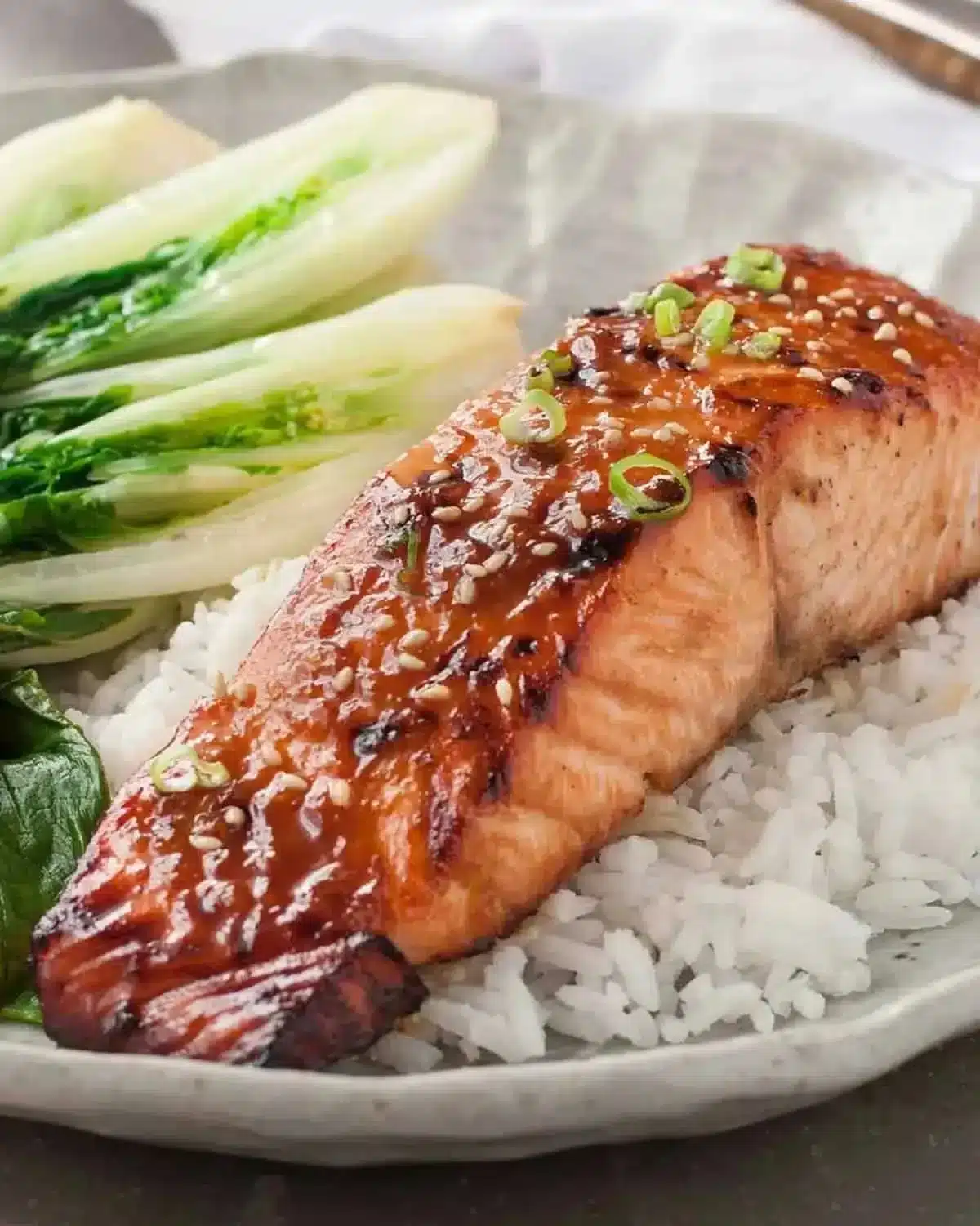
Sticky Maple-Soy Glazed Salmon
The skin crackles and the glaze sings of sweet, salty, and smoky notes on this Asian Glazed Salmon—ready in about 22 minutes. I perfected this version after testing it 10 times, adjusting the sugar-to-acid ratio so the glaze caramelizes without burning. The result is a fast weeknight main that looks restaurant-level but requires minimal hands-on time. This recipe works whether you broil, pan-sear, or finish in the oven, and the glaze doubles as a sauce for rice or greens. Read on for exact measurements, timing, and pro tips so your fillets come out glossy, flaky, and perfectly seasoned every time.
Why This Recipe Works
- A 1:1 balance of maple syrup and soy sauce gives a glossy glaze that caramelizes quickly without becoming too sweet.
- High heat at the finish creates Maillard browning on the surface for savory depth while keeping the center moist.
- A splash of rice vinegar and a pinch of ground ginger cut sweetness and brighten flavors.
- Brushing during the last minute builds layered glaze without burning the sugars.
- Salt on the fish skin draws out moisture, ensuring the skin crisps when seared or broiled.
Ingredients Breakdown
- Salmon fillets (680 g / 1.5 lb total; 4 × 170 g / 6 oz portions) — fatty, firm flesh holds up to high heat and glaze. Skin-on helps crisp the exterior and makes flipping easier.
- Maple syrup (60 ml / 1/4 cup) — primary sweetener. Use pure maple syrup for a cleaner flavor; pancake syrup won’t caramelize the same.
- Low-sodium soy sauce (45 ml / 3 tbsp) — salt and umami. Low-sodium keeps the glaze from overpowering the fish; if using regular soy, reduce added salt.
- Rice vinegar (15 ml / 1 tbsp) — brightens and balances sweet flavors.
- Fresh grated ginger (1 tsp / 5 g) or 1/2 tsp ground ginger — adds warmth and spice complexity.
- Garlic (1 clove, minced) — background savory note.
- Neutral oil (15 ml / 1 tbsp, e.g., canola or grapeseed) — for searing; smoke point matters.
- Sesame oil (optional, 5 ml / 1 tsp) — finishing oil for aroma.
- Red pepper flakes (pinch) — optional heat.
- Kosher salt — season fish; if using Morton kosher, use the full amount. If using Diamond Crystal, halve the quantity because it’s lighter.
- Freshly ground black pepper — to taste.
- Garnishes (scallions, sesame seeds, lime wedges) — for brightness and texture.
Substitutions and impact warnings:
- Swap tamari for soy sauce to make it gluten-free — flavor is similar but slightly milder.
- Honey may replace maple syrup in a 1:1 ratio, but it will brown faster; reduce finish heat slightly.
- Use fish sauce sparingly (½ tsp) for extra umami—don’t add additional salt.
Essential Equipment
- Heavy skillet (cast-iron or stainless steel) or oven-proof nonstick pan — for even heat and good sear. If you plan to broil, a rimmed baking sheet with rack works.
- Pastry brush — to glaze the salmon during cooking.
- Instant-read thermometer — for precise doneness (recommended).
- Tongs or fish spatula — for confident flipping.
- Small saucepan — to reduce and finish the glaze if you prefer thicker sauce.
- Air fryer (optional) — works well; see Variations for timing.
If you don’t have a thermometer, use the flake test: press the thickest part gently—when it flakes easily but is still moist in the center, it’s done.
Step 1: Gather and measure (Prep Time: 10 minutes | Cook Time: 12 minutes | Inactive Time: None | Total Time: 22 minutes | Servings: 4)
Pat 4 skin-on salmon fillets dry and season both sides with 1 tsp kosher salt and 1/4 tsp black pepper. Dry skin crisps better and the salt helps flavor the flesh. Let rest while you make the glaze, about 5 minutes.
Step 2: Make the glaze
Combine 60 ml (1/4 cup) pure maple syrup, 45 ml (3 tbsp) low-sodium soy sauce, 15 ml (1 tbsp) rice vinegar, 1 tsp (5 g) grated ginger, and 1 minced garlic clove in a small bowl. Stir to combine. For a thicker glaze, simmer in a small saucepan over medium heat for 3–4 minutes until slightly reduced, stirring every 30 seconds. Taste — the glaze should be bright, not cloying.
Step 3: Sear the salmon
Heat 15 ml (1 tbsp) neutral oil in a heavy skillet over medium-high until shimmering, about 2 minutes. Place fillets skin-side down and press gently for 10 seconds to prevent curling. Sear for 3–4 minutes without moving, until the skin is deeply golden and releases from the pan. Flip and cook the flesh side for 1–2 minutes.
Step 4: Glaze and finish
Brush 1–2 tbsp of the glaze over the flesh side, then move the skillet to a preheated oven at 200°C (400°F) for 3–4 minutes, or continue cooking on the stovetop over medium-low for 2–3 minutes. Do not overcook — remove at 52°C (125°F) for medium-rare to medium; the fish will carryover to about 54–57°C (130–135°F). If you don’t have a thermometer, cook until the center is opaque but still moist and flakes easily, about 3–4 minutes after flipping.
Step 5: Caramelize and rest
Return to stovetop on medium-high for a final 30–60 seconds, brushing another thin layer of glaze and moving the fillets to get light caramelization. Watch carefully to avoid burning—sugars burn fast. Rest the salmon on a warm plate for 2 minutes, then finish with 1 tsp (5 ml) toasted sesame oil, sliced scallions, and sesame seeds.
Expert Tips & Pro Techniques
- Use room-temperature fillets for even cooking; cold fish seizes and cooks unevenly.
- Common mistake: glazing too early — if you apply thick glaze and keep high heat, the sugars will burn. Apply thin layers in the last minute of cooking.
- For extra crisp skin: after searing, lift the pan off heat and blot any pooled oil before glazing.
- Make-ahead: make the glaze up to 3 days ahead and refrigerate in a sealed jar. Warm gently before using.
- Professional trick adapted for home cooks: finish under a hot broiler for 30–45 seconds to get an instant gloss and char. Keep the pan 10–12 cm (4–5 in) from the heat and watch closely.
- If cooking frozen fillets, thaw completely and pat dry; increase final cook time by 2–3 minutes.
Storage & Reheating
- Refrigerator: Store cooled salmon in an airtight container for up to 3 days. Keep the glaze separate if you want to refresh the finish before serving.
- Freezer: You can freeze cooked salmon for up to 2 months wrapped tightly in plastic wrap and placed in a freezer bag. Thaw overnight in the fridge; texture will soften slightly.
- Reheating: Reheat gently in a 150°C (300°F) oven for 8–10 minutes to preserve moisture. Reheat glaze separately in a small pan and brush on for a fresher finish. Avoid microwaving; it makes the texture gummy.
Variations & Substitutions
- Air-Fryer Version: Pat fillets dry and preheat air fryer to 200°C (400°F). Cook skin-side down for 7–9 minutes, brushing glaze halfway through. This keeps skin crisp without added oil. (Note: timing varies by model.)
- Broiled Salmon: Sear briefly skin-side down, then broil 6–8 cm (2–3 in) from heat for 3–5 minutes, brushing once. Use broil for a faster char but watch to avoid burning the glaze.
- Gluten-Free: Replace soy sauce with tamari (45 ml / 3 tbsp). Everything else stays the same.
- Less Sweet: Reduce maple syrup to 45 ml (3 tbsp) and add ½ tsp (2.5 ml) lemon juice to brighten flavor.
- Spicy-Sweet: Add 1 tsp (5 ml) gochujang or a pinch of cayenne to the glaze for a deeper spice profile. Keep measurements small—these ingredients are potent.
Serving Suggestions & Pairings
- Serve over steamed jasmine rice or garlic fried rice to soak up the glaze.
- Pair with quick cucumber salad (sliced cucumber, rice vinegar, sesame oil) for cool crunch.
- Roast or steam broccoli or bok choy tossed with sesame oil and soy for a matched savory side.
- Beverage pairing: a crisp Riesling or cold lager balances the sweet-salty glaze.
- Pair with our Garlic Roasted Potatoes or simple steamed greens for a heartier plate.
Nutrition Information
Per serving (Serving size: 1 fillet, recipe yields 4 servings). Nutrition values are estimates. Actual values may vary based on specific ingredients and preparation methods.
- Calories: 420 kcal
- Total Fat: 22 g
- Saturated Fat: 4 g
- Cholesterol: 85 mg
- Sodium: 620 mg
- Total Carbohydrates: 17 g
- Dietary Fiber: 0 g
- Sugars: 15 g
- Protein: 39 g
Nutrition estimate assumes 680 g (1.5 lb) salmon, 60 ml maple syrup, 45 ml soy sauce, and 1 tbsp oil total.
Frequently Asked Questions
Q: Why did my salmon turn out dry?
A: Most often you overcooked it. Salmon keeps moisture when removed at 52°C (125°F) and allowed to rest. Use an instant-read thermometer or take it off the heat as soon as it flakes but is still moist.
Q: Can I make this without maple syrup?
A: Yes. Use honey 1:1, but watch finish time — honey browns faster. For less sugar, cut syrup to 45 ml (3 tbsp) and add 1 tsp (5 ml) lemon juice.
Q: Can I double this recipe?
A: Yes, double the ingredients and cook fillets in batches. Crowding the pan lowers searing temperature and prevents proper caramelization.
Q: Can I prepare this the night before?
A: Make the glaze the night before and refrigerate. For the salmon, you can season it and keep it covered in the fridge for up to 24 hours, but sear and glaze just before serving for best texture.
Q: How long does this keep in the fridge?
A: Cooked salmon keeps well for up to 3 days in an airtight container. Reheat gently as described to avoid drying.
Q: What’s the best way to tell doneness without a thermometer?
A: Press the thickest part with a finger or fork—if it flakes easily and the center is opaque but moist, it’s done.
Q: Will this glaze burn under high heat?
A: Sugars do burn. Apply thin layers and finish quickly. If broiling, keep the pan 10–12 cm (4–5 in) from the heat and watch closely.
Conclusion
If you want additional inspiration for maple-soy preparations or an air-fryer method, these two pages offer useful variations and timing notes: Maple Soy Glazed Salmon – Mess in the Kitchen and The Best Air Fryer Salmon Recipe (With Maple Soy Glaze). Give the glaze a quick simmer next time for an even thicker finish, and enjoy a glossy, flavorful salmon that comes together fast.
Print
Sticky Maple-Soy Glazed Salmon
- Total Time: 22 minutes
- Yield: 4 servings 1x
- Diet: Pescatarian
Description
A fast weeknight main featuring salmon fillets glazed with a sweet and savory maple-soy sauce that caramelizes beautifully while keeping the fish moist.
Ingredients
- 680 g salmon fillets (4 × 170 g)
- 60 ml maple syrup
- 45 ml low-sodium soy sauce
- 15 ml rice vinegar
- 1 tsp fresh grated ginger (or 1/2 tsp ground ginger)
- 1 clove garlic, minced
- 15 ml neutral oil (canola or grapeseed)
- 5 ml sesame oil (optional)
- Pinch red pepper flakes (optional)
- Kosher salt, to taste
- Freshly ground black pepper, to taste
- Garnishes (scallions, sesame seeds, lime wedges)
Instructions
- Pat the salmon fillets dry and season both sides with salt and pepper. Let rest for about 5 minutes.
- Combine the maple syrup, soy sauce, rice vinegar, ginger, and garlic in a small bowl for the glaze.
- Heat the neutral oil in a heavy skillet over medium-high heat. Sear the salmon skin-side down for 3-4 minutes until golden, then flip and cook for 1-2 minutes.
- Brush the glaze over the flesh side, then transfer to a preheated oven or cook on medium-low until done.
- Return to the stovetop for a final caramelization, brushing with more glaze.
Notes
For best results, use room-temperature fillets and avoid glazing too early to prevent burning. Make the glaze ahead of time for convenience.
- Prep Time: 10 minutes
- Cook Time: 12 minutes
- Category: Main Course
- Method: Searing, Baking
- Cuisine: Asian
Nutrition
- Serving Size: 1 fillet
- Calories: 420
- Sugar: 15g
- Sodium: 620mg
- Fat: 22g
- Saturated Fat: 4g
- Unsaturated Fat: 0g
- Trans Fat: 0g
- Carbohydrates: 17g
- Fiber: 0g
- Protein: 39g
- Cholesterol: 85mg