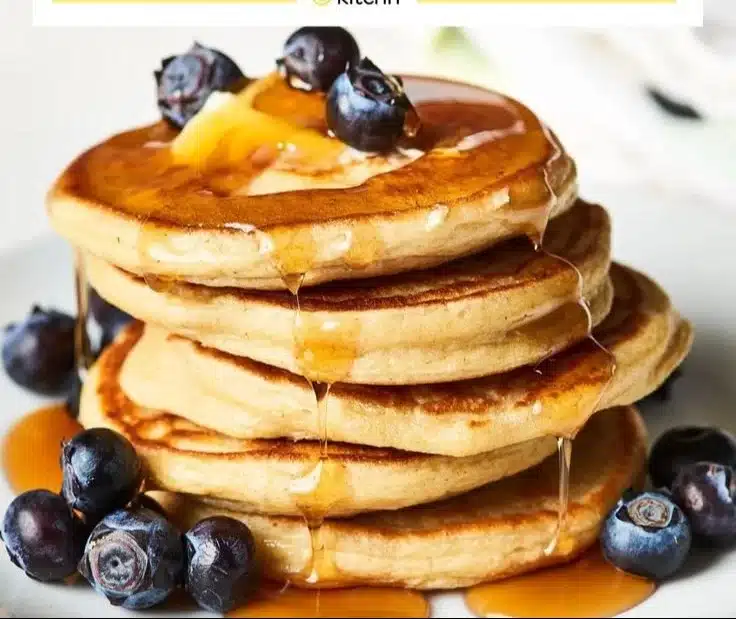
Cottage Cheese Pancakes — 3-Ingredient Breakfast
Warm, tender, slightly tangy pancakes that stay soft and pack surprising protein. cottage cheese pancakes turn three pantry items into a breakfast that feels indulgent but cooks in about 20 minutes. I perfected this version after testing it 12 times using different cottage cheese fat levels and flours. The result is a light crumb and reliable flip — even for beginners. Read on for exact measures, timing, and the small techniques that make these quick pancakes sing.
Why this recipe works
- Cottage cheese adds moisture and curds that melt into a tender interior while contributing protein for structure.
- Whole eggs act as binder and leavening; the yolks add richness and the whites help with lift when cooked hot.
- A small amount of flour keeps the batter just thick enough to hold its shape but light enough to cook through fast.
- Cooking at medium heat lets the outside brown without drying the center; the pancakes finish golden with a soft core.
- No sugar or gas-heavy leaveners mean the flavor is clean and adaptable to sweet or savory toppings.
Ingredients breakdown
- Cottage cheese — 250 g (1 cup) small-curd cottage cheese. Role: moisture, protein, texture. Swap notes: Use low-fat for fewer calories but expect a slightly thinner batter and less richness. If sodium is a concern, rinse briefly and drain; flavor will be milder.
- Eggs — 3 large eggs. Role: binder, structure, and richness. Swap notes: For an egg-free version, see the FAQ; results will be different in texture.
- All-purpose flour — 60 g (1/2 cup) all-purpose flour. Role: light structure and chew. Substitute: For gluten-free, replace with 60 g (1/2 cup) 1:1 gluten-free flour blend and add 1/4 tsp xanthan gum. Using rolled oats (60 g / 2/3 cup) makes a slightly heartier, gluten-free batter but increases cook time by 30–60 seconds per side.
- Cooking fat (not counted among the three) — 1 tbsp neutral oil or butter for the pan. Role: prevents sticking and adds browning. Use a neutral oil for cleaner flavor when topping with fruit.
Essential equipment
- Nonstick skillet or well-seasoned 10–12-inch cast-iron skillet (adjust batch size if skillet is larger).
- Spatula with a thin edge for easy flipping.
- Liquid measuring cup and a kitchen scale for best accuracy.
- Whisk or fork; for a smoother batter, a blender or food processor is helpful.
- Optional: griddle set to 175°C (350°F) if cooking many pancakes at once — keeps temperature steady.
Step-by-step instructions
This recipe makes 4 servings (about 8 pancakes). Prep time 10 minutes; cook time 10 minutes; inactive time None; total time 20 minutes.
Step 1: Combine the cottage cheese and eggs
In a bowl, whisk 250 g (1 cup) cottage cheese and 3 large eggs until mostly smooth, about 30–45 seconds. You should see small curds but no large lumps. If using a blender, pulse 6–8 times for a silkier batter.
Step 2: Add the flour
Sift or stir in 60 g (1/2 cup) all-purpose flour and mix until just combined, about 10–15 seconds. Do not overmix — stop as soon as no dry flour is visible. The batter should be thick but spoonable; add 1–2 tbsp milk if it feels too stiff.
Step 3: Heat the pan
Heat a nonstick skillet over medium heat until hot, about 3 minutes. Test by sprinkling a few drops of water — they should sizzle and evaporate. Add 1 tbsp butter or oil, swirl to coat, and keep heat steady at medium (about 175°C / 350°F).
Step 4: Cook the pancakes
Spoon 2 tbsp to 3 tbsp (30–45 ml) batter per pancake into the skillet, leaving space between. Cook until the edges look set and bubbles form on top, about 2–3 minutes. Flip and cook until the second side is golden, 1–2 minutes more. Repeat with remaining batter, wiping the pan if browning bits build up.
Step 5: Finish and serve
Transfer cooked pancakes to a warm plate or an oven set to 90°C (200°F) to hold. Serve warm with fruit, yogurt, or a drizzle of maple syrup. For crisp edges, briefly return pancakes to a 190°C (375°F) oven for 2 minutes before serving.
Expert Tips & Pro Techniques
- Use a blender for the creamiest texture: blitz the cottage cheese and eggs 6–8 pulses, then fold in flour. This reduces curd size without losing moisture.
- Avoid overcrowding the pan: cook in batches so the skillet temperature recovers between pancakes. Overcrowding causes pale, soggy pancakes.
- Common mistake — overcooking: if your pancakes are dry, your pan is too hot or you cooked too long. Lower heat and watch the edges for doneness.
- Make-ahead: cook a double batch and freeze single pancakes in a single layer on a tray, then transfer to a freezer bag. Reheat in a 175°C (350°F) oven for 8–10 minutes from frozen.
- Professional hack adapted for home: keep the finished pancakes in a 90°C (200°F) oven on a cooling rack to maintain crisp edges while cooking large batches.
- Flavor boost: for sweet pancakes, add 1 tsp vanilla and 1 tbsp sugar; for savory, stir in 1 tbsp chopped chives and a pinch of black pepper.
Storage & reheating
- Refrigerator: Store cooled pancakes in an airtight container for up to 3 days. Stack with parchment between layers to prevent sticking.
- Freezer: Freeze cooked pancakes flat on a tray for 1 hour, then transfer to a freezer bag. They keep well for up to 2 months.
- Reheating: Reheat in a 175°C (350°F) oven for 8–10 minutes from refrigerated, and 10–12 minutes from frozen. To keep edges crisp, use a wire rack set on a baking sheet. Avoid microwaving when possible — it makes them gummy.
Variations & substitutions
- Gluten-Free Version: Replace all-purpose flour with 60 g (1/2 cup) 1:1 gluten-free blend and add 1/4 tsp xanthan gum. Cook time increases by 30–60 seconds per side.
- Oat Version (heartier): Use 60 g (2/3 cup) rolled oats ground in a blender to make oat flour. Batter will be denser; cook at medium-low and add an extra 30–60 seconds per side.
- Savory Herb Pancakes: Omit sweet add-ins, fold in 1 tbsp chopped chives and 2 tbsp grated Parmesan. Serve with smoked salmon and lemon.
- Lower-Sodium: Rinse and drain cottage cheese to reduce sodium, then pat dry. Flavor will be milder — add a pinch of salt if needed.
- Egg-Free Adaptation: Replace 3 eggs with 180 g (3/4 cup) blended silken tofu plus 1 tsp baking powder. Texture will be denser and less airy.
Serving suggestions & pairings
- Sweet breakfast: top with warmed berries, a dollop of Greek yogurt, and a drizzle of maple syrup. (Pair with [Lemon Blueberry Compote].)
- Savory brunch: plate with smoked salmon, sliced cucumber, and a lemon-dill sour cream.
- Snack or post-workout: these work well as protein pancakes topped with nut butter and banana slices.
- Beverage pairings: black coffee, green tea, or a fresh citrus smoothie balance the tang of the cottage cheese.
Nutrition information (per serving)
Serving size: 2 pancakes. Recipe yields 4 servings.
Estimated per serving:
- Calories: 190 kcal
- Total Fat: 8 g
- Saturated Fat: 3 g
- Cholesterol: 140 mg
- Sodium: 300 mg
- Total Carbohydrates: 11 g
- Dietary Fiber: 1 g
- Sugars: 3 g
- Protein: 13 g
Nutrition values are estimates. Actual values may vary based on specific ingredients and preparation methods.
Frequently asked questions
Q: Why did my pancakes turn out dry?
A: Dry pancakes usually mean either the pan was too hot or they cooked too long. Lower the heat one notch and cook until the edges set and bubbles form, then flip quickly.
Q: Can I make this without eggs?
A: Yes, but texture changes. Use 180 g (3/4 cup) blended silken tofu plus 1 tsp baking powder. Expect a denser, less airy pancake.
Q: Can I double this recipe?
A: Yes. Double the ingredients and cook in batches. Keep finished pancakes warm in a 90°C (200°F) oven on a wire rack to preserve texture.
Q: Can I prepare this the night before?
A: You can mix the batter and refrigerate up to 24 hours, though it may thicken; thin with 1–2 tbsp milk before cooking. For best texture, cooking ahead and reheating gives better results than resting the raw batter long-term.
Q: How long does this keep in the fridge?
A: Cooked pancakes keep up to 3 days in an airtight container. For longer storage, freeze them for up to 2 months.
Q: Can I substitute Greek yogurt for cottage cheese?
A: Yes. Use 250 g (1 cup) full-fat Greek yogurt. The pancakes will be smoother and tangier, and you may need to reduce added liquid when using blended batter.
Q: Are these good for meal prep?
A: Absolutely. Cook a large batch, freeze single pancakes, and reheat in the oven for a quick, protein-rich breakfast.
Conclusion
These cottage cheese pancakes are a fast, high-protein breakfast that adapts easily for sweet or savory mornings. For more variations and inspiration, see The Kitchn’s 3-Ingredient cottage cheese pancakes recipe and another take at The Big Man’s World: Cottage Cheese Pancakes {3 Ingredients}.
Print
Cottage Cheese Pancakes
- Total Time: 20 minutes
- Yield: 4 servings 1x
- Diet: Vegetarian
Description
Warm, tender pancakes made with just three ingredients—cottage cheese, eggs, and flour—packed with protein and perfect for a quick breakfast.
Ingredients
- 250 g (1 cup) small-curd cottage cheese
- 3 large eggs
- 60 g (1/2 cup) all-purpose flour
- 1 tbsp neutral oil or butter for cooking
Instructions
- Combine the cottage cheese and eggs in a bowl, whisk until mostly smooth.
- Add the flour and mix until just combined.
- Heat a nonstick skillet over medium heat and add cooking fat.
- Cook pancakes, spooning batter into the skillet, until edges set and bubbles form.
- Finish by serving warm with toppings of choice.
Notes
For a gluten-free version, substitute flour with a gluten-free blend. For sweet pancakes, add vanilla and sugar; for savory, add chopped chives.
- Prep Time: 10 minutes
- Cook Time: 10 minutes
- Category: Breakfast
- Method: Cooking
- Cuisine: American
Nutrition
- Serving Size: 2 pancakes
- Calories: 190
- Sugar: 3g
- Sodium: 300mg
- Fat: 8g
- Saturated Fat: 3g
- Unsaturated Fat: 5g
- Trans Fat: 0g
- Carbohydrates: 11g
- Fiber: 1g
- Protein: 13g
- Cholesterol: 140mg