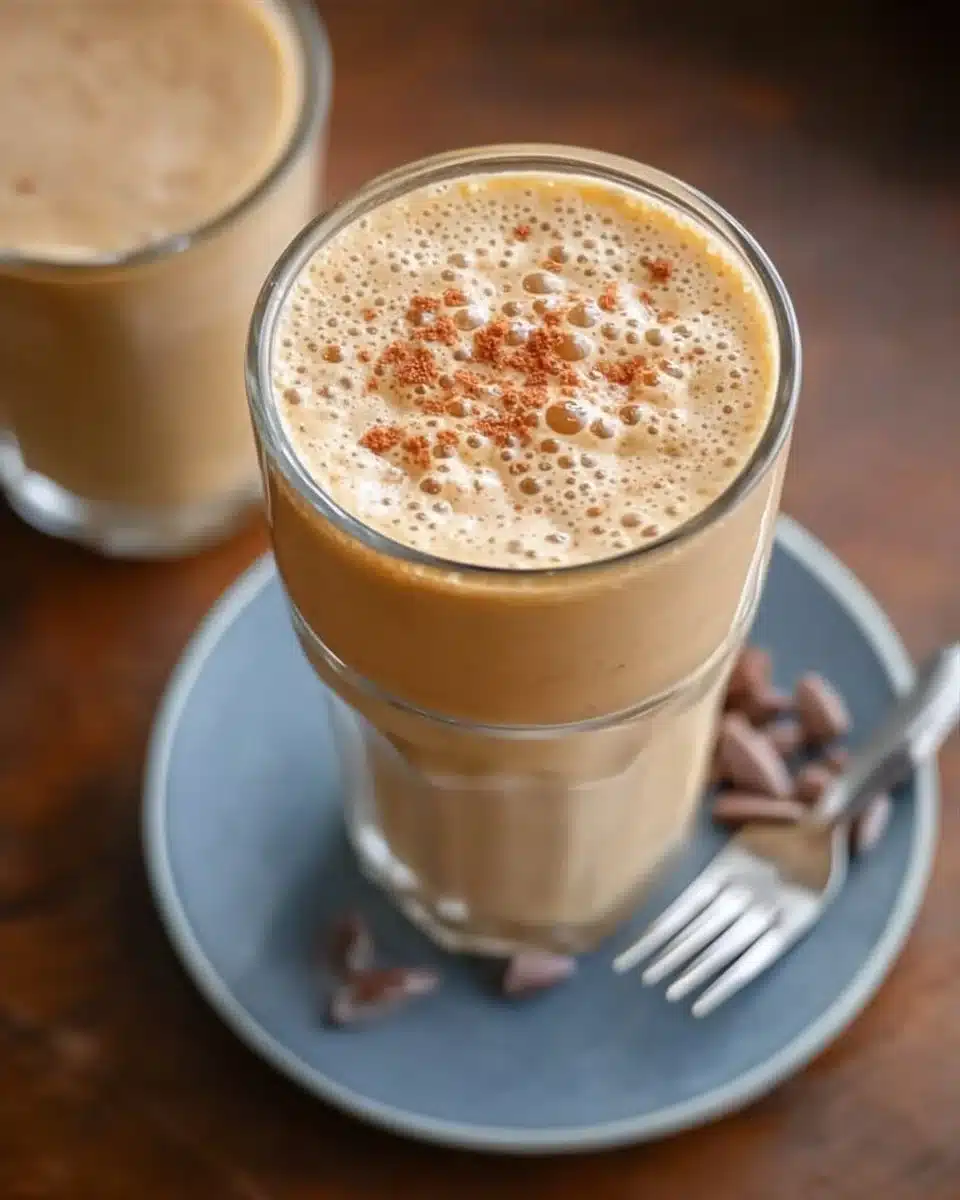
Peanut Butter Coffee Smoothie
Bold, nutty coffee meets silky peanut butter for a smoothie that wakes you up and keeps you full. This peanut butter coffee smoothie blends real espresso or cold brew with creamy peanut butter, banana, Greek yogurt, and a scoop of protein for a balanced, energizing drink. I tested this version over a dozen mornings to dial in the coffee strength and peanut butter ratio. The blend consistently stayed smooth, never grainy, and gave 30 g of protein per serving when made with whey powder. It’s fast, forgiving, and ideal for busy mornings or a post-workout pick-me-up. Read on for why it works, exact measurements, pro tips, and make-ahead tricks so you can nail it every time.
Why This Recipe Works
- The banana and Greek yogurt add body and creaminess so the peanut butter emulsifies smoothly with the coffee.
- Cold, strong coffee (or chilled espresso) keeps the flavor sharp without watering down the drink.
- A touch of honey balances the bitter coffee and highlights toasted peanut notes.
- Adding a scoop of protein powder raises protein without changing texture if blended properly.
- Using natural peanut butter with oil keeps the flavor pure; commercial stabilizers can make the texture gummy.
Ingredients Breakdown
- Brewed coffee (240 ml / 1 cup) — Use chilled espresso or cold brew for a rich coffee backbone. If you use hot coffee, cool it to room temp (20–22°C / 68–72°F) before blending or the ice will melt.
- Whole milk (240 ml / 1 cup) — Adds fat for richness. For lighter versions use 240 ml (1 cup) unsweetened almond milk (note: fewer calories and less protein).
- Natural peanut butter (64 g / 4 tbsp) — Natural (oil-separated) peanut butter blends into a silkier texture. If you use stabilized peanut butter, texture may be slightly thicker.
- Frozen banana (120 g / 1 medium) — Adds natural sweetness and a creamy body. Substituting fresh banana will thin the smoothie.
- Greek yogurt (120 g / 1/2 cup) — Boosts creaminess and protein. For dairy-free, use 120 g (1/2 cup) coconut yogurt (flavor will be more coconut-forward).
- Protein powder (30 g / 1 scoop) — Optional. Whey gives the best texture; plant proteins may need a little extra liquid.
- Honey or maple syrup (15 ml / 1 tbsp) — Optional sweetener. Use less if your banana is very ripe.
- Ice (120 g / 1 cup) — Keeps the drink cold and thick. If you use frozen banana, reduce ice to 60 g (1/2 cup).
- Pinch of fine salt (optional) — Enhances peanut flavor. If your peanut butter is salted, skip extra salt.
Substitutions with impact warnings:
- Almond milk (unsweetened) will reduce calories and protein; add 30 g extra yogurt or protein powder if you want the same protein level.
- Natural peanut butter blends best; using crunchy peanut butter adds texture and may require longer blending.
- Using instant coffee instead of brewed espresso gives a cleaner coffee flavor but can be slightly more bitter; dissolve it first.
Brand notes: If you use Greek yogurt with active cultures, expect a tangier finish. No brand names are necessary unless you need a very specific texture.
Essential Equipment
- High-speed blender — Recommended for the smoothest texture. If using a standard blender, blend longer and check for peanut butter pockets.
- Measuring cups and spoons; digital scale (grams) for precise peanut butter and banana weight.
- Tall glass and straw for serving.
- Espresso machine, moka pot, or French press — or bottled cold brew if you prefer cold brew.
- If you don’t have a blender: use an immersion blender in a deep jar, but expect slightly chunkier texture.
Step-by-Step Instructions
Serves 2 | Prep 5 minutes | Cook 0 minutes | Inactive 0 minutes | Total 5 minutes.
Step 1: Chill or brew the coffee
Brew 240 ml (1 cup) of strong coffee or pull two short shots of espresso, then cool to room temperature, about 20–22°C (68–72°F), or use cold brew chilled at 4°C (39°F). Let hot coffee rest for 10–15 minutes before using — hot coffee will melt ice and thin the smoothie.
Step 2: Measure the main ingredients
Add to the blender: 240 ml (1 cup) chilled coffee, 240 ml (1 cup) whole milk, 64 g (4 tbsp) natural peanut butter, 120 g (1 medium) frozen banana, 120 g (1/2 cup) Greek yogurt, and 30 g (1 scoop) protein powder. Measure honey 15 ml (1 tbsp) if using. Precision here keeps consistency batch to batch.
Step 3: Add ice and salt
Add 120 g (1 cup) ice and a pinch of fine salt if needed. If your banana is frozen, reduce ice to 60 g (1/2 cup). Ice controls thickness; add more for a slushier texture or less for a thinner drink.
Step 4: Blend until smooth
Blend on high for 30–45 seconds or until the mixture is completely smooth and frothy. Stop and scrape down the sides if you see peanut butter clinging to the jar. Do not underblend — pockets of peanut butter cause a gritty mouthfeel.
Step 5: Taste and adjust
Taste for sweetness and coffee strength. Add an extra 5–10 ml (1–2 tsp) honey or an extra 30 ml (1/8 cup) milk to thin, then blend for 5–10 seconds more. Aim for a balance where coffee brightens the peanut butter without dominating.
Step 6: Serve immediately
Pour into two tall glasses and serve cold. Garnish with a thin drizzle of peanut butter or a light dusting of cocoa powder, if desired. Smoothies are best immediately; texture will change if left standing.
Expert Tips & Pro Techniques
- Use chilled coffee or cold brew to keep the ice from melting during blending — this preserves a thick texture.
- Common mistake: adding hot coffee to ice. The result is watery. Always cool coffee to room temp or use cold brew.
- If your blender struggles with peanut butter, microwave the peanut butter for 8–10 seconds to loosen the oil, then blend.
- Make-ahead: combine all dry and frozen ingredients (banana, protein powder, peanut butter) in a freezer-safe bag. When ready, dump into the blender with chilled coffee and milk; blend 30–45 seconds.
- Pro technique: for a creamier mouthfeel, blend the peanut butter with the milk first until emulsified, then add coffee and remaining ingredients.
- To avoid a grainy protein powder texture, add the protein powder to the wet ingredients first and let it hydrate for 20–30 seconds before high-speed blending.
Storage & Reheating
Refrigerator: Store leftover smoothie in an airtight container in the fridge for up to 24 hours. Shake or stir vigorously before drinking; expect some separation and a slightly thicker texture.
Freezer: You can freeze smoothie portions in ice cube trays or freezer bags for up to 1 month. To reheat/thaw, place cubes in the blender with 30–60 ml (2–4 tbsp) milk and blend until smooth. Do not microwave — it ruins the texture and flavor.
Reheating: Smoothies are not reheated. If you want a warm coffee-and-peanut snack, heat milk and whisk in 15–20 g (1–1.5 tbsp) peanut butter and dissolved instant espresso.
Variations & Substitutions
- Vegan / Dairy-Free Version: Replace whole milk with 240 ml (1 cup) unsweetened almond or oat milk and swap Greek yogurt for 120 g (1/2 cup) coconut yogurt. Use plant-based protein powder. Texture will be slightly lighter; add 1–2 tbsp (15–30 ml) extra nut butter for creaminess.
- High-Protein Version: Add an extra 30 g (1 scoop) protein powder and use 240 ml (1 cup) skim or high-protein milk. Protein increases by ~20–25 g per serving; texture remains thick if you add 30–60 ml (2–4 tbsp) extra liquid.
- Mocha Boost: Add 10 g (1 tbsp) unsweetened cocoa powder for a chocolate note. Use cocoa powder dissolved in a small amount of hot water first to prevent clumps.
- No-Banana/Less-Sugar: Replace the banana with 60 g (1/2 cup) frozen cauliflower florets or avocado (60 g / 1/4 medium) for creaminess and fewer carbs. Expect a milder flavor; add 5–10 ml (1–2 tsp) honey if needed.
- Kid-Friendly Version: Use decaffeinated coffee or replace coffee with 120 ml (1/2 cup) chocolate milk and 120 ml (1/2 cup) milk. Reduce caffeine for children.
Serving Suggestions & Pairings
- Pair with a toasted whole-grain bagel or slice of avocado toast for a balanced breakfast.
- Garnish with crushed peanuts and a dusting of cocoa for texture and visual appeal.
- Serve alongside a small bowl of mixed berries to add bright acidity.
- Internal link opportunity: pair with our [Garlic Roasted Potatoes] for a savory brunch spread.
Nutrition Information
Per serving (Serving size: 1 smoothie; Recipe yields 2 servings)
- Calories: 446 kcal
- Total Fat: 20 g
- Saturated Fat: 5.3 g
- Cholesterol: 15 mg
- Sodium: 290 mg
- Total Carbohydrates: 31.5 g
- Dietary Fiber: 3.5 g
- Sugars: 23.5 g
- Protein: 30 g
Nutrition values are estimates. Actual values may vary based on specific ingredients and preparation methods.
Frequently Asked Questions
Q: Why is my smoothie too thin?
A: Thin smoothies usually mean too much liquid or melted ice. Use frozen banana, reduce milk by 30–60 ml (2–4 tbsp), or add another 30–60 g (2–4 tbsp) of ice. Also ensure coffee is chilled so it doesn’t melt the ice.
Q: Can I make this without dairy or yogurt?
A: Yes. Substitute 240 ml (1 cup) unsweetened almond or oat milk and 120 g (1/2 cup) coconut yogurt. This lowers protein and alters flavor. Add an extra scoop of protein powder if you want equivalent protein.
Q: Can I double this recipe?
A: Yes — double all ingredients and blend in batches if your blender jar is small. Blending in two batches ensures consistent texture. For large blenders, double everything and increase blend time by 15–20 seconds.
Q: Can I prepare this the night before?
A: You can, but the texture changes. Store the smoothie in an airtight container in the fridge for up to 24 hours and stir or re-blend briefly before serving. For best texture, prepare frozen ingredient packs and blend fresh in the morning.
Q: How long does this keep in the fridge?
A: Store in an airtight container for up to 24 hours. Separation and texture change occur after a few hours; shake or re-blend to recombine.
Q: Why is my smoothie grainy after adding protein powder?
A: Graininess often comes from underhydrated protein powder or a low-speed blender. Let the protein powder hydrate in the liquid for 20–30 seconds before blending on high. If graininess persists, try a different brand or a higher-powered blender.
Q: Can I use powdered peanut butter to reduce fat?
A: Yes. Use 30 g (2 tbsp) powdered peanut butter plus 60–90 ml (1/4–1/3 cup) extra liquid to rehydrate. Flavor will be less rich and texture slightly thinner.
Conclusion
This peanut butter coffee smoothie is quick to make, packs protein, and balances strong coffee with nutty sweetness. For other recipe takes and inspiration, try Lemons & Zest’s peanut butter mocha smoothie and see how they layer chocolate and espresso, or explore a higher-protein twist at Bucket List Tummy’s high-protein peanut butter coffee smoothie.
Print
Peanut Butter Coffee Smoothie
- Total Time: 5 minutes
- Yield: 2 servings 1x
- Diet: Vegetarian
Description
Bold espresso blends with creamy peanut butter and banana for a delicious smoothie that energizes and keeps you full.
Ingredients
- 240 ml (1 cup) brewed coffee, chilled
- 240 ml (1 cup) whole milk
- 64 g (4 tbsp) natural peanut butter
- 120 g (1 medium) frozen banana
- 120 g (1/2 cup) Greek yogurt
- 30 g (1 scoop) protein powder (optional)
- 15 ml (1 tbsp) honey or maple syrup (optional)
- 120 g (1 cup) ice
- Pinch of fine salt (optional)
Instructions
- Chill or brew the coffee.
- Measure the main ingredients.
- Add ice and salt.
- Blend until smooth.
- Taste and adjust.
- Serve immediately.
Notes
Smoothies are best served immediately as texture can change if left standing. For creamier texture, blend peanut butter with milk first.
- Prep Time: 5 minutes
- Cook Time: 0 minutes
- Category: Beverage
- Method: Blending
- Cuisine: American
Nutrition
- Serving Size: 1 smoothie
- Calories: 446
- Sugar: 23.5g
- Sodium: 290mg
- Fat: 20g
- Saturated Fat: 5.3g
- Unsaturated Fat: 14.7g
- Trans Fat: 0g
- Carbohydrates: 31.5g
- Fiber: 3.5g
- Protein: 30g
- Cholesterol: 15mg