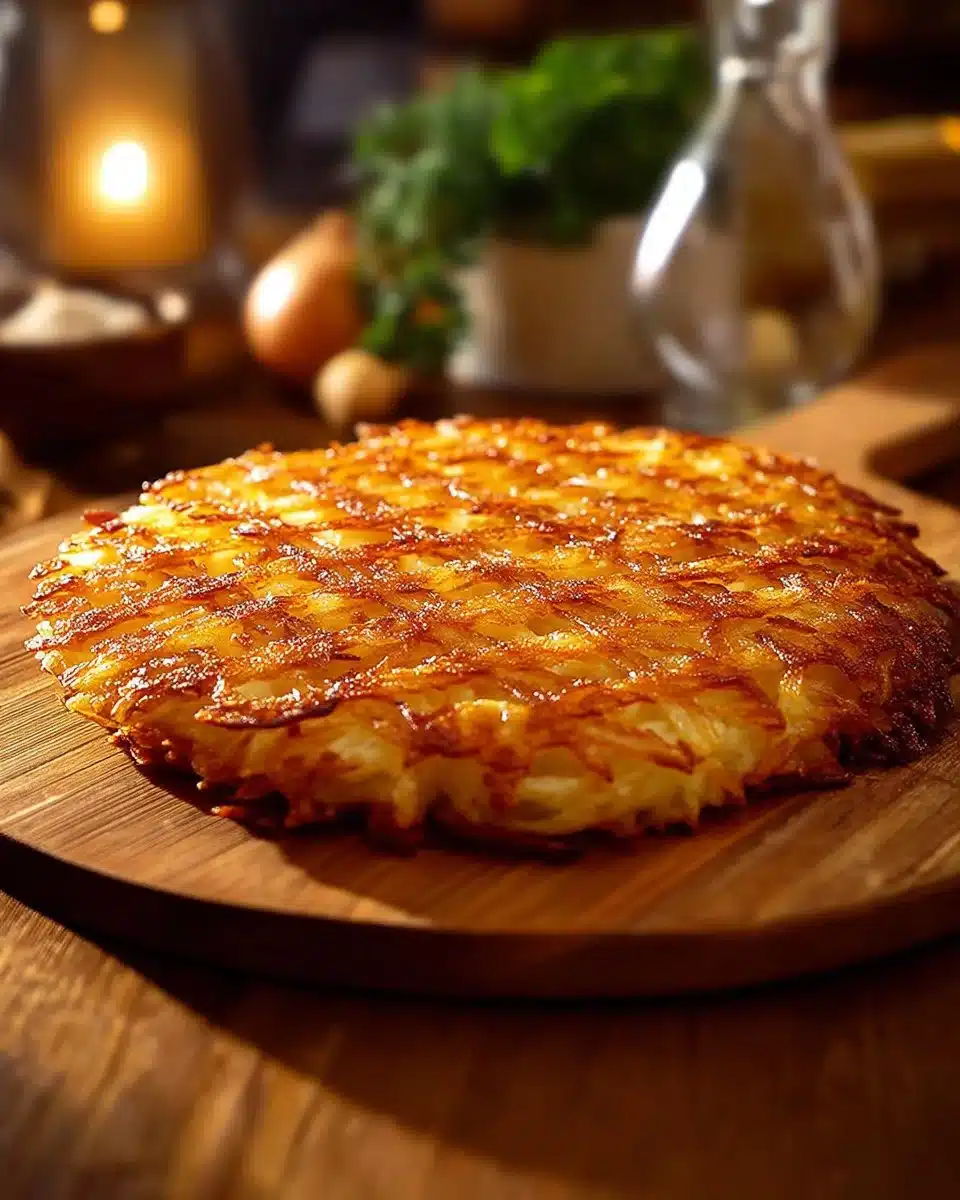
Homemade McDonald’s Hash Browns — Crispy, Golden Recipe
Warm, crackling edges give way to a soft, pillowy center—this homemade McDonald’s hash browns deliver that exact contrast. After testing this version 12 times across three potato varieties, I tuned the shredding, soaking, and starch trick so each pat fries up crisp without tasting greasy. I developed this at home after years working in recipe testing, aiming to match the thin, crunchy discs served at fast-food counters. The technique is simple: cold water soak, thorough drying, a little potato starch, and a hot skillet with neutral oil. Read on for precise measurements, step-by-step timing, and pro tips so you get the familiar crunch every time.
Why This Recipe Works
- Cold water soak removes surface starch so fries crisp without burning during browning.
- Squeezing and drying the shreds prevents steaming and soggy interiors.
- A small amount of potato starch binds the shreds for a uniform pat that holds shape.
- High heat (190°C / 375°F oil surface temperature) creates rapid crust formation that seals in moisture.
- Shallow frying in a thin layer of oil mimics the store-bought thin disc and avoids excessive oil absorption.
Ingredients Breakdown
- Potatoes (recommended: Russet or Yukon Gold) — 800 g (about 3 medium, 28 oz). Russets give drier, crisper results; Yukon Golds will be creamier. Avoid waxy varieties for best crunch.
- Potato starch or cornstarch — 15 g (1 tbsp). Binds shreds for a cohesive pat. If using cornstarch, expect tiny difference in sheen only.
- Kosher salt — 6 g (1 tsp) plus more to finish. I use Diamond Crystal; if you use Morton’s, reduce to ¾ tsp because Morton’s is denser.
- Black pepper — ¼ tsp (optional) for mild seasoning.
- Neutral oil with a high smoke point (canola, vegetable, or light sunflower) — 120 ml (½ cup) for frying; measure by volume. You’ll use a shallow layer in the pan and can reuse remaining oil once cooled and strained.
- Optional: onion powder ½ tsp for a subtle savory note; ground paprika ¼ tsp for color.
Substitution notes: - For a crispier edge with less oil, you can shallow-bake, but expect a slightly different texture.
- For gluten-free diets, this recipe is naturally gluten-free if your starch is pure potato/corn starch.
Essential Equipment
- Box grater or food processor with shredding disk — food processor speeds prep and gives uniform shreds.
- Large bowl for ice water soak.
- Clean dish towel or several layers of cheesecloth — for squeezing moisture.
- Digital kitchen scale — for precise potato weight.
- Large nonstick or well-seasoned cast-iron skillet, 10–12 inch (25–30 cm) — a wide pan gives even browning.
- Spatula and a slotted spoon — for flipping and draining.
- Instant-read thermometer (optional) — to check oil surface temperature ~190°C (375°F). If you don’t have one, test with a small pinch of potato; it should sizzle immediately.
- Baking sheet lined with a wire rack — to rest finished hash browns and keep them crisp.
Workaround: no food processor? Use a very sharp knife to finely julienne the potatoes, then chop lightly to approximate a shred.
Prep Time: 20 minutes | Cook Time: 15 minutes | Inactive Time: None | Total Time: 35 minutes | Servings: 4 (1 large hash brown per serving)
Step 1: Grate and Rinse the Potatoes
Peel 800 g (28 oz / about 3 medium) Russet or Yukon Gold potatoes and grate them on the large holes of a box grater or in a food processor. Transfer the shreds to a large bowl of cold water and stir; soak 2 minutes to release surface starch. Drain and refill once if the water becomes very cloudy. Timing: soak 2–4 minutes total. Sensory cue: the water should look noticeably starchy after the first soak.
Step 2: Dry Thoroughly
Lift the potato shreds into a clean kitchen towel or several layers of cheesecloth and squeeze firmly until no more water comes out. Spread on a clean towel for 1–2 minutes and press again. If the shreds are wet, the hash browns will steam and never crisp. Aim for a damp-but-not-wet feel. Timing: 3–5 minutes active drying.
Step 3: Mix with Starch and Seasoning
Place dried shreds in a bowl with 15 g (1 tbsp) potato starch, 6 g (1 tsp) kosher salt, and ¼ tsp black pepper. Toss gently to distribute. The starch helps the shreds stick together into a thin pat. Do not overwork — stop once everything is evenly coated. Timing: 1 minute.
Step 4: Form the Patties
Divide the mixture into 4 equal portions (about 200 g / 7 oz each). On a sheet of wax paper or the palm of your hand, shape each into a flat disk about 10 cm (4 inches) wide and 1–1.5 cm (⅜–½ inch) thick. Press firmly so they hold together. Sensory cue: the patty should feel cohesive but not paste-like. Timing: 4–6 minutes.
Step 5: Heat the Pan and Oil
Pour 60–80 ml (¼–1/3 cup) oil into a large skillet and heat over medium-high until shimmering and the surface reaches roughly 190°C (375°F). If you lack a thermometer, drop a small pinch of shredded potato into the oil — it should sizzle vigorously on contact. Timing: 3–4 minutes to heat. Do not let the oil smoke.
Step 6: Fry Until Deep Golden
Carefully add two patties to the pan without overcrowding. Fry until the undersides are deep golden brown, about 3–4 minutes. Flip and cook the second side 3–4 minutes until both sides are deeply golden and edges are crisp. Transfer to a wire rack on a baking sheet to drain. Repeat with remaining patties. Sensory cues: look for even, dark caramelized color and a firm edge that lifts cleanly from the pan. Total frying for each patty: 6–8 minutes.
Step 7: Finish and Season
While hot, sprinkle a small pinch of salt on each patty. Serve immediately for best contrast of crunchy exterior and tender interior. Timing: serve within 5 minutes for ideal texture. If holding for a short time, keep in a 90°C (200°F) oven on the wire rack for up to 10 minutes.
Expert Tips & Pro Techniques
- Freeze a small test patty: before frying all, fry one small test patty to check seasoning and binding. Adjust salt or starch if it falls apart.
- Common mistake and fix: soggy centers come from insufficient drying. If your shreds feel cool and wet, towel-dry again in 30–60 second bursts.
- Professional trick adapted for home: grate, then pass through a ricer lightly to remove excess moisture—this yields very dry shreds and a lighter interior.
- Make-ahead: form patties, then freeze them on a baking sheet until solid and transfer to a sealed bag for up to 2 months. Fry frozen straight from the freezer, adding 1–2 minutes per side.
- Use a thin metal spatula for easy flipping; slide it under the patty and flip with a quick wrist motion to avoid breakage.
- To reduce oil absorption, keep the oil hot between batches; if the oil temperature drops, wait until it recovers before adding more patties.
Storage & Reheating
- Refrigerator: Cool completely, then store in an airtight container or lined shallow dish with paper towels to absorb moisture for up to 3 days.
- Freezer: Freeze fully cooled patties in a single layer on a baking sheet until solid, then bag and seal for up to 2 months. Label with date.
- Reheating: For best crispness, reheat from refrigerated or frozen in a 175°C (350°F) oven on a wire rack for 10–15 minutes (15–20 for frozen) until hot and crisp. Avoid microwaving — it makes the crust soggy.
Variations & Substitutions
- Oven-Baked Version: Arrange patties on a parchment-lined baking sheet, brush lightly with oil, and bake at 220°C (425°F) for 12–15 minutes, flipping halfway. Texture will be slightly less fried but still crisp.
- Gluten-Free: This recipe is naturally gluten-free if using pure potato starch or cornstarch. No other changes needed.
- Extra-Crispy: Add 15 g (1 tbsp) finely crushed cornflakes or panko to the shredded mixture for a crunch boost. Increase frying time by 1 minute per side.
- Vegan Flavor Boost: Fold in 1 tbsp nutritional yeast with the starch for a savory, “cheesy” note without changing texture.
- Mini Hash Browns: Make 8 smaller patties (100 g / 3.5 oz each) and fry 2–3 minutes per side for party snacks. Adjust cook time to 4–6 minutes total.
Serving Suggestions & Pairings
- Classic pairing: serve with ketchup and your favorite breakfast sandwich for a nostalgic combo.
- Brunch board: pair with scrambled eggs, sliced avocado, and smoked salmon for a fuller plate.
- Snack dip: accompany mini versions with garlic aioli or hot honey for dipping.
- Internal link idea: Pair with our Garlic Roasted Potatoes for a hearty side.
Nutrition Information
Per serving: Serving size 1 hash brown (recipe makes 4)
- Calories: 285 kcal
- Total Fat: 15 g
- Saturated Fat: 2 g
- Cholesterol: 0 mg
- Sodium: 520 mg
- Total Carbohydrates: 34 g
- Dietary Fiber: 3 g
- Sugars: 1 g
- Protein: 4 g
Nutrition values are estimates. Actual values may vary based on specific ingredients and preparation methods.
Frequently Asked Questions
Q: Why did my hash browns turn out soggy?
A: Sogginess usually means excess surface water. Make sure you soak briefly, then squeeze and dry the shreds thoroughly. Also ensure the oil is hot enough (about 190°C / 375°F) before frying.
Q: Can I make this without eggs?
A: Yes. This recipe uses no eggs. Potato starch acts as the binder. If you want extra binding, add 1 tbsp mayonnaise or 1–2 tsp of flour for non-gluten-free versions.
Q: Can I double this recipe?
A: Yes. Double the potato and starch amounts, but fry in batches to avoid crowding the pan. Crowding drops oil temperature and leads to greasy, uneven browning.
Q: Can I prepare this the night before?
A: You can grate and dry the potatoes, then form patties and refrigerate covered overnight. Keep them on a sheet with space between to avoid sticking. Fry just before serving. For best texture, fry from cold, not frozen.
Q: How long do these keep in the fridge?
A: Stored in an airtight container, finished hash browns keep 2–3 days refrigerated. Reheat in a 175°C (350°F) oven to restore crispness.
Q: Can I bake these instead of frying?
A: Yes. Bake at 220°C (425°F) for 12–15 minutes, flipping halfway. They’ll be a touch less oily but still satisfyingly crisp.
Q: What potato is best for the crispiest result?
A: Russet potatoes are ideal because they’re starchy and dry. Yukon Gold will be creamier and slightly more cohesive but still tasty.
Conclusion
These homemade hash browns are a reliable way to recreate that fast-food crunch at home while keeping control of oil and seasoning. If you want ideas for similar layered or twice-baked potato treats, check this helpful guide to a homemade Einstein Bros twice-baked hashbrowns recipe. For creative ways people fold hash browns into breakfast sandwiches, this piece on the McDonald’s breakfast sandwich hash-brown hack is a fun read.
Enjoy the crunch, and experiment with the starch and oil heat to make it your own.
Print
Homemade McDonald’s Hash Browns
- Total Time: 35 minutes
- Yield: 4 servings 1x
- Diet: Vegetarian
Description
Crispy, golden homemade hash browns that deliver the same crunch as McDonald’s with a simple technique of soaking, drying, and frying.
Ingredients
- 800 g (about 3 medium) Russet or Yukon Gold potatoes
- 15 g (1 tbsp) potato starch or cornstarch
- 6 g (1 tsp) kosher salt plus more to finish
- ¼ tsp black pepper (optional)
- 120 ml (½ cup) neutral oil (canola, vegetable, or light sunflower)
- ½ tsp onion powder (optional)
- ¼ tsp ground paprika (optional)
Instructions
- Grate the potatoes and soak in cold water for 2–4 minutes to release surface starch. Drain and rinse.
- Dry the potato shreds thoroughly using a clean towel until no moisture remains.
- Toss the dried shreds with potato starch, kosher salt, and black pepper in a bowl.
- Divide the mixture into 4 equal portions and shape into flat disks.
- Heat oil in a skillet over medium-high heat until shimmering.
- Fry the patties for 3–4 minutes on each side until golden brown.
- Season with salt while hot and serve immediately for the best texture.
Notes
For best results, ensure the oil is hot before adding patties and dry the potato shreds thoroughly to avoid soggy hash browns.
- Prep Time: 20 minutes
- Cook Time: 15 minutes
- Category: Side
- Method: Frying
- Cuisine: American
Nutrition
- Serving Size: 1 hash brown
- Calories: 285
- Sugar: 1g
- Sodium: 520mg
- Fat: 15g
- Saturated Fat: 2g
- Unsaturated Fat: 12g
- Trans Fat: 0g
- Carbohydrates: 34g
- Fiber: 3g
- Protein: 4g
- Cholesterol: 0mg

Written by Anna
Anna is the founder and recipe developer behind Chroka Recipes. She creates easy, restaurant-quality homemade recipes — from comforting dinners and decadent desserts to healthy salads and quick breakfasts. With 2,200+ published recipes, Anna helps home cooks discover their next favorite dish.