Homemade Bread: Simple Crusty Loaf
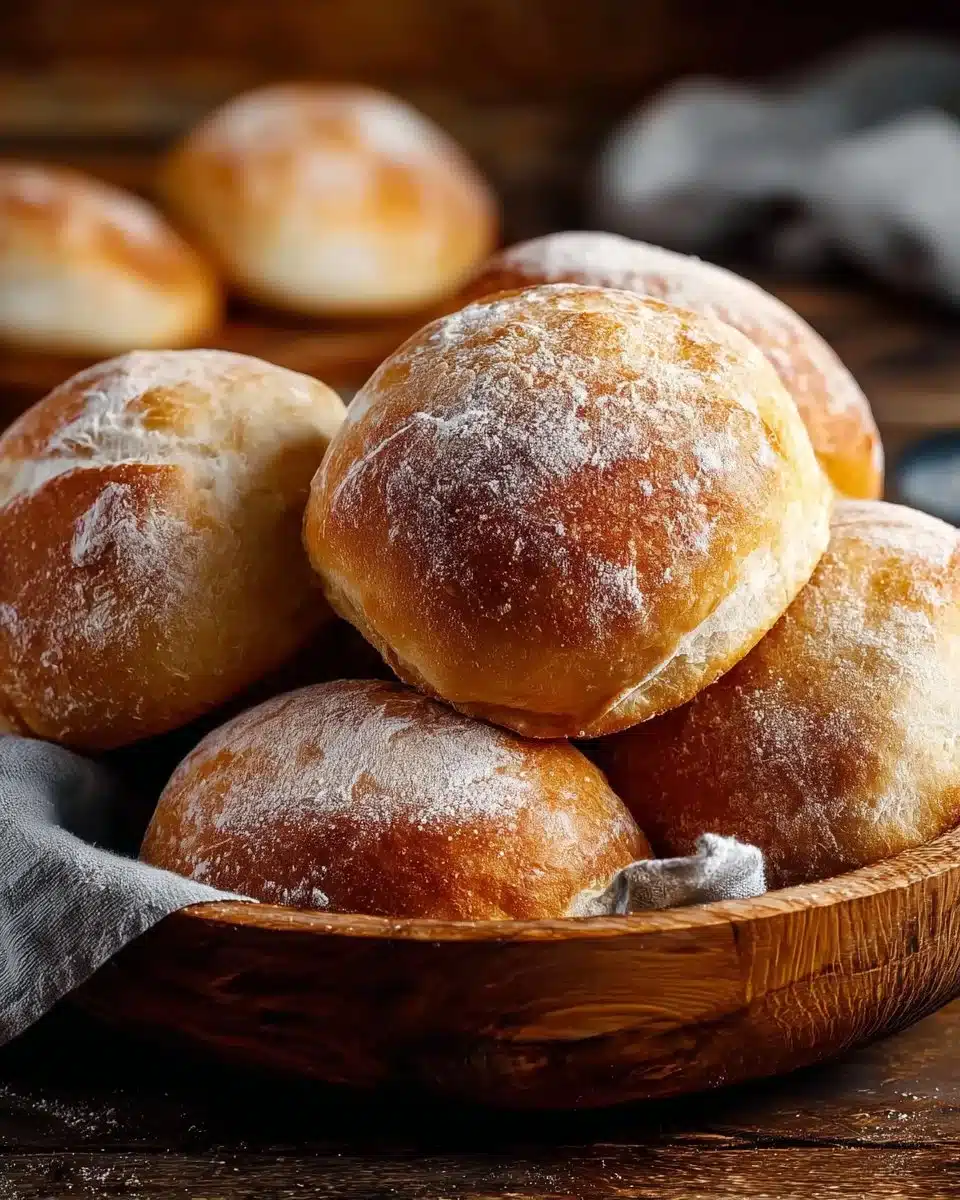
Steam rises, the crust crackles, and this homemade bread smells like Sunday morning. I developed this loaf after testing it 10 times with different flours and ovens to find a reliable, forgiving method that gives a crisp crust and tender crumb. It’s an easy bread recipe that works for beginners and busy cooks alike. I first perfected this version while teaching home-baking classes and have refined timings, hydration, and shaping to make success nearly inevitable. Read on for exact measurements, timing, and sensory cues so you can bake one loaf with confidence tonight.
Why this recipe works
- Long, cool fermentation builds flavor without complex techniques. The crumb gains depth while the dough rests.
- A higher hydration (about 70%) creates an open, tender crumb while still allowing a thin, crackly crust.
- A short, gentle knead develops just enough gluten for structure; long kneading is unnecessary.
- Baking in a preheated covered pot traps steam, producing glossy crust and good oven spring.
- Simple ingredients and clear sensory cues make repeatable results likely for home ovens.
Ingredients Breakdown
- Bread flour 500 g (4 cups): Provides strength and good gluten for rise. You can use all-purpose flour, but expect a slightly denser crumb.
- Water 350 ml (1 1/2 cups): Warm (about 24–27°C / 75–80°F) to help yeast wake. More water yields a more open crumb; don’t add extra until you test dough feel.
- Instant yeast 7 g (1 packet / 2 1/4 tsp): Fast and reliable. If using active dry yeast, proof in 50 ml warm water first.
- Salt 10 g (1 3/4 tsp) Diamond Crystal or 1 tsp Morton’s: Salt controls fermentation and strengthens gluten. If using Morton’s, use slightly less because it’s denser.
- Olive oil 15 ml (1 tbsp) optional: Adds flavor and a softer crumb. Omit for a leaner crust.
- Optional: 10 g (1 tbsp) honey or sugar to help browning — not required.
Substitutions and impact warnings:
- Whole wheat flour: Replace up to 150 g (1 1/4 cups) and expect a denser loaf. Add 15–30 ml (1–2 tbsp) extra water.
- Gluten-free: This is not suitable without a tested gluten-free blend and xanthan gum; results will differ.
- No eggs in this recipe — it’s naturally egg-free.
Essential Equipment
- Large mixing bowl (4–5 liter / quart) — big enough for doubling.
- Digital kitchen scale — use weights for best results.
- Dutch oven or covered oven-safe pot, 4–5 liter (9–10 inch) — locks steam for crust. If you don’t have one, a rimmed baking sheet plus a shallow pan for water will work.
- Bench scraper — helpful for folding and shaping.
- Cooling rack.
- Instant-read thermometer (optional) — loaf is done at 96–99°C (205–210°F) internal if you prefer accuracy.
Step-by-step instructions
Prep Time: 20 minutes · Cook Time: 35 minutes · Inactive Time: 12 hours · Total Time: 12 hours 55 minutes · Servings: 12 slices
Step 1: Mix the dough
In a large bowl, combine 500 g (4 cups) bread flour, 7 g (2 1/4 tsp) instant yeast, and 10 g (1 3/4 tsp) salt. Add 350 ml (1 1/2 cups) water and 15 ml (1 tbsp) olive oil. Stir with a wooden spoon until a shaggy dough forms, about 1–2 minutes. Stop when no dry flour remains; do not overmix.
Step 2: Short knead and first rest
Turn dough out onto a lightly floured surface and knead 2–3 minutes until smooth but still slightly sticky. Alternatively, do a 2-minute stretch-and-fold in the bowl. Place dough back in the bowl, cover with plastic wrap or a damp towel, and rest for 30 minutes.
Step 3: Bulk fermentation (slow rise)
After the 30-minute rest, perform three stretch-and-folds spaced 30 minutes apart: lift one side of the dough and fold it over, rotate, repeat three more times. Then cover and refrigerate for 10–12 hours (overnight). The dough will rise and develop flavor; you should see bubbles and it will feel lighter.
Step 4: Shape the loaf
Remove dough from the fridge. Turn onto a lightly floured surface and shape into a round boule by folding edges under to create tension on the surface, about 2 minutes. Cover and bench-rest for 30 minutes until slightly puffy but not doubled.
Step 5: Preheat pot and bake
Place a Dutch oven with its lid in the oven and preheat to 230°C (450°F) for 30 minutes. When hot, transfer the dough to a piece of parchment, slash the top with a sharp knife, then carefully lower into the hot pot. Cover and bake 20 minutes, then remove the lid and bake another 12–15 minutes until deep golden brown and internal temperature reaches 96–99°C (205–210°F).
Step 6: Cool and rest
Carefully remove the loaf from the pot and place on a cooling rack. Cool at least 1 hour before slicing — cooling finishes the bake and prevents a gummy crumb. Slice and enjoy.
Expert Tips & Pro Techniques
- Use a digital scale. Volume measures vary; weight makes this recipe repeatable.
- Common mistake: cutting too soon. Wait a full hour after baking; the crumb sets while cooling.
- If your dough feels dry, add water in 15 ml (1 tbsp) increments. The dough should be tacky, not sticky.
- Make-ahead: After shaping, refrigerate the shaped loaf for up to 24 hours and bake straight from cold; add 2–3 minutes to covered bake time.
- Professional tweak: Score with a razor for cleaner cuts and better oven spring. A single long slash gives a rustic ear.
- If your oven has hot spots, rotate the pot halfway through the uncovered bake to brown evenly.
Storage & Reheating
- Refrigerator: Store the cooled loaf wrapped in a clean kitchen towel or in a paper bag, then inside a resealable bag for up to 3 days. Avoid refrigeration for longer; it speeds staling.
- Freezer: Slice the cooled loaf, wrap slices individually in plastic wrap, then place in a freezer bag. Freeze up to 3 months. To thaw, leave slices at room temperature for 30–60 minutes.
- Reheating: Reheat whole or sliced bread in a 175°C (350°F) oven for 8–12 minutes to refresh crust. For individual slices, toast or warm on a dry skillet. Avoid microwaving — it softens the crust and can make the crumb gummy.
Variations & Substitutions
- Whole Wheat Version: Replace 150 g (1 1/4 cups) bread flour with whole wheat flour. Increase water by 30 ml (2 tbsp). Expect a nuttier flavor and slightly denser crumb.
- No-Knead Version: Mix ingredients, cover, and let rest 18–24 hours at room temp instead of the short knead and fridge method. Bake the same; expect a looser dough and more open crumb. This is a good approach if you want a no-knead bread.
- Olive & Herb Loaf: Fold in 75 g (1/3 cup) chopped olives and 15 g (1 tbsp) chopped rosemary during the final shaping. Keep other amounts the same.
- Lower-Sodium: Reduce salt to 6 g (1 tsp). Fermentation will be faster; keep an eye on rise times.
Serving Suggestions & Pairings
- Classic: Serve warm with soft butter and flaky sea salt.
- Meal pairing: Pair with soups like tomato bisque or minestrone for a hearty meal.
- Breakfast: Make avocado toast topped with lemon and chili flakes.
- Cheese board: Pair with creamy brie, fig jam, and honey for an appetizer spread. Pair with our Garlic Roasted Potatoes for a fuller plate.
Nutrition Information
Per serving (1 slice, recipe makes 12 slices)
- Calories: 160 kcal
- Total Fat: 3.5 g
- Saturated Fat: 0.5 g
- Cholesterol: 0 mg
- Sodium: 160 mg
- Total Carbohydrates: 28 g
- Dietary Fiber: 1.5 g
- Sugars: 1.5 g
- Protein: 5 g
Nutrition values are estimates. Actual values may vary based on specific ingredients and preparation methods.
Frequently Asked Questions
Q: Why did my bread turn out dense?
A: Dense bread often means underdeveloped gluten or underproofing. Ensure you did the stretch-and-folds and allowed bulk fermentation. Also check yeast freshness and that the dough felt slightly springy before shaping.
Q: Can I make this without eggs?
A: Yes. This recipe contains no eggs. It is naturally egg-free and still achieves good structure from the flour and yeast.
Q: Can I double this recipe?
A: Yes. Double all ingredients and use a larger bowl and pot. You may need two pots or bake two loaves sequentially. Allow the same relative fermentation times; larger volumes can take slightly longer to rise.
Q: Can I prepare this the night before?
A: Absolutely. After the first short rest and fold sequence, cover and refrigerate for 10–12 hours (overnight). You can also shape, cover, and refrigerate the shaped loaf up to 24 hours before baking.
Q: How long does this bread keep in the fridge?
A: Wrapped well, it will keep 2–3 days in the fridge. For longer storage, freeze slices for up to 3 months.
Q: Why is my crust soft instead of crisp?
A: Soft crust usually comes from insufficient oven steam or storing the warm loaf in a sealed bag. Bake covered for the first part, then uncover to brown. Cool completely on a rack before storing.
Q: Can I use all-purpose flour instead of bread flour?
A: Yes, but expect a slightly softer, less airy crumb. You can improve structure by adding 1 tbsp vital wheat gluten if you have it.
Conclusion
Baking this homemade bread gives you a dependable crusty loaf with minimal fuss. If you want another tested home-baker method, see the Homemade Bread Recipe from Tastes Better from Scratch for an alternative approach. For a straightforward, beginner-friendly version with step-by-step photos, try EASY HOMEMADE BREAD RECIPE from Butter with a Side of Bread to compare methods and find the one that fits your schedule.
Print
Homemade Bread: Simple Crusty Loaf
- Total Time: 775 minutes
- Yield: 12 slices 1x
- Diet: Vegetarian
Description
This homemade bread boasts a crisp crust and tender crumb, developed through long fermentation. Ideal for beginners and busy cooks.
Ingredients
- 500 g (4 cups) bread flour
- 350 ml (1 1/2 cups) warm water
- 7 g (1 packet / 2 1/4 tsp) instant yeast
- 10 g (1 3/4 tsp) salt
- 15 ml (1 tbsp) olive oil (optional)
- 10 g (1 tbsp) honey or sugar (optional)
Instructions
- In a large bowl, combine flour, yeast, and salt. Add water and olive oil; stir until a shaggy dough forms.
- Knead the dough on a floured surface for 2–3 minutes until smooth and slightly sticky.
- Cover the dough and let it rest for 30 minutes.
- Perform three stretch-and-folds spaced 30 minutes apart, then refrigerate for 10–12 hours.
- Shape the dough into a round boule and let it bench rest for 30 minutes.
- Preheat a Dutch oven to 230°C (450°F) for 30 minutes. Bake the dough covered for 20 minutes, then uncovered for another 12-15 minutes until golden brown.
- Cool the bread on a rack for at least 1 hour before slicing.
Notes
For best results, use a digital scale for measurements. Refrigerate for up to 24 hours after shaping if needed.
- Prep Time: 20 minutes
- Cook Time: 35 minutes
- Category: Baking
- Method: Baking
- Cuisine: American
Nutrition
- Serving Size: 1 slice
- Calories: 160
- Sugar: 1.5g
- Sodium: 160mg
- Fat: 3.5g
- Saturated Fat: 0.5g
- Unsaturated Fat: 2g
- Trans Fat: 0g
- Carbohydrates: 28g
- Fiber: 1.5g
- Protein: 5g
- Cholesterol: 0mg

Written by Anna
Anna is the founder and recipe developer behind Chroka Recipes. She creates easy, restaurant-quality homemade recipes — from comforting dinners and decadent desserts to healthy salads and quick breakfasts. With 2,200+ published recipes, Anna helps home cooks discover their next favorite dish.