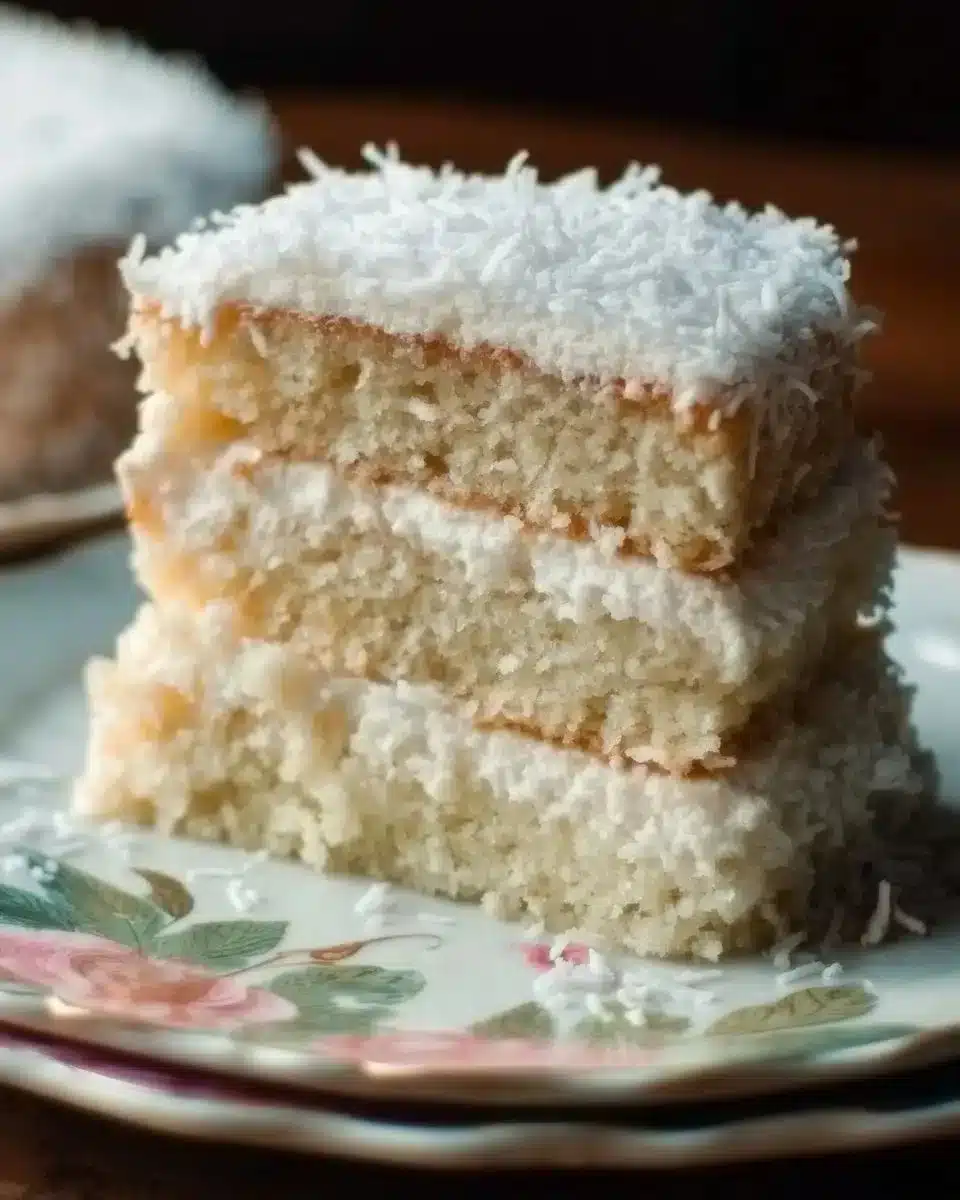
Classic Coconut Cake — Tender Layer Cake Recipe
A spoonful of sweet coconut and warm vanilla fills the kitchen the minute this cake comes out of the oven. This classic coconut cake is tender, moist, and layered with a light coconut buttercream and toasted coconut for crunch. After testing this recipe 12 times and adjusting the liquid balance, I landed on a batter that yields soft crumbs without being gummy. I also developed a quick stovetop toasting method for evenly browned coconut flakes when you don’t want to babysit the oven. This is the version I perfected while developing desserts for a busy bakery, so it holds up to slicing, stacking, and travel. Read on for ingredient notes, step‑by‑step timing, and professional tips that make this cake simple to reproduce at home.
Why This Recipe Works
- Balances milk and canned coconut milk for moist crumb without oiliness.
- Beating butter and sugar until pale traps air for lift and even texture.
- A bit of sour cream adds acidity that tenderizes gluten and keeps crumbs soft.
- Toasted shredded coconut adds texture and prevents the cake from tasting one‑dimensional.
- Gentle folding prevents overdeveloped gluten; the cake rises without becoming tough.
Ingredients Breakdown
- All-purpose flour (375 g / 3 cups): Provides structure. Measure by weight for consistency.
- Granulated sugar (400 g / 2 cups): Sweetness and tenderizing via creaming with butter.
- Baking powder (10 g / 2 tsp) and baking soda (5 g / 1 tsp): Leavening—both together give a reliable rise and color.
- Kosher salt (6 g / 1 tsp Diamond Crystal): Enhances flavor. If using Morton’s, use 1/2 tsp because it’s denser.
- Unsalted butter (227 g / 1 cup), room temperature: Fat for richness and structure. Using salted butter will add variable salt—reduce added salt if using salted.
- Eggs (4 large, about 200 g without shells): Add structure and moisture. For egg-free options see Variations.
- Whole milk (240 ml / 1 cup) + canned full‑fat coconut milk (120 ml / 1/2 cup): Milk thins the batter; coconut milk adds flavor and richness. Do not use only skim milk.
- Sour cream (60 g / 1/4 cup): Adds acidity and moisture. Greek yogurt is an acceptable swap but will be slightly tangier.
- Vanilla extract (10 ml / 2 tsp): Flavor anchor—use pure vanilla for best results.
- Sweetened shredded coconut (120 g / 1 cup) for batter; additional 120 g (1 cup) for topping: Adds coconut flavor and texture. Unsweetened will produce a less sweet result.
- Powdered sugar (720 g / 6 cups) for buttercream: Adjust for desired sweetness and consistency.
- Cream cheese (225 g / 8 oz) or additional butter for a pure buttercream: Cream cheese gives a tangy, lighter finish; straight buttercream is richer and more stable at room temp.
- Coconut extract (optional, 1/2 tsp): Potent—omit if vanilla-forward flavor is preferred.
- Toasting coconut: Use unsweetened large‑flake coconut for crunchy topping; sweetened flakes brown faster—watch closely.
Substitution notes:
- Greek yogurt for sour cream: Slightly tangier and thicker; use the same amount.
- Morton’s kosher salt: Halve the quantity listed.
- Gluten-free: Use a 1:1 GF blend and add 1/2 tsp xanthan gum (see Variations).
Essential Equipment
- Two 9-inch (23 cm) round cake pans (an 8-inch pan will make layers taller and may overflow).
- Kitchen scale for accurate dry measurements.
- Stand mixer or hand mixer — sturdy mixing gives consistent creaming. A whisk and elbow grease can work for creamier batters but require more time.
- Instant-read thermometer (optional) to check doneness if unsure. Cake is done at about 95–99°C (203–210°F) internal temp.
- Offset spatula for smooth frosting.
- Cooling racks for even cooling.
- Parchment paper and nonstick spray.
- Small skillet for toasting coconut (workaround for oven toasting).
Step-by-Step Instructions
Prep time: 30 minutes | Cook time: 28–32 minutes per layer | Inactive time: 1 hour cooling and 30 minutes chilling | Total time: about 2½ hours | Servings: 12 slices
Step 1: Prep pans and oven
Preheat oven to 175°C (350°F). Grease two 9-inch (23 cm) round pans, line bottoms with parchment, and grease again. Allow pans to sit while you measure ingredients.
Step 2: Toast the coconut
Heat a dry skillet over medium heat and toast 120 g (1 cup) shredded coconut, stirring constantly, 2–4 minutes until golden and fragrant. Transfer to a bowl to cool immediately to stop browning. Toasted coconut deepens flavor and adds crunch.
Step 3: Combine dry ingredients
Whisk 375 g (3 cups) all-purpose flour, 400 g (2 cups) granulated sugar, 10 g (2 tsp) baking powder, 5 g (1 tsp) baking soda, and 6 g (1 tsp) kosher salt in a large bowl for 10–20 seconds until evenly mixed. Sifting is optional but helps remove lumps.
Step 4: Cream butter and sugar
In a stand mixer fitted with the paddle, beat 227 g (1 cup) room-temperature unsalted butter and 400 g (2 cups) granulated sugar on medium-high for 3–4 minutes until pale and fluffy. Scrape the bowl every minute. This step traps air for lift.
Step 5: Add eggs and extracts
Beat in 4 large eggs, one at a time, about 20 seconds each until incorporated. Add 10 ml (2 tsp) vanilla and 2–4 ml (1/2 tsp) coconut extract if using. Mix until smooth.
Step 6: Alternate dry and wet ingredients
With the mixer on low, add the dry mixture in three parts alternating with the milk mixture: start and end with the dry. For the wet, whisk 240 ml (1 cup) whole milk, 120 ml (1/2 cup) full‑fat canned coconut milk, and 60 g (1/4 cup) sour cream until smooth. Add each addition and mix 8–10 seconds—do not overmix. Stop as soon as no flour streaks remain.
Step 7: Fold in shredded coconut
Fold in 120 g (1 cup) sweetened shredded coconut with a spatula for 6–8 strokes until evenly distributed. Overfolding will tighten the crumb.
Step 8: Bake the layers
Divide batter evenly between prepared pans (roughly 900–950 g batter per pan). Smooth tops and bake at 175°C (350°F) for 28–32 minutes. Rotate pans at 15 minutes if your oven heats unevenly. Cake is done when a toothpick comes out with a few moist crumbs and the internal temperature reads 95–99°C (203–210°F).
Step 9: Cool completely
Cool layers in pans 10 minutes, then turn out onto racks to cool completely, about 1 hour. Do not frost warm cake—frosting will slide and cake will steam.
Step 10: Make the frosting
Beat 225 g (8 oz) cream cheese and 113 g (1/2 cup) unsalted butter until smooth, about 2 minutes. Gradually add 720 g (6 cups) powdered sugar, 30–45 ml (2–3 tbsp) coconut milk for spreadability, and 1 tsp vanilla. Beat until smooth and fluffy, about 1–2 minutes. Adjust thickness with more powdered sugar or a teaspoon of coconut milk.
Step 11: Assemble and decorate
Level cakes if needed. Place one layer on a cake board, spread 120–150 g (1/2–2/3 cup) frosting, add second layer, crumb coat with a thin layer of frosting, chill 15–30 minutes, then finish with a final coat. Press toasted coconut onto top and sides as desired. Chill 20–30 minutes to set before slicing.
Expert Tips & Pro Techniques
- Measure flour by weight; scooping cups compacts flour and gives dry, dense cake.
- Common mistake: Overmixing after adding flour. Mix only until blended—stop when no white streaks remain.
- Use room-temperature eggs and butter; cold ingredients cause the batter to seize and reduce volume.
- Make-ahead: Bake layers a day ahead, wrap tightly and refrigerate. Bring to room temperature before frosting.
- Professional trick: A light simple syrup brush (1:1 sugar to water) adds moisture for long transports—brush 1–2 tbsp per layer.
- Crumb coat chills faster if you lightly freeze the cake 10–15 minutes before the final frosting application.
Storage & Reheating
- Refrigerator: Store cake covered in an airtight cake carrier or wrapped in plastic wrap for up to 4 days. Keep refrigerated if using cream cheese in frosting.
- Freezer: Yes — freeze unfrosted layers well wrapped in plastic and foil for up to 3 months. Thaw in the refrigerator overnight, then come to room temperature 1–2 hours before assembling. Frosted cake can be frozen; flash-freeze uncovered 1 hour, then wrap tightly and freeze up to 2 months.
- Reheating: Serve chilled or at room temperature. To gently warm a slice, preheat oven to 175°C (350°F) and heat a slice on a tray for 6–8 minutes. Avoid microwaving as it makes the frosting runny.
Variations & Substitutions
- Gluten-Free Version: Replace 375 g (3 cups) all-purpose flour with 375 g (3 cups) 1:1 gluten-free flour blend and add 1/2 tsp xanthan gum. Bake time increases by ~3–5 minutes. Texture will be slightly more crumbly.
- Dairy-Free / Vegan Adaptation: Use a vegan butter (227 g / 1 cup) and a dairy-free yogurt in place of sour cream. Replace eggs with 4 flax eggs (4 tbsp ground flax + 12 tbsp water). Use a stabilized vegan frosting; expect a denser crumb.
- Light Coconut Version: Use unsweetened shredded coconut and reduce granulated sugar to 340 g (1¾ cups). Keep rest of the recipe the same. Cake is less sweet; frost will balance sweetness.
- Tropical Fill: Add a layer of mashed ripe pineapple (drained) or passionfruit curd between layers. Use 120–150 g (1/2–2/3 cup) fruit—do not add extra liquid. Toasted coconut pairs well with bright fruit.
Serving Suggestions & Pairings
- Garnish with fresh berries and a dusting of powdered sugar for brightness.
- Pair with a cup of medium-roast coffee or a lightly sweetened iced tea.
- Serve with a scoop of vanilla bean ice cream for a party dessert.
- Pair with our citrus tart recipes for a balanced dessert menu.
Nutrition Information
Per serving (1 slice, recipe yields 12):
Serving size: 1 slice
Calories: 590 kcal
Total Fat: 30 g
Saturated Fat: 18 g
Cholesterol: 110 mg
Sodium: 320 mg
Total Carbohydrates: 72 g
Dietary Fiber: 1.5 g
Sugars: 48 g
Protein: 6 g
Nutrition values are estimates. Actual values may vary based on specific ingredients and preparation methods.
Frequently Asked Questions
Q: Why did my cake turn out dry?
A: Dry cake usually means too much flour or overbaking. Weigh flour and remove the cake when a toothpick shows moist crumbs or internal temp hits 95–99°C (203–210°F).
Q: Can I make this without eggs?
A: Yes. Use flax eggs (4 tbsp ground flax + 12 tbsp water, mixed and rested 5 minutes). The cake will be slightly denser and more moist.
Q: Can I double this recipe?
A: Yes. Double all ingredients and bake in two sets of pans or use three 9-inch pans. Baking time may vary; check doneness with a toothpick or thermometer.
Q: Can I prepare this the night before?
A: Absolutely. Bake layers and freeze or refrigerate them overnight. Assemble and frost the next day. For best texture, bring layers to room temperature before frosting.
Q: How long does this keep in the fridge?
A: With cream cheese frosting, store covered for up to 4 days. Without cream cheese, a buttercream-frosted cake keeps about 3–4 days refrigerated.
Q: My frosting wept after refrigeration. What happened?
A: Condensation forms when a cold cake is exposed to warm air. Chill the cake fully before slicing and keep it covered. If using cream cheese, avoid high humidity.
Q: Can I use only canned coconut milk instead of whole milk?
A: You can, but full‑fat coconut milk will make the batter richer and may change texture slightly. Use 300–340 ml total liquid (reduce milk if using only coconut milk) to maintain balance.
Conclusion
This cake is a reliable crowd‑pleaser and travels well when layered and chilled. If you want a comparison to other popular versions, I found different techniques useful for adjusting sweetness and texture; see the detailed Classic Coconut Cake method at The Pancake Princess for Classic Coconut Cake and a well-loved Fluffy & Moist Coconut Cake method at Sally’s Baking Addiction – Fluffy & Moist Coconut Cake for additional variations and inspiration.
Print
Classic Coconut Cake
- Total Time: 150 minutes
- Yield: 12 servings 1x
- Diet: Vegetarian
Description
A tender, moist coconut layer cake with light coconut buttercream and toasted coconut for crunch.
Ingredients
- 375 g (3 cups) all-purpose flour
- 400 g (2 cups) granulated sugar
- 10 g (2 tsp) baking powder
- 5 g (1 tsp) baking soda
- 6 g (1 tsp) kosher salt
- 227 g (1 cup) unsalted butter, room temperature
- 4 large eggs
- 240 ml (1 cup) whole milk
- 120 ml (1/2 cup) canned full-fat coconut milk
- 60 g (1/4 cup) sour cream
- 10 ml (2 tsp) vanilla extract
- 120 g (1 cup) sweetened shredded coconut (for batter)
- 120 g (1 cup) sweetened shredded coconut (for topping)
- 720 g (6 cups) powdered sugar (for buttercream)
- 225 g (8 oz) cream cheese (or additional butter)
- Optional: 1/2 tsp coconut extract
Instructions
- Prep pans and oven: Preheat oven to 175°C (350°F), grease two 9-inch round pans, and line bottoms with parchment.
- Toast the coconut: Heat a dry skillet over medium heat, toast shredded coconut for 2–4 minutes until golden, then cool.
- Combine dry ingredients: Whisk flour, sugar, baking powder, baking soda, and salt in a large bowl.
- Cream butter and sugar: Beat unsalted butter and sugar on medium-high for 3–4 minutes until pale and fluffy.
- Add eggs and extracts: Beat in eggs one at a time, then mix in vanilla and coconut extract if using.
- Alternate dry and wet ingredients: Gradually add dry mixture alternating with milk mixture, mixing briefly until just combined.
- Fold in shredded coconut gently.
- Bake the layers: Divide batter evenly between pans and bake for 28–32 minutes or until a toothpick comes out with a few moist crumbs.
- Cool completely: Let layers cool in pans for 10 minutes before turning out onto racks to cool fully.
- Make the frosting: Beat cream cheese and butter, gradually add powdered sugar and coconut milk for desired consistency.
- Assemble and decorate: Spread frosting between layers, crumb coat, chill, and apply final coat with toasted coconut.
Notes
Measure flour by weight for consistency; consider using a light simple syrup for added moisture.
- Prep Time: 30 minutes
- Cook Time: 30 minutes
- Category: Dessert
- Method: Baking
- Cuisine: American
Nutrition
- Serving Size: 1 slice
- Calories: 590
- Sugar: 48g
- Sodium: 320mg
- Fat: 30g
- Saturated Fat: 18g
- Unsaturated Fat: 8g
- Trans Fat: 0g
- Carbohydrates: 72g
- Fiber: 1.5g
- Protein: 6g
- Cholesterol: 110mg